Advances in material development have brought to the market a new type of concrete that can bend under pressure and heal cracks with the addition of water.


"Traditional concrete is brittle and is easily fractured during an earthquake or by overuse.
By contrast, the new concrete composite can bend into a U-shape without breaking. When strained, the material forms hairline cracks, which auto-seal after a few days of light rain.
Dry material exposed by the cracks reacts with rainwater and carbon dioxide in the air to form "scars" of calcium carbonate, a strong compound found naturally in seashells, said study co-author Victor Li of the University of Michigan in Ann Arbor.
The flexible material is just as strong after it heals, the study authors report."
Read the full story: Bendable Concrete Heals Itself -- Just Add Water

Did Corrupt Building Practices Contribute to China's Earthquake Disaster?
As rescue work continues in the aftermath of the earthquake in China's Sichuan province, many -- including the state-run media -- are asking questions about why so many buildings collapsed, and blame corruption and shoddy construction methods.
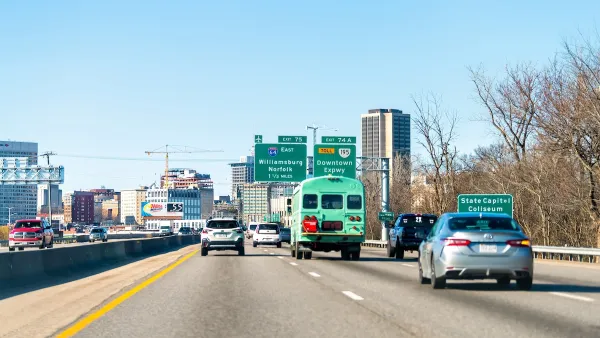
'This is going to be painful:’ Virginia stares down $1.7 billion funding gap for highway maintenance
The state may address the deficit by shifting $290 million from its construction budget to maintenance projects.

Raised interest rates may kill financially vulnerable construction projects
The chief economist at ConstructConnect warns that if construction project owners are negatively impacted by the raised rates, it could result in delayed payments to contractors.

Amtrak, CN end decades-long dispute with eight-year agreement
The new operating agreement establishes an updated framework for the companies to work together, including processes to resolve disputes.

Judges permit Denver to divert 77,000 acre feet from the Colorado River for reservoir expansion
Overuse and climate change have caused the Colorado River’s water levels to plummet.
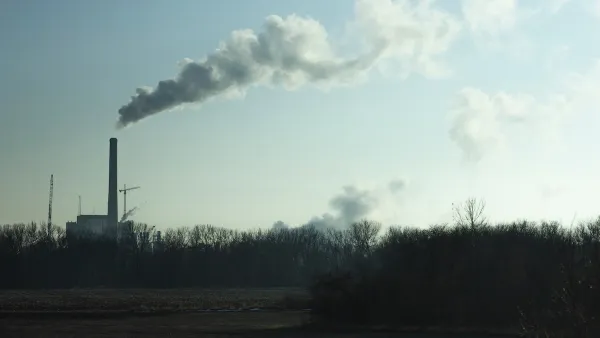
Nation's most wind-powered state turns to coal as data centers increase energy demand
For the first time in decades, Iowa has increased its generation of coal power.

Boston has spent millions making the Green Line more accessible — and there’s no end in sight
While the city has invested millions into expanding and adding platforms to the Green Line to make it more accessible, new train cars set to arrive next year will be too tall for disabled passengers to board without raising the current platforms.

Idaho may see an 18% drop in federal surface transit funding — the largest estimated cut in the US
Transit systems in rural communities are much more reliant on federal funding to provide their services.

How ‘post-disaster gentrification’ alters neighborhoods after natural calamities
After hurricanes, fires or other calamities, the original residents of a community are often replaced by younger, wealthier residents.

FREE Course: Walkable City 1: Why Walkability?
After describing his path towards focusing on walkability as the essence of good planning, Jeff Speck marches through his five principal reasons for making more walkable places.
Reinventing Malls: Planning Alchemy—Turning Gray Fields Into Gold
The course focuses on the opportunities and imperatives that shape reinvention of mall sites.

City of Wisconsin Rapids
Harvard University Graduate School of Design
KFH Group Inc.
The Architects Foundation
University of Cincinnati Online
The Pocatello Development Authority
The Urban Renewal Agency of the City of Pocatello