Los Angeles mayor Antonio Villaraigosa has unveiled plans to turn an industrial parcel of land near downtown into "the global capital of clean technology."


"Cecilia V. Estolano, chief executive of the Community Redevelopment Agency, has led development of the CleanTech Corridor concept. She contends that Los Angeles is 'driving the technology, and we're driving demand and that is a huge calling card.'
The corridor envisioned by city planners spans 2,236 acres -- about 10% railroad-owned -- east of Alameda Street, with its borders still in flux. It begins at a swath of land straddling the L.A. River, near Los Angeles State Historic Park (the former Cornfield), that Councilman Ed Reyes hopes to transform into a neighborhood where bicycles and pedestrians would rule and carbon emissions would be cut by 35%. Then it runs south through the site of a future Department of Water and Power research center into the Artists-in-Residence district, which stretches from Alameda to the river and from 1st Street to south of 7th Street.
The vacant CleanTech Manufacturing site at Santa Fe Avenue and 15th Street, just south of the 10 Freeway, forms the corridor's southern anchor.
The jockeying for a piece of a project at the top of the mayor's agenda has already begun."
Read the full story: Angling for a piece of L.A.'s future clean-tech center

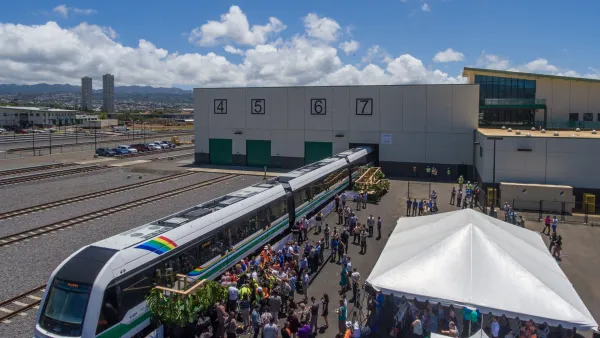
From robotaxis to robotrains: LA, DC weigh driverless transit
If approved, the projects will take years to implement and face financial and technical hurdles.
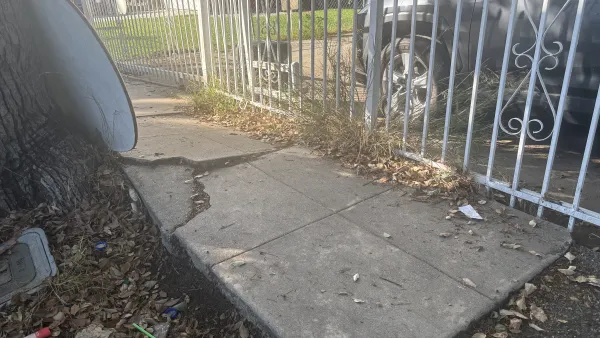
LA accused of breaching $1.4 billion sidewalk repair settlement
The city faces a backlog of nearly 5,000 street repair requests.
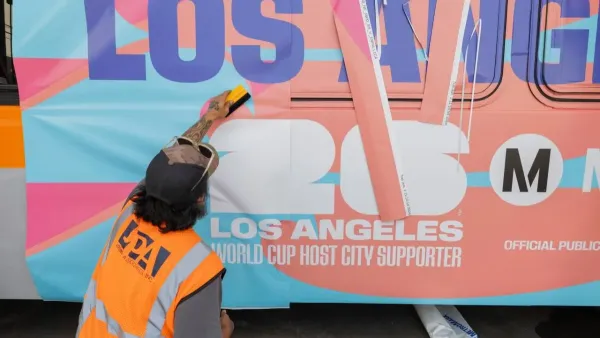
LA doesn’t need new transit for LA28: it needs to connect the transit it already has
The 2026 FIFA World Cup in Los Angeles showed that if the county’s transit providers work together, they can move thousands of people with ease. With two years remaining before the Games, the region should treat that success as inspiration, not a finish line.

Planetizen Federal Action Tracker
A weekly monitor of how Trump’s orders and actions are impacting planners and planning in America.

Chicago breaks ground on $3 billion megadevelopment
The new neighborhood, titled Foundry Park, will one day host 3,700 residences.

This MA town is drowning in its own sewage — and residents like it that way
Susan Murcott, a waste water expert, said if Carlisle didn't address their leaking sewage, the problem could turn “deadly.”

Feds to more closely scrutinize proposed Amtrak facility’s environmental impact
The Federal Railroad Administration had initially said the facility qualified for a less extensive environmental review.

Boston is hard to build housing in: its chief of planning wants to keep it that way
Chief of Planning Kairos Shen said she would not make changes to Boston’s affordability requirements for new housing, which critics say have slowed down development.

California plans to bury El Niño’s downpour
If the state plays its cards right, it may be able to store a billion acre-feet of El Niño’s water in aquifers.

FREE Course: Walkable City 1: Why Walkability?
After describing his path towards focusing on walkability as the essence of good planning, Jeff Speck marches through his five principal reasons for making more walkable places.
Reinventing Malls: Planning Alchemy—Turning Gray Fields Into Gold
The course focuses on the opportunities and imperatives that shape reinvention of mall sites.

City of Rosemead
Rutgers University, Edward J. Bloustein School of Planning and Public Policy
One Hundred Miles
Hunter College, City University of New York (CUNY)
The Architects Foundation
University of Cincinnati Online
Montrose County
The Pocatello Development Authority
The Urban Renewal Agency of the City of Pocatello