GOOD Magazine talks with Joseph M. Sussman, an external adviser to the Department of Transportation and professor at MIT, about high-speed rail, intelligent transportation systems, and more.


"G: There is a sense in certain circles that high-speed rail is finally getting its due. But you are saying it is still not enough?
JS: Well, it's getting some attention, but the actual numbers in the stimulus are not such that one could imagine the national investment that one needs to make. I'm not talking about a national network of high-speed rail, because our country is just too darn big for that to be useful. When I say national I mean that we can develop these clusters of high-speed rail. It's not only the Northeast corridor. There are opportunities in Florida, in the Texas triangle, Chicago, and in the Pacific Northwest. And it could have significant long-term impacts economically as well as environmentally. I'm not one of these crazies who get wild-eyed and say all we should do is rail, no more highways. I realize that's politically not a reasonable stance to take. The best stance is to continue to develop highways effectively, but the lack of balance in our investment does concern me. These are expensive systems, no doubt, but the long-term benefits are really quite substantial."
FULL STORY: Transportation Innovation

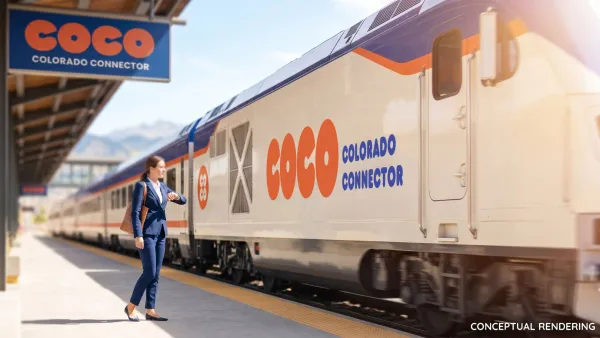
Colorado unveils fox mascot, branding for 'CoCo' high-speed rail
The new Denver-to-Fort Collins train is expected to begin service in 2029.
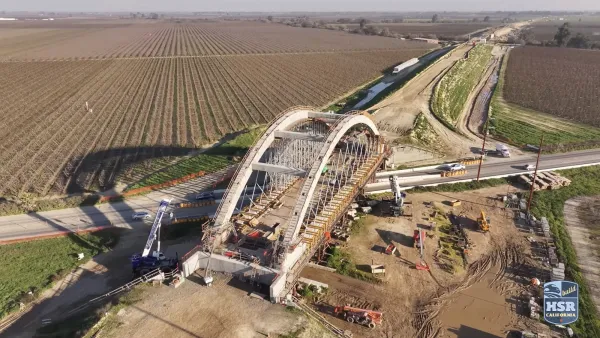
California High-Speed Rail wants to leverage data center revenue to fund trains
By positioning the rail line as a tech and renewable energy corridor, the agency hopes to increase revenue opportunities.

March Must-Reads: Top 10 Articles From Last Month
Seattle may roll back a development fee as housing permits plummet, an ambitious Google-led project in the heart of San Jose goes sideways, and a list of sci-fi books to feed your futurist dreams.

Planetizen Federal Action Tracker
A weekly monitor of how Trump’s orders and actions are impacting planners and planning in America.

The state-sanctioned urbicide of Austin
People don’t kill cities. Freeways do.

US to reduce Colorado River water deliveries to Mexico
A new Colorado Treaty amendment reduces Mexico’s Colorado River water allocation by 250,000 acre feet.

5 New England states march closer to 800 megawatt wind energy project
Securing federal approval for the project may be complicated under the Trump administration, which has historically been hostile towards domestic wind power.

Baltimore to break ground on $50 million Transit Priority Project
The project will bring faster bus trips, safer streets and better bike connections to Baltimore.

Airbnb launches $250 million 'last-dollar financing' housing accelerator, makes first investment in Austin
The company will put $6.4 million towards affordable housing development in Texas’ capital.

FREE Course: Walkable City 1: Why Walkability?
After describing his path towards focusing on walkability as the essence of good planning, Jeff Speck marches through his five principal reasons for making more walkable places.
Reinventing Malls: Planning Alchemy—Turning Gray Fields Into Gold
The course focuses on the opportunities and imperatives that shape reinvention of mall sites.

Eagle County Government
Harvard University Graduate School of Design
Nashville Planning Department
The Architects Foundation
University of Cincinnati Online
The Pocatello Development Authority
The Urban Renewal Agency of the City of Pocatello
Journal of the American Planning Association