Computer modeling predicts sea levels rising 55 inches by 2100, and a recent report from California's interagency Climate Action Team is calling for a radical reorganization of the state's coastal development and infrastructure to avoid disaster.


"California's interagency Climate Action Team on Wednesday issued the first of 40 reports on impacts and adaptation, outlining what the state's residents must do to deal with the floods, erosion and other effects expected from rising sea levels."
"Hundreds of thousands of people and billions of dollars of Golden State infrastructure and property would be at risk if ocean levels rose 55 inches by the end of the century, as computer models suggest, according to the report."
"The group floated several radical proposals: limit coastal development in areas at risk from sea rise; consider phased abandonment of certain areas; halt federally subsidized insurance for property likely to be inundated; and require coastal structures to be built to adapt to climate change."
Read the full story: California panel urges 'immediate action' to protect against rising sea levels

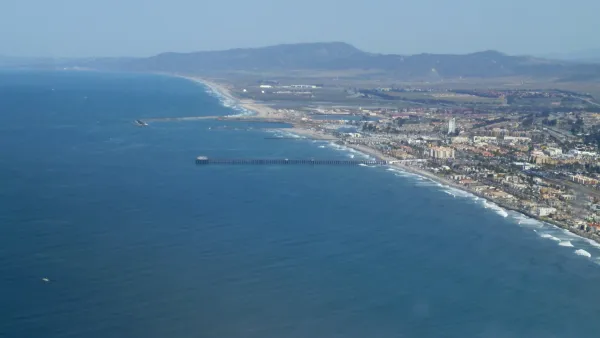
Oceanside Debates the Future of its Coastline
As sea levels rise, California's coastal communities face difficult decisions about how to preserve coastlines and mitigate the looming threat.
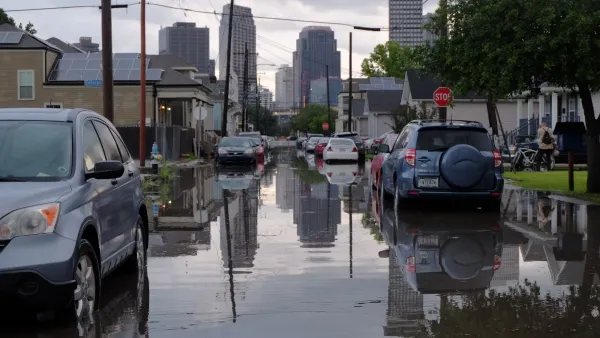
Study: New Orleans sea level rise is at 'point of no return'
Research shows that the city could be surrounded by water by the end of this century.
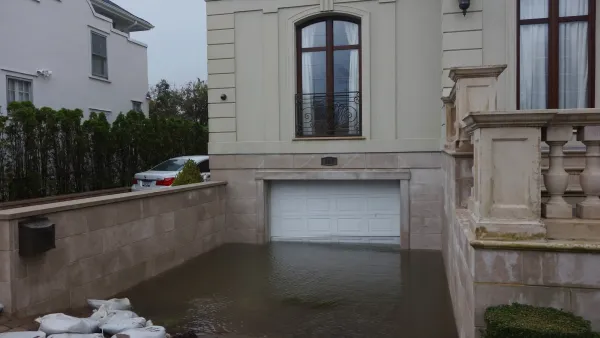
Over 500 NYC ‘Blue Zones’ at Risk of More Destructive Floods
High-risk flood zones cover roughly 20% of the city’s land.

Planetizen Federal Action Tracker
A weekly monitor of how Trump’s orders and actions are impacting planners and planning in America.

California plans to bury El Niño’s downpour
If the state plays its cards right, it may be able to store a billion acre-feet of El Niño’s water in aquifers.

Chicago breaks ground on $3 billion megadevelopment
The new neighborhood, titled Foundry Park, will one day host 3,700 residences.

California High-Speed Rail Authority CEO resigns after $600,000 scandal
Under Ian Choudri, the authority used taxpayer dollars to fund first class flights and trips to nightclubs.

Want to study the Missouri River? Soon, you may need unanimous approval from 10 states
Legislation would require 10 governors’ permission to study or build projects moving water outside the basin.

Desperate measures: Advocates weigh draining Lake Powell to fill Colorado River
Draining the reservoir could reduce evaporation losses by a couple hundred thousand acre-feet.

FREE Course: Walkable City 1: Why Walkability?
After describing his path towards focusing on walkability as the essence of good planning, Jeff Speck marches through his five principal reasons for making more walkable places.
Reinventing Malls: Planning Alchemy—Turning Gray Fields Into Gold
The course focuses on the opportunities and imperatives that shape reinvention of mall sites.

City of Rosemead
Rutgers University, Edward J. Bloustein School of Planning and Public Policy
One Hundred Miles
Hunter College, City University of New York (CUNY)
The Architects Foundation
University of Cincinnati Online
City of Cambridge
Montrose County
The Pocatello Development Authority