This article provides a general breakdown of how state governments plan to use the first installment of transportation spending money from the stimulus. The leeway states have in how to spend has sparked debates among legislators.


"More than a dozen states have now said how they plan to spend at least some of their transportation money, giving the clearest picture yet of how one of the president's signature programs is playing out around the country. Beyond all the money for Medicaid and unemployment benefits in the huge bill passed last month, this will be the face of the country's stimulus program: a bridge will be painted on a rural road, a new lane added on a suburban highway, a guardrail built on a median strip.
They may be old plans that the recession had forced a state to shelve, but multiplied by thousands, they will quickly get bulldozers rolling again and paychecks flowing. On the highway projects alone, the White House said Tuesday that 150,000 jobs would be created or saved.
Some states are taking radically different approaches with their transportation money. While Kansas is using it on a few big marquee projects to expand capacity at several highways, Maryland has adopted a fix-it-first policy, and plans to use its money to repair dozens of roads and bridges instead of building new ones."
Read the full story: Stimulus Spurs Road Projects, Big and Small

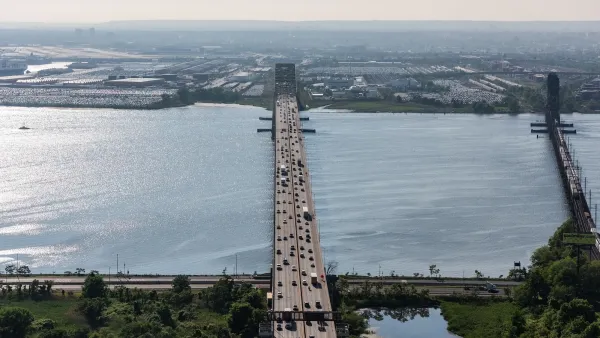
New Jersey Governor Kills ‘Boondoggle’ Highway Expansion
Gov. Sherrill ‘right-sized’ the Newark Bay Bridge reconstruction project, nixing a second proposed bridge and road expansion.
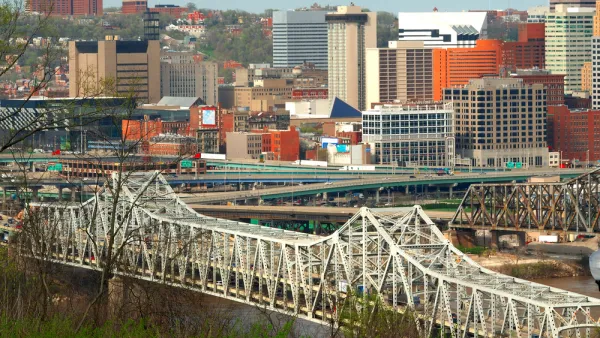
Federal Government Awards Over $1 Billion to Nine ‘Mega’ Projects
The funding comes from a discretionary grant program aimed at supporting infrastructure projects too massive or complex for traditional funding mechanisms.
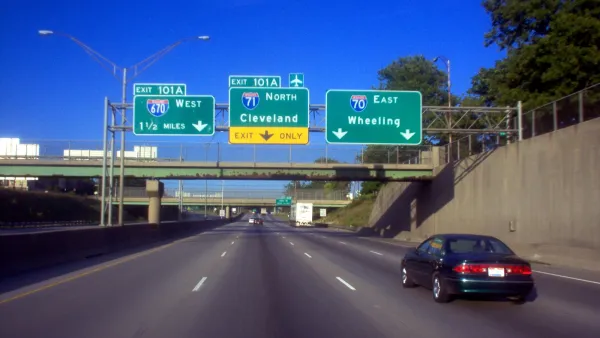
Northeast Ohio Agency Set to Reject Three Highway Proposals
The agency's recommendations are based on a new method of cost-benefit analysis that includes equity and environmental sustainability as key measures.

Planetizen Federal Action Tracker
A weekly monitor of how Trump’s orders and actions are impacting planners and planning in America.

Amtrak, CN end decades-long dispute with eight-year agreement
The new operating agreement establishes an updated framework for the companies to work together, including processes to resolve disputes.

Judges permit Denver to divert 77,000 acre feet from the Colorado River for reservoir expansion
Overuse and climate change have caused the Colorado River’s water levels to plummet.

South Chicago development proposal would 'upzone' neighborhoods to increase density
The South Chicago Land Use Framework plan also aims to promote pedestrian and transit-oriented developments.

Boston has spent millions making the Green Line more accessible — and there’s no end in sight
While the city has invested millions into expanding and adding platforms to the Green Line to make it more accessible, new train cars set to arrive next year will be too tall for disabled passengers to board without raising the current platforms.

Idaho may see an 18% drop in federal surface transit funding — the largest estimated cut in the US
Transit systems in rural communities are much more reliant on federal funding to provide their services.

FREE Course: Walkable City 1: Why Walkability?
After describing his path towards focusing on walkability as the essence of good planning, Jeff Speck marches through his five principal reasons for making more walkable places.
Reinventing Malls: Planning Alchemy—Turning Gray Fields Into Gold
The course focuses on the opportunities and imperatives that shape reinvention of mall sites.

City of Wisconsin Rapids
Harvard University Graduate School of Design
KFH Group Inc.
The Architects Foundation
University of Cincinnati Online
The Pocatello Development Authority
The Urban Renewal Agency of the City of Pocatello