Republicans are using the budgetary process to roll-back environmental protections, claim environmentalists in California. The state is due to run out of funds in Feb and issue I.O.U.s unless the $18 billion gap is filled for the current fiscal year


"Republicans are trying to use their budget leverage to achieve weakenings of environmental laws they could never achieve through the normal budget process," said Sierra Club California Director Bill Magavern. "We urge the legislative leaders and the governor not to acquiesce to this fiscal blackmail."
"GOP leaders have asked for changes in environmental laws before, but they have significant leverage this year because leaders are desperate to reach a budget deal soon, which requires Republican votes.
One proposal would allow farmers in the Central Valley and in certain coastal areas to use more pesticides than allowed under a court-authorized agreement the state made last year."
From Sierra Club California blog
Minority Republicans are trying to erode "regulations that protect Californians from diesel pollution caused by dirty engines; allow affected residents to sue to stop global warming pollution; require environmental review of the sale of state lands; and prevent the use of smog-forming pesticides.
From SF Gate-Thin Green Line: Capitol Alert
Republicans are demanding five environmental-weakening measures, including "delaying and weakening implementation of a measure to reduce toxic diesel emissions from off-road construction equipment, just adopted in July 2007 by the California Air Resources Board".
Meanwhile, voters indicate in a recent
poll that they want the state to maintain its environmental protections, even in the face of serious budgetary and economic woes."
Thanks to Colleen Flannery
Read the full story: Environmentalists sound alarms over budget deal
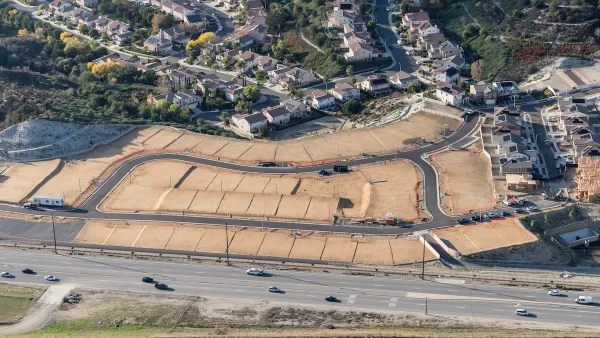
In California Battle of Housing vs. Environment, Housing Just Won
A new state law significantly limits the power of CEQA, an environmental review law that served as a powerful tool for blocking new development.

California Governor Suspends CEQA Reviews for Utilities in Fire Areas
Utility restoration efforts in areas affected by the January wildfires in Los Angeles will be exempt from environmental regulations to speed up the rebuilding of essential infrastructure.

Misuse of Environmental Laws Betrays Their Intent
How laws written to protect natural resources and biodiversity are being reinterpreted by NIMBY groups to block development.

Planetizen Federal Action Tracker
A weekly monitor of how Trump’s orders and actions are impacting planners and planning in America.

California plans to bury El Niño’s downpour
If the state plays its cards right, it may be able to store a billion acre-feet of El Niño’s water in aquifers.

Desperate measures: Advocates weigh draining Lake Powell to fill Colorado River
Draining the reservoir could reduce evaporation losses by a couple hundred thousand acre-feet.

Chicago voters approve permanent festival grounds, penalty for vacant property owners
Currently, major summer and fall festivals take over public parks for weeks at a time, drawing criticism from nearby residents

NYC votes to cut outdoor dining red tape, speed up permitting
New York City also voted to allow the Department of Transportation to begin work on urgent projects before notifying elected officials.

California appears to reject Prop. 45
The proposition would have expanded the projects that qualify for a streamlined environmental review, effectively paring down the California Environmental Quality Act.

FREE Course: Walkable City 1: Why Walkability?
After describing his path towards focusing on walkability as the essence of good planning, Jeff Speck marches through his five principal reasons for making more walkable places.
Reinventing Malls: Planning Alchemy—Turning Gray Fields Into Gold
The course focuses on the opportunities and imperatives that shape reinvention of mall sites.

City of Rosemead
Rutgers University, Edward J. Bloustein School of Planning and Public Policy
One Hundred Miles
Hunter College, City University of New York (CUNY)
The Architects Foundation
University of Cincinnati Online
City of Cambridge
Montrose County
The Pocatello Development Authority