A proposed bridge going over the Columbia River in the Portland-Vancouver area may be able to power itself with wind turbines integrated right onto the design.


"You read that right: The latest bridge design features vertically spinning turbines that would generate an unknown amount of juice while proclaiming loudly that the Portland-Vancouver area is the sustainability center of the world.
Or so says the Florida firm that did the design, now winning the affections of leaders from both cities as well as planners trying to eliminate congestion by building a new $4 billion structure.
It's unknown how much energy the turbines would generate or how it would be used. The turbines might help power bridge lights and toll booths. Or they could be merely decorative icons of a green industry hereabouts --a problem for purists who say that's less than sustainable.
Either way, the concept has captured the imagination of local leaders scrutinizing the project and local architects pushing for a bridge that looks as good as it functions."
Read the full story: New I-5 bridge design includes wind turbines

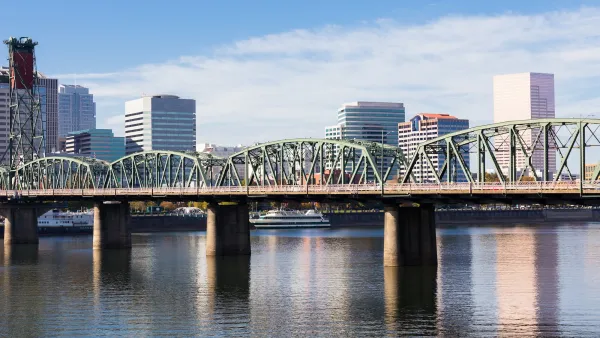
Federal agencies give go-ahead to I-5 Columbia River bridge project
The next few months will clarify whether the massive bridge replacement project will secure the funding to move forward as planned.
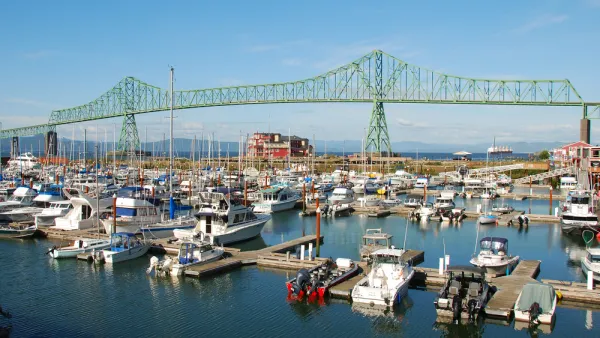
Meet the Beautiful Bridges 'Spanning Oregon'
Oregon lovers and bridge lovers alike will find lots to appreciate in the "Spanning Oregon" series.
Budget constraints threaten light rail for Oregon, Washington’s new bridge
The current proposal includes only the infrastructure for the light rail, without funding for the train and tracks.

Planetizen Federal Action Tracker
A weekly monitor of how Trump’s orders and actions are impacting planners and planning in America.

Amtrak, CN end decades-long dispute with eight-year agreement
The new operating agreement establishes an updated framework for the companies to work together, including processes to resolve disputes.

Judges permit Denver to divert 77,000 acre feet from the Colorado River for reservoir expansion
Overuse and climate change have caused the Colorado River’s water levels to plummet.

Northwest rail fans eager for Sept. 30 debut of Amtrak’s Airo fleet
Get ready for that new train smell and more seats. But they won’t go faster or run more frequently on the Cascades route in Washington and Oregon.

NYC DOT wants faster, more permanent street upgrades
The city is examining ways to build more concrete infrastructure without getting entangled in 'decades-long' projects.

'Something we’ve never seen before:' rising utility rates could strain city finances nationwide
Data centers, climate change and other factors have caused utility rates in the United States to increase by 38% since 2020.

FREE Course: Walkable City 1: Why Walkability?
After describing his path towards focusing on walkability as the essence of good planning, Jeff Speck marches through his five principal reasons for making more walkable places.
Reinventing Malls: Planning Alchemy—Turning Gray Fields Into Gold
The course focuses on the opportunities and imperatives that shape reinvention of mall sites.

Harvard University Graduate School of Design
KFH Group Inc.
Greater Baltimore Committee
The Architects Foundation
University of Cincinnati Online
The Pocatello Development Authority
The Urban Renewal Agency of the City of Pocatello