An internal report to the Canadian government written nearly two years ago concludes that infrastructure in the country is at serious risk from climate change. The study came to light recently under the Access to Information Act.


"The documents, sent to the senior levels of Transport and Infrastructure Canada late in 2006 and early in 2007, warned that water resources were particularly vulnerable to changes in the climate and urged the government to offer more support, guidance and leadership to help Canada's cities and communities.
The reports explained that extreme weather and rising temperatures would threaten infrastructure that was not designed for the full range of changes in the climate. It also warned that many cities were ill-prepared to tackle the problem.
'Water infrastructure is perhaps the most vulnerable of all types of infrastructure to climate change, and the importance of water to human health, the economy and the environment also makes it one of the most critical types of infrastructure. Furthermore, this type of infrastructure has the potential to suffer the greatest damages or losses associated with climate change unless proactive adaptation actions are taken,' reads an internal report, prepared by Infrastructure Canada's Research and Analysis division, titled Adapting Infrastructure to Climate Change in Canada's Cities and Communities."
Read the full story: Cities face ravages of warming


'Something we’ve never seen before:' rising utility rates could strain city finances nationwide
Data centers, climate change and other factors have caused utility rates in the United States to increase by 38% since 2020.
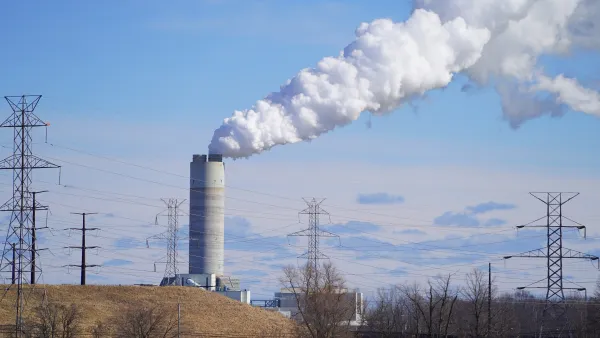
EPA erases limits on planet-warming pollution from power plants
Under Monday’s plan, power plants would still have some limits on how much mercury, arsenic and other contaminants they can emit.

Climate change is battering US water systems
The American Water Works Association estimates that roughly $2 trillion will be needed to update municipal water systems for contemporary conditions.

Planetizen Federal Action Tracker
A weekly monitor of how Trump’s orders and actions are impacting planners and planning in America.

HUD modernizes 50-year-old manufactured housing framework
The Next Generation Manufactured Housing Action Plan establishes new energy-efficiency standards for manufactured homes, and new guidelines for anchoring them.

Data reveals that NYC’s bet on congestion pricing has paid off
After almost two years of the program, reports show positive impacts on traffic and air quality and no disruptions to parking.

How Chicago, New York and Seattle are funding transit projects amid tough times
Notes from the American Public Transportation Association's TransForm conference in Chicago.

Transport for London tackles hate crime spike with free bystander training
Recorded hate crime offences on the London's transport network have increased by 36 per cent.

Denver is solving homelessness. Why aren't the rest of us?
Since 2023, Denver's street homeless population has decreased by 64%, proving that effective tools exist to support those in need of housing.

FREE Course: Walkable City 1: Why Walkability?
After describing his path towards focusing on walkability as the essence of good planning, Jeff Speck marches through his five principal reasons for making more walkable places.
Reinventing Malls: Planning Alchemy—Turning Gray Fields Into Gold
The course focuses on the opportunities and imperatives that shape reinvention of mall sites.

One Hundred Miles
County of Mendocino
planning NEXT
The Architects Foundation
University of Cincinnati Online
Montrose County
Northern Illinois Transit Authority (NITA)
The Pocatello Development Authority