A rescue package for New York’s debt-ridden M.T.A. includes two new revenue generators: first-ever tolls for the East and Harlem River bridges, and a 12-county, corporate payroll tax, to supplement fare and toll increases and transit service cuts.


"The authority is facing a $1.2 billion shortfall next year and even larger deficits in the future because of the economic downturn. The authority relies heavily on revenue from taxes on real estate transactions, which have plummeted as the real estate boom has fizzled."
"The authority has called for raising revenues from fares and tolls by 23 percent next year - which could mean a base subway and bus fare of $2.50 or higher, up from $2, the elimination of the W and Z subway lines," amongst other transit service cuts."
"The idea of collecting tolls on the bridges over the four East River and nine Harlem River bridges has enticed and tormented mayors for decades. It has repeatedly been proposed and then shot down, with especially strong opposition coming from elected officials in Brooklyn and Queens and on Long Island, whose constituents account for much of the traffic on the free bridges.
There would be no toll plazas: Most tolls would be collected through a system of E-ZPass readers. Drivers without E-ZPass would be identified and could be billed using digital cameras that snap a picture of each vehicle's license plate."
Read the full story: Taxes and Tolls Sought in Plan to Save M.T.A.

MTA Rescue Plan Wins Support Of NY Governor
The MTA rescue plan, with its new East & Harlem River bridge tolls and first-ever, 12-county transit payroll tax cleared a major political hurdle by winning the crucial support of NY Gov' Paterson. Winning support from mayor, outer boroughs remains.
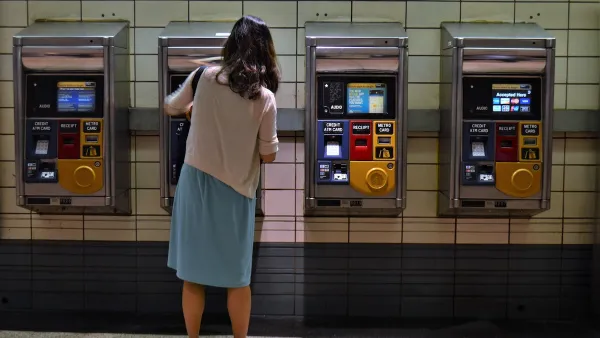
NYC to Raise Transit Fares
The MTA board approved a 10-cent fare increase as part of a plan to increase revenue, claiming the agency loses $1 billion annually to fare evasion.
New York MTA Increases Transit Fares to Fund Capital Investments
The latest fare increase for the Metropolitan Transportation Authority comes against the backdrop of record ridership and a $15 billion funding gap for the system's five-year capital plan.

Planetizen Federal Action Tracker
A weekly monitor of how Trump’s orders and actions are impacting planners and planning in America.

Data reveals that NYC’s bet on congestion pricing has paid off
After almost two years of the program, reports show positive impacts on traffic and air quality and no disruptions to parking.

HUD modernizes 50-year-old manufactured housing framework
The Next Generation Manufactured Housing Action Plan establishes new energy-efficiency standards for manufactured homes, and new guidelines for anchoring them.

Small single-family homes are illegal in most of MA. Voters can change that
Most land zoned for single-family housing in Massachusetts requires at least 40,000 square feet of land per house.

Public steps inside U.S.’s first battery-powered train
Metra’s groundbreaking train feature modern seats and a futuristic battery car.

Companies show off AI technology, new innovation hubs at APTA Expo
Nearly 700 companies attended the American Public Transportation Association’s Expo last week, which happens once every three years.

FREE Course: Walkable City 1: Why Walkability?
After describing his path towards focusing on walkability as the essence of good planning, Jeff Speck marches through his five principal reasons for making more walkable places.
Reinventing Malls: Planning Alchemy—Turning Gray Fields Into Gold
The course focuses on the opportunities and imperatives that shape reinvention of mall sites.

One Hundred Miles
County of Mendocino
planning NEXT
The Architects Foundation
University of Cincinnati Online
Montrose County
Northern Illinois Transit Authority (NITA)
The Pocatello Development Authority