Park planners from Denmark recently toured some of New York's parks and found much to be jealous of.


"To its natives, New York may look like a city on the verge of a nervous breakdown. But to a team of Danes from the Copenhagen parks department, on a grand tour of New York's finest parks this week, everything appeared to be coming up roses. Or at least flowers."
"'In your parks, you have so many more flowers than we do,' said Jon Pape, the director the Copenhagen parks system, gesturing at a spray of burgundy buds in Hunts Point's Riverside Park in the Bronx. 'This is very expensive.'"
"In Copenhagen, flowering plants are particularly hard to maintain because the public parks are without pesticides."
"That Copenhagen could have dirtier parks than New York seems to subvert the natural order of things - next we'll start hearing that the Danes are also pushier in line and are even more insistent that they get better tables whenever they eat out. But the public-private model of funding for parks that has helped New York's green spaces thrive is a harder sell in Denmark, where high taxes quell spontaneous civic donations."
Read the full story: Danes Come Down With a Case of Park Envy

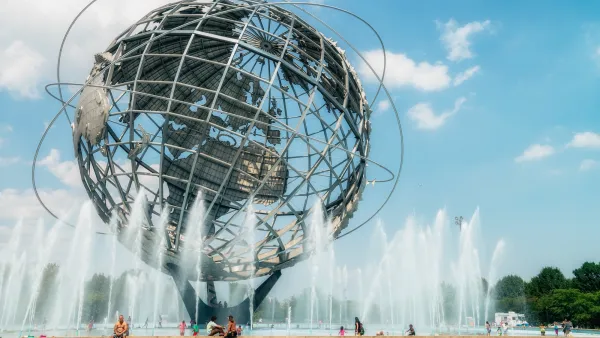
Historic Queens park is getting a $120M upgrade
The borough's largest park will undergo significant upgrades for accessibility, flood mitigation and historic preservation.

Manhattan Waterfront Parking Lot to Become Public Park
A lot that has served as parking for decades will add a much-needed public amenity to the East River waterfront.
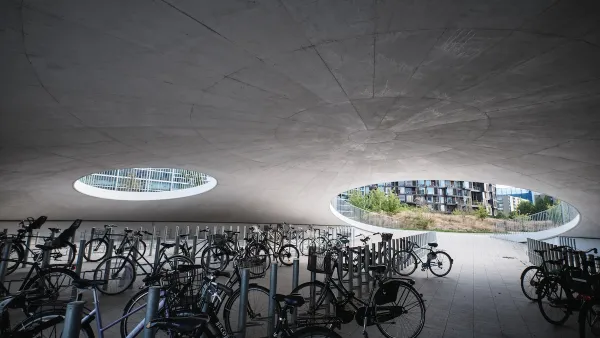
How Copenhagen Became a ‘Sponge City’
The Danish capital is implementing a massive, multi-pronged strategy to build resilience against flooding and shore up water supplies during drought periods.

Planetizen Federal Action Tracker
A weekly monitor of how Trump’s orders and actions are impacting planners and planning in America.

Amtrak, CN end decades-long dispute with eight-year agreement
The new operating agreement establishes an updated framework for the companies to work together, including processes to resolve disputes.

Judges permit Denver to divert 77,000 acre feet from the Colorado River for reservoir expansion
Overuse and climate change have caused the Colorado River’s water levels to plummet.

Atlanta City Council unanimously backs $3.5 billion Beltline light rail project
The resolution was drafted after Atlanta Mayor Andre Dickens pulled support for the Atlanta Streetcar extension last year.

SEPTA to bring nearby frequent transit to over 1 million new riders as part of decade-long plan
The agency's Accelerate plan will also bring frequent transit to twice the amount of jobs that are currently located near it.

NYC plants over 18,000 trees, the most new foliage in a decade
Many of the trees were planted in communities vulnerable to extreme heat.

FREE Course: Walkable City 1: Why Walkability?
After describing his path towards focusing on walkability as the essence of good planning, Jeff Speck marches through his five principal reasons for making more walkable places.
Reinventing Malls: Planning Alchemy—Turning Gray Fields Into Gold
The course focuses on the opportunities and imperatives that shape reinvention of mall sites.

City of Thousand Oaks
City of Wisconsin Rapids
Harvard University Graduate School of Design
The Architects Foundation
University of Cincinnati Online
The Pocatello Development Authority
The Urban Renewal Agency of the City of Pocatello