A proposal to turn part of a 6,000-hectare copper mine into a landfill has just been given the green light for an environmental assessment. The garbage dump would bury 250,000 metric tons of garbage from 25 local communities annually.


"The Highland Valley Copper mine proposal was first made several years ago, when Metro Vancouver was looking for a long-term solution for its garbage-disposal problem. But last spring Metro shifted direction, with a new solid-waste management plan that calls for its garbage to be burned in several waste-to-energy facilities, negating the need for a new landfill.
The mine dump site would have a triple lining as a barrier against seepage, a process for reclaiming methane gas to fuel garbage trucks, and enough capacity to collect garbage for more than 130 years.
The proposal has support from some Indian bands in the area, but not others."
"[Chief David Walkem of Cooks Ferry Indian Band] said Metro Vancouver is showing the right approach by planning to handle its garbage locally, and other communities should do the same."
Read the full story: Open-pit garbage dump idea revived
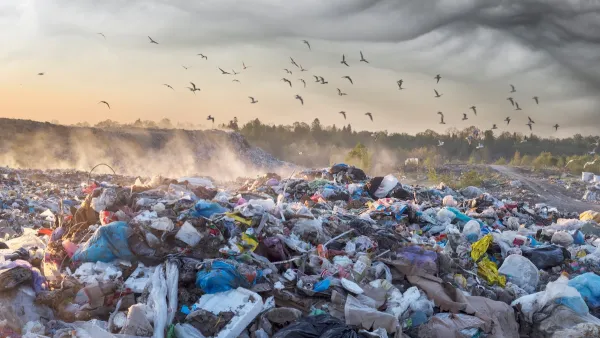
Colorado Landfills Emit as Much Pollution as 1M Cars
Landfills are the third-largest source of methane pollution in Colorado, after agriculture and fossil fuel extraction.
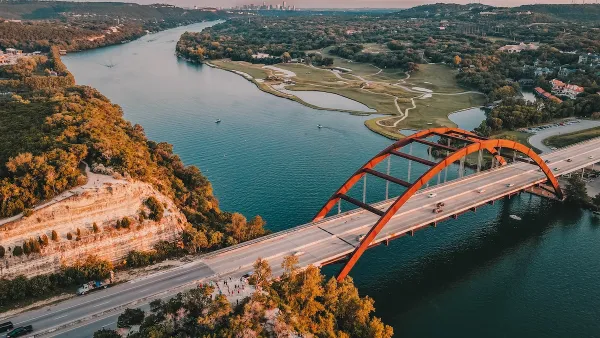
Texas Infrastructure Gets a ‘C’
The American Society of Civil Engineers rates states in 16 categories related to transportation, water, waste management, parks, and more.
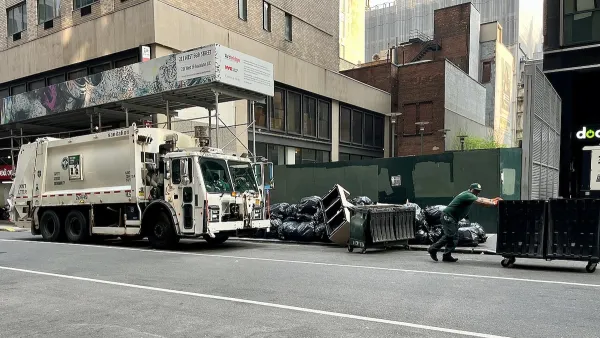
Parked Cars Hamper NYC Trash Containerization Effort
Sanitation workers must manually collect bags from containers blocked by parked cars, slowing a process that is meant to be safer and more efficient.

Planetizen Federal Action Tracker
A weekly monitor of how Trump’s orders and actions are impacting planners and planning in America.

California plans to bury El Niño’s downpour
If the state plays its cards right, it may be able to store a billion acre-feet of El Niño’s water in aquifers.

Desperate measures: Advocates weigh draining Lake Powell to fill Colorado River
Draining the reservoir could reduce evaporation losses by a couple hundred thousand acre-feet.

US buildings threatened, destroyed by fires set to triple by 2060
Researchers found a high fire risk for socioeconomically vulnerable neighborhoods in the American West.

LA residents may be allowed to paint their own crosswalks
Councilwoman Katy Yaroslavsky put out a motion instructing the Los Angeles Department of Public Transportation to study the feasibility of allowing volunteers to paint crosswalks.

Dallas moves to overhaul its zoning code
The city's zoning reform will allow more multi-family and mixed-use developments.

FREE Course: Walkable City 1: Why Walkability?
After describing his path towards focusing on walkability as the essence of good planning, Jeff Speck marches through his five principal reasons for making more walkable places.
Reinventing Malls: Planning Alchemy—Turning Gray Fields Into Gold
The course focuses on the opportunities and imperatives that shape reinvention of mall sites.

City of Rosemead
Rutgers University, Edward J. Bloustein School of Planning and Public Policy
One Hundred Miles
Hunter College, City University of New York (CUNY)
The Architects Foundation
University of Cincinnati Online
City of Cambridge
Montrose County
The Pocatello Development Authority