Midway Airport may become the first U.S. airport to be privatized if the 99-year lease for $2.52 billion is approved by the City Council and F.A.A., following in the footsteps of privatizing the Chicago Skyway toll road in 2005.


"Midway Airport may make airport history as the first airport to be privatized after an investment group composed of two domestic and one Canadian companies bid $2.52 billion to win rights to a long-term lease.
Almost all commercial airports in the United States are owned and operated by local or state governments. However, Midway is eligible for leasing because Chicago applied to the F.A.A. to take part in an experimental program begun about 12 years ago to explore privatization as a means to generate capital for improvements.
As the first privatization of a major American airport, this transaction will provide unprecedented benefits for the traveling public, the airlines and the taxpayers of Chicago," Mayor Richard M. Daley said Tuesday at a news conference here."
Thanks to Mark Boshnack
Read the full story: In Chicago, Private Firm Is to Run Midway Airport
End Of The Infrastructure Privatization Craze
It was hailed as the solution to America's infrastructure spending deficit, but the influx of private funds has come to halt along with the failure of banks and the huge investment from the Recovery Act. Plus, many schemes aroused taxpayers wrath.
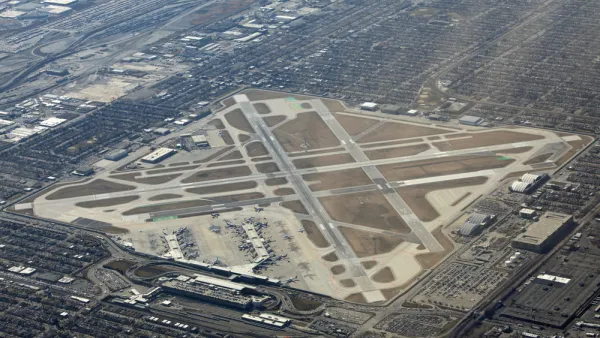
Homes Near Chicago's Midway Airport to Receive Soundproofing
The city of Chicago intends to soundproof more homes this year than any in the 20-year history of the city's soundproofing program, insulating homes from the noise generated by the city's south side airport.
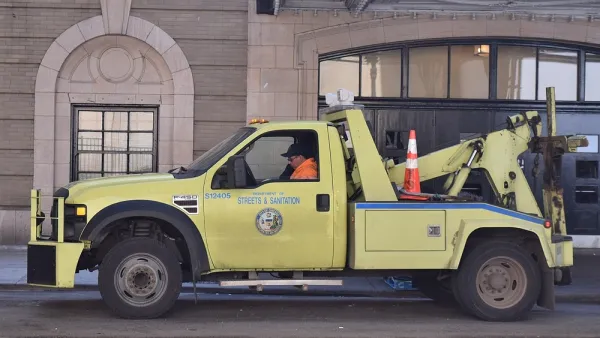
Chicago to Install New Parking Meters to Lessen Impact of Bad Contract
The city of Chicago will install 752 new parking meters in 2017—but still fall far from the Shoupian ideal.

Planetizen Federal Action Tracker
A weekly monitor of how Trump’s orders and actions are impacting planners and planning in America.

California plans to bury El Niño’s downpour
If the state plays its cards right, it may be able to store a billion acre-feet of El Niño’s water in aquifers.

Desperate measures: Advocates weigh draining Lake Powell to fill Colorado River
Draining the reservoir could reduce evaporation losses by a couple hundred thousand acre-feet.

Mamdani’s pied-à-terre tax survives legal challenge
A panel of judges found that the plaintiffs failed to demonstrate injury as a result of New York City's implementation of the tax.

Eastern Nebraska is running out of electricity
Data centers and electrification are straining eastern Nebraska’s grid, throttling economic development.

Seattle passes record-breaking transit services expansion
Proposition 1 will double the city’s transit tax to add 95,000 more bus trips and preserve 180,000 bus trips annually.

FREE Course: Walkable City 1: Why Walkability?
After describing his path towards focusing on walkability as the essence of good planning, Jeff Speck marches through his five principal reasons for making more walkable places.
Reinventing Malls: Planning Alchemy—Turning Gray Fields Into Gold
The course focuses on the opportunities and imperatives that shape reinvention of mall sites.

City of Rosemead
Rutgers University, Edward J. Bloustein School of Planning and Public Policy
One Hundred Miles
University of Michigan School for Environment and Sustainability (SEAS)
Hunter College, City University of New York (CUNY)
The Architects Foundation
City of Cambridge
Montrose County
The Pocatello Development Authority