City Cargo of Amsterdam has developed a fleet of non-polluting vehicles to deliver cargo via the city's unused streetcar tracks. Their aim is to cut the number of trucks going into the city by 50%.


"City Cargo got the idea in 2004, to use these same tram tracks to bring in products through the cities without having to have diesel delivery trucks do all the work. Once in the city, they have a fleet of electric delivery vans (e-cars) that can then take the individual deliveries to their exact destination.
This project alone could take about half the delivery truck traffic off the streets, thus reducing the amount of particulate pollution in the air (sulfur), as well as noise pollution, and just plain 'size' pollution. If we could take about half of the delivery trucks out of our own cities, we could all breathe easier as well as drive our sub-compacts and electric vehicles without worry of becoming a bug splat on some semi's window."
Read the full story: A Lesson from Amsterdam: Reducing Our Transportation Carbon Footprint

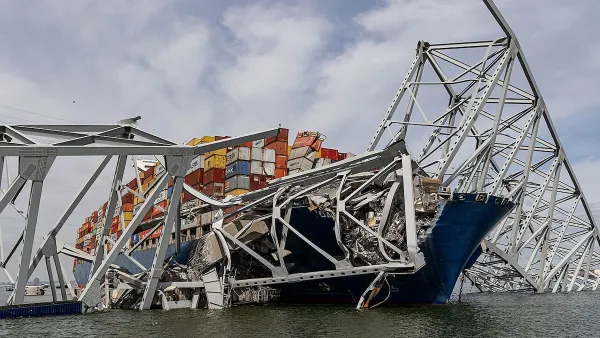
Baltimore Traffic Suffering From Absence of Key Bridge
The loss of a key route to the Port of Baltimore is causing major delays and long detours on alternate routes.
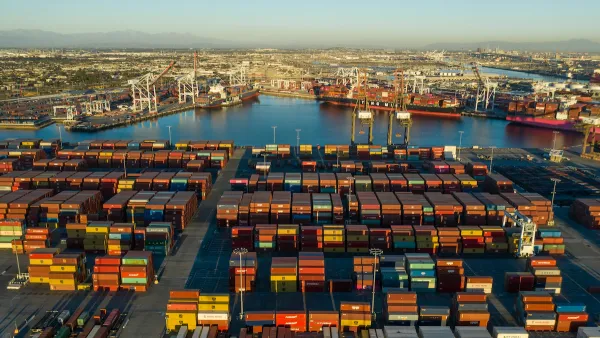
Port of Long Beach Begins Massive Rail Yard Expansion
The project, which will break ground this summer, is expected to dramatically curb emissions from trucking.
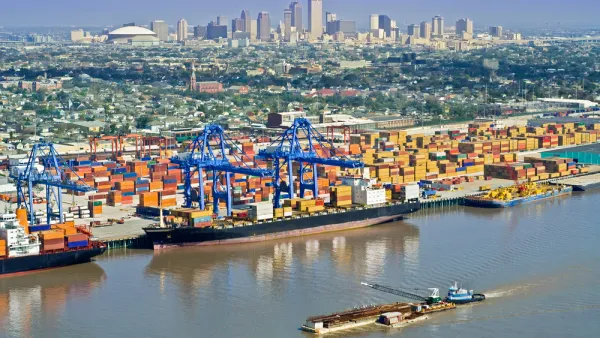
Proposed Legislation Sounds Alarm on Mississippi River Drought
Without concerted restoration efforts, the river’s historically low levels could dramatically impact shipping activities and economic development throughout the region.

Planetizen Federal Action Tracker
A weekly monitor of how Trump’s orders and actions are impacting planners and planning in America.

Amtrak, CN end decades-long dispute with eight-year agreement
The new operating agreement establishes an updated framework for the companies to work together, including processes to resolve disputes.

Judges permit Denver to divert 77,000 acre feet from the Colorado River for reservoir expansion
Overuse and climate change have caused the Colorado River’s water levels to plummet.

Philadelphia to invest $2 billion into upgrading city airports as PHL places last in customer satisfaction
Modernizations to Philadelphia's airports will include baggage system upgrades and a new automated parking garage guidance system.

The LA housing policies making developers turn away from the city
Despite LA’s housing shortage, developers say the city’s "mansion-tax" and pandemic-era policies make it an unappealing place to build housing.

New density bill would require 7 California cities to establish regional transit hubs
The bill would also require major cities in California to permit high-rise residential buildings.

FREE Course: Walkable City 1: Why Walkability?
After describing his path towards focusing on walkability as the essence of good planning, Jeff Speck marches through his five principal reasons for making more walkable places.
Reinventing Malls: Planning Alchemy—Turning Gray Fields Into Gold
The course focuses on the opportunities and imperatives that shape reinvention of mall sites.

City of Wisconsin Rapids
Harvard University Graduate School of Design
KFH Group Inc.
The Architects Foundation
University of Cincinnati Online
The Pocatello Development Authority
The Urban Renewal Agency of the City of Pocatello