Congress is in the midst of discussing whether or not more people ought to be eligible for homeless services. But without any additional funding to go with it, some argue that a broadened definition of homelessness may be unrealistic.


"For more than 20 years, federal housing law has counted as homeless only people living on the streets or in shelters. But now the House and the Senate are considering an expansion of the definition to include people precariously housed: those doubled up with friends or relatives or living day to day in motels, with money and options running out."
"The outcome of the discussions will most likely broaden the categories of people eligible for emergency shelter, housing and other services provided by the Department of Housing and Urban Development's $1.7 billion budget for the homeless, which accounts for most federal spending on homelessness. Bush administration officials support the narrow expansion under consideration in the House.
But none of the bills come with any additional financing. And with too few shelter beds and services available to help the homeless who are already living on the streets, the debate over whether to expand significantly the pool of people eligible for such limited aid has sharply divided advocates for the homeless and upended political alliances."
Read the full story: Capitol Strives to Define ‘Homeless’

LA has no plan — or funding — to help unhoused people displaced by Olympics security efforts
City and county officials say they don't have the funds to offer housing to the up to 1,600 people that will be displaced by perimeters around event venues.
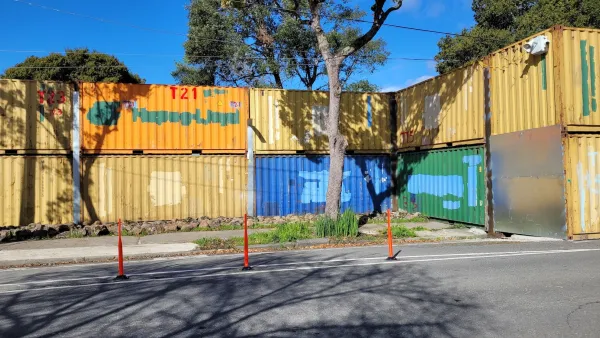
Berkeley promised to build supportive housing in People's Park. Where is it?
More than two years after People's Park was cordoned off, there is no word on a timeline for a promised affordable housing project.
Cleveland program has housed 200 people since 2024
The A Home For Every Neighbor initiative successfully moves people into housing in under two weeks.

Desperate measures: Advocates weigh draining Lake Powell to fill Colorado River
Draining the reservoir could reduce evaporation losses by a couple hundred thousand acre-feet.

Eastern Nebraska is running out of electricity
Data centers and electrification are straining eastern Nebraska’s grid, throttling economic development.

Move over, LA: St. Louis gears up for Olympics, invests millions in downtown redevelopment
The Missouri city will host the 2028 Olympic soccer group stage and knockout matches.

California, Hawaii, Rhode Island approve housing propositions
Hawaii and Rhode Island each approved their sole proposition, while California approved two of its three.

Officials claim feds 'rushed' Amtrak environmental review
Amtrak plans to move their Chicago maintenance facility from an industrial area to a residential one.

NYC breaks ground on anti-flooding infrastructure project
New York City's new system will reduce stormwater flows to local sewers by 90%.

FREE Course: Walkable City 1: Why Walkability?
After describing his path towards focusing on walkability as the essence of good planning, Jeff Speck marches through his five principal reasons for making more walkable places.
Reinventing Malls: Planning Alchemy—Turning Gray Fields Into Gold
The course focuses on the opportunities and imperatives that shape reinvention of mall sites.

City of Rosemead
Rutgers University, Edward J. Bloustein School of Planning and Public Policy
One Hundred Miles
University of Michigan School for Environment and Sustainability (SEAS)
Hunter College, City University of New York (CUNY)
The Architects Foundation
City of Cambridge
Montrose County
The Pocatello Development Authority