The "Transition Towns" movement -- a grassroots initiative to develop local energy and economic self-reliance -- is gathering momentum, especially in the UK.


"The Transition Town movement has grown from a classroom idea to a sprawling international network, which many think holds some of the answers to our environmental problems.
The idea behind transition towns is simple: if you have no faith that governments will take meaningful action on climate change and 'peak oil', then you can come together as a community to do something about it.
Communities...[commit] to break free from oil addiction and move, over a period of 10 to 20 years, from a high-carbon economy to a low one. Transition Network, the coordinating body, cheerfully states that it has no idea if it will work. 'It is a social experiment on a massive scale,' says its website. But it presents communities with a 12-step guide to a low-carbon economy. Step one is to set up a steering committee to take the project forward. Steps two to 11 are about raising awareness, setting up working groups to discuss topics such as food and fuel, and liaising with local government. Step 12 sees the creation of a unique energy action plan."
Read the full story: A peak into the future


Planetizen Federal Action Tracker
A weekly monitor of how Trump’s orders and actions are impacting planners and planning in America.

‘Going backwards:’ Baltimore mayor, students rally against state's transit funding plan
Maryland's proposed six-year plan provides no funding for Baltimore’s BMORE bus program and reduces its road maintenance funding.
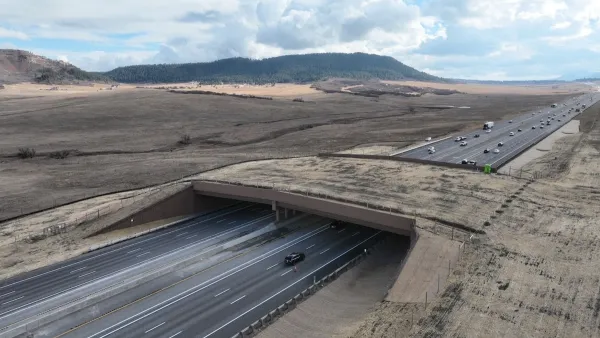
Record-breaking wildlife overpass in Colorado brings 91% reduction in animal collisions
Prior to the overpass, vehicles were hitting one deer per day on Colorado’s Interstate 25.

Mamdani sent nearly 6,000 pied-à-terre tax warnings to homes that didn’t qualify
A judge has ordered the administration to cancel thousands of pied-à-terre tax notices after it sent 35% of them erroneously.

Detroit to transform waterfront with $2.2 billion investment
Developers will convert about 18 acres of unused parking lot space into civic spaces.

‘Going backwards:’ Baltimore mayor, students rally against state's transit funding plan
Maryland's proposed six-year plan provides no funding for Baltimore’s BMORE bus program and reduces its road maintenance funding.

FREE Course: Walkable City 1: Why Walkability?
After describing his path towards focusing on walkability as the essence of good planning, Jeff Speck marches through his five principal reasons for making more walkable places.
Reinventing Malls: Planning Alchemy—Turning Gray Fields Into Gold
The course focuses on the opportunities and imperatives that shape reinvention of mall sites.

City of Thousand Oaks
City of Wisconsin Rapids
Harvard University Graduate School of Design
The Architects Foundation
University of Cincinnati Online
Northern Illinois Transit Authority (NITA)
The Pocatello Development Authority
The Urban Renewal Agency of the City of Pocatello