Tokyo finds solution to commuter bicycle parking shortage by building high-tech robotic garages.


With more than 700,000 people riding bikes everyday, the most populous metropolitan area in the world with 35 million people, greater Tokyo is facing a serious bicycle parking shortage. With the world's largest system of commuter trains and subways, Tokyo's bike parking deficit is especially acute around stations.
The city recently built a high-tech underground parking facility for bikes at one of its busiest stations. Commuters coming into the station can now push a button at one of the designated elevators, and when the door opens, they can trust their bicycle to a giant robotic hand that takes hold of the bike and takes it to the underground garage where it is safely parked and stored by machines. It takes approximately ten seconds for the bicycle to be returned to the commuter.
The cost to users is only $18 a month. The parking contains space for more than 9,000 bikes and is at full capacity almost daily. Since the project started there has been a 20% increase in neighborhood biking.
Thanks to Andrea Limauro
Read the full story: Tokyo's High-Tech Bike Storage Solution
Best Ideas of the Week
Another week has passed, and some more exciting and interesting ideas have taken root in the world of urban planning.
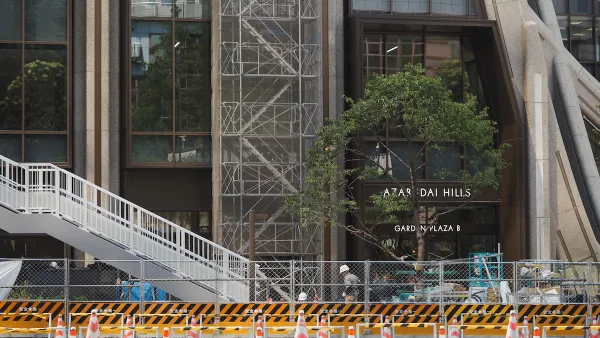
A New Tallest Skyscraper for Japan
The Toranomon-Azabudai reaches 330 meters into the sky, far lower than international standards but taller by 30 meters than the previous tallest building in Japan.
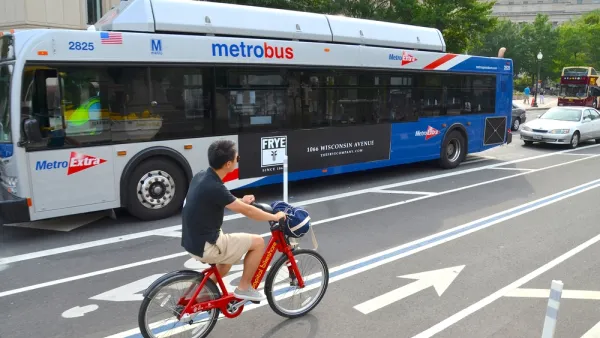
In D.C., Employers Will Refund Workers Who Leave the Car at Home
D.C. has passed a "parking cash-out" law that goes further than a few preexisting examples to reward commuters who leave their cars at home.

Planetizen Federal Action Tracker
A weekly monitor of how Trump’s orders and actions are impacting planners and planning in America.

California plans to bury El Niño’s downpour
If the state plays its cards right, it may be able to store a billion acre-feet of El Niño’s water in aquifers.

Desperate measures: Advocates weigh draining Lake Powell to fill Colorado River
Draining the reservoir could reduce evaporation losses by a couple hundred thousand acre-feet.

Los Angeles just elected an urban planner as its mayor
Transportation analysts are optimistic that Raman will be more aggressive in addressing transit issues than Bass.

Mamdani’s pied-à-terre tax survives legal challenge
A panel of judges found that the plaintiffs failed to demonstrate injury as a result of New York City's implementation of the tax.

Eastern Nebraska is running out of electricity
Data centers and electrification are straining eastern Nebraska’s grid, throttling economic development.

FREE Course: Walkable City 1: Why Walkability?
After describing his path towards focusing on walkability as the essence of good planning, Jeff Speck marches through his five principal reasons for making more walkable places.
Reinventing Malls: Planning Alchemy—Turning Gray Fields Into Gold
The course focuses on the opportunities and imperatives that shape reinvention of mall sites.

City of Rosemead
Rutgers University, Edward J. Bloustein School of Planning and Public Policy
One Hundred Miles
University of Michigan School for Environment and Sustainability (SEAS)
Hunter College, City University of New York (CUNY)
The Architects Foundation
City of Cambridge
Montrose County
The Pocatello Development Authority