San José, California, after decades of sprawl that left the region one of the least-dense cities in the state, is on track to densify their underused areas. As one planner put it, "The decision was, let's not build out anymore, let's build up."


"Strip malls and low-rise office parks dominate the landscape of northern San Jose, but a long-term redevelopment plan could make over large swaths of the area along decidedly more urban lines.
Over the next three decades, the city wants to add more than 30,000 new homes and 80,000 jobs within walking distance of a Santa Clara Valley Transportation Authority light-rail line on North First Street.
Planners, architects and environmentalists applauded the approach during a tour Saturday of recent developments exemplifying the model in the area. They argued that compact and transit-oriented building is among the most effective means of reducing driving, cutting greenhouse gas emissions and creating better functioning cities."
Thanks to Center for Transit-Oriented Development
FULL STORY: San Jose leaders try to reverse urban sprawl


Nearly a third of US housing is in the wildland-urban interface — and at growing risk of wildfire
As suburbs increasingly mingle with undeveloped land, homes face a higher risk from destructive fires.
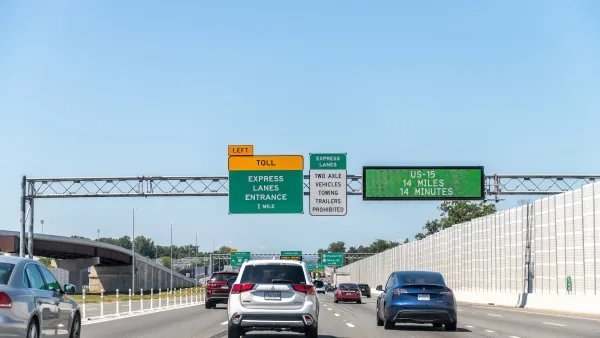
Congestion Costing Reality Check, Part 2: A congestion costing critique
There are good reasons to be skeptical of highway industry claims that traffic congestion is a growing problem. Their analysis is often incomplete and biased. Let’s pull back the curtain on some major congestion cost studies.
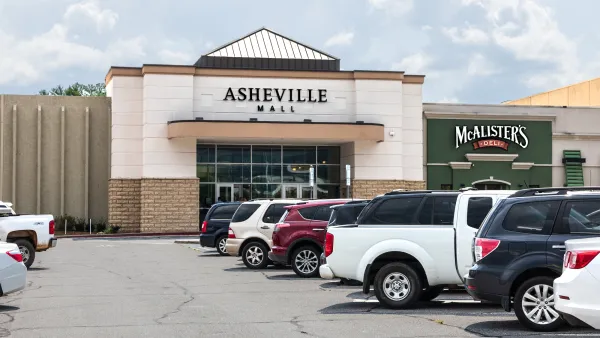
Asheville reconsiders parking minimums as surface parking eats up over a third of downtown real estate
Housing advocates say parking requirements are unnecessary and induce sprawl.

Planetizen Federal Action Tracker
A weekly monitor of how Trump’s orders and actions are impacting planners and planning in America.

The state-sanctioned urbicide of Austin
People don’t kill cities. Freeways do.

US to reduce Colorado River water deliveries to Mexico
A new Colorado Treaty amendment reduces Mexico’s Colorado River water allocation by 250,000 acre feet.

5 New England states march closer to 800 megawatt wind energy project
Securing federal approval for the project may be complicated under the Trump administration, which has historically been hostile towards domestic wind power.

Baltimore to break ground on $50 million Transit Priority Project
The project will bring faster bus trips, safer streets and better bike connections to Baltimore.

Airbnb launches $250 million 'last-dollar financing' housing accelerator, makes first investment in Austin
The company will put $6.4 million towards affordable housing development in Texas’ capital.

FREE Course: Walkable City 1: Why Walkability?
After describing his path towards focusing on walkability as the essence of good planning, Jeff Speck marches through his five principal reasons for making more walkable places.
Reinventing Malls: Planning Alchemy—Turning Gray Fields Into Gold
The course focuses on the opportunities and imperatives that shape reinvention of mall sites.

Eagle County Government
Harvard University Graduate School of Design
Nashville Planning Department
The Architects Foundation
University of Cincinnati Online
The Pocatello Development Authority
The Urban Renewal Agency of the City of Pocatello
Journal of the American Planning Association