The city of Austin considers a multi-billion dollar investment in a "biomass" power plant, burning wood waste in East Texas as a carbon-neutral, renewable energy source.


"The city-run utility is on the verge of going forward with a $2.3 billion, 20-year contract for the power that includes paying for the construction of the plant, which will be fueled by wood waste.
Officials with Austin Energy say the contract could lower the average residential customer's bill as much as $1.50 or raise it as much as $2.50 per month once the plant comes online in 2012, depending on future regulation, government incentives and fluctuations in the price of traditional fuels. They did not provide rate estimates beyond 2012.
Also lingering are questions about the plant's effect on air and water quality and whether there is enough wood waste near the plant near Sacul, north of Nacogdoches, to fuel it.
Austin Energy is interested in biomass power because the plants are considered carbon-neutral. The contract would also be a hedge on traditional fuel prices, officials said: They say the price of biomass fuel, once transportation to the plant is factored in, is comparable to that of natural gas. But having a 20-year contract would make that price more stable than natural gas prices, officials said."
Read the full story: Austin's biomass power plans raise questions

The Big Divide Between Big and Little Oil on the New Climate-Energy Law
President Joe Biden signed what he called “one of the most significant laws in our history” last Tuesday. The energy provisions in the law that benefit oil and gas extraction exposed different perspectives within the industry on the law.
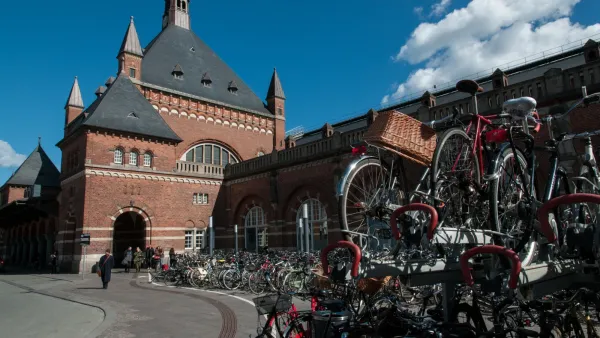
Copenhagen Strives to Be Carbon Neutral by 2025
The Danish capital has an ambitious goal to be the world’s greenest and most bike-friendly city, and it is taking big steps to make that happen soon.
A Carbon-Neutral City?
A region known more for carbon emissions strives to create a carbon-neutral city powered by renewable energy and designed to reduce overall energy demand.

Washington state to charge fee to drivers with fuel-efficient cars
Revenue from the fee will go towards supporting the state’s highways.

Illinois considers spending $1 billion in taxpayer money on data center
A quantum computing campus and data center are currently under construction in Chicago.

Trump to blast ‘hydrocarbon highway’ through ‘world’s longest art gallery’
Environmental and historic preservation groups are suing to stop the project.

NYC, state sue feds over mixed-immigration-status housing assistance rule
The state’s lawsuit argues that the rule change violates the Administrative Procedure Act.

Michigan to turn neighborhood into virtual power plant
Residents will soon be able to divert their excess energy to the grid in exchange for compensation.

Data center, mining project swarm to long-awaited Alaska railroad line
The state-owned railroad approved final plans for the spur line this week; the project is expected to cost $311 million, mostly funded by the federal government

FREE Course: Walkable City 1: Why Walkability?
After describing his path towards focusing on walkability as the essence of good planning, Jeff Speck marches through his five principal reasons for making more walkable places.
Reinventing Malls: Planning Alchemy—Turning Gray Fields Into Gold
The course focuses on the opportunities and imperatives that shape reinvention of mall sites.

City of Charlotte
City of Rosemead
Rutgers University, Edward J. Bloustein School of Planning and Public Policy
University of Michigan School for Environment and Sustainability (SEAS)
Hunter College, City University of New York (CUNY)
The Architects Foundation
University District Partnership