Harlem is undergoing a rapid change in terms of demographics and income levels. One real estate broker is at the front of driving this change, and many in the neighborhood are not happy about it. But is this change avoidable?


"All you need to know about the current backlash against Harlem's gentrification, Suggs says, comes down to the happy campers who bought at the right time and the stupid people who didn't. Those who didn't buy, she says, are just jealous, and Suggs never seems to miss a chance to rub it in-even if they're black."
"But what about the people who would like Harlem to stay mainly black, I ask, even if it wasn't always that way?"
"Suggs shuts her eyes and shakes her head. 'You don't have a God-given right to own your house till the end of time,' she says, 'unless you actually own your house. We're not talking about a country like Italy that's for Italians. We're talking about a neighborhood in the United States of America. There's nothing that says Harlem has to be black!'"
"No part of New York has changed more dramatically during the recent historic real-estate boom than Harlem, and no broker has done more to drive that change than Willie Kathryn Suggs."
"Critics say she has wantonly driven up real-estate prices until no one but the richest Harlemites could afford them and, worse, delivered much of the neighborhood into the hands of wealthy whites. Now every new sale she rings up seems to raise a pair of uncomfortable questions: Should Harlem be preserved forever as an affordable haven for blacks? Or should it be sold to the highest bidder?"
FULL STORY: Whose Harlem Is It?

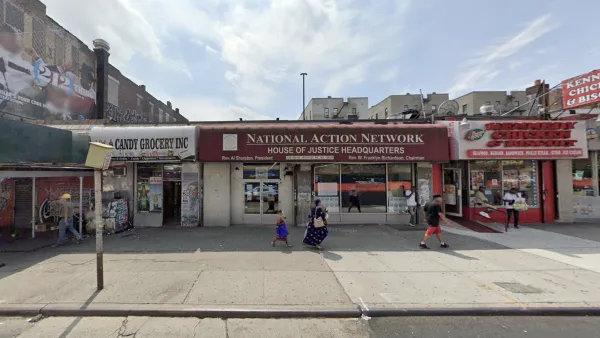
Market Rate Condos Could Replace Harlem Towers Proposal
After facing community opposition and a call for more deeply affordable housing units, developers withdrew their proposal for Harlem’s One45, prompting questions about the future of the site.
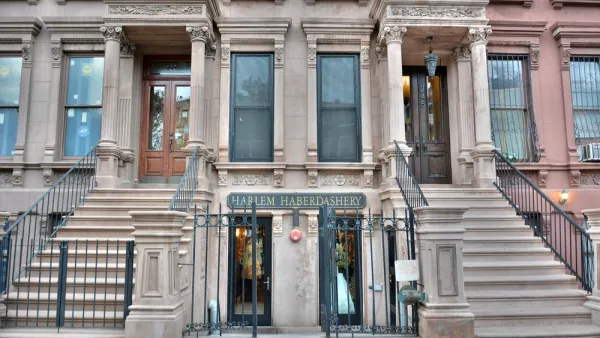
The Langston Hughes House and a Gentrifying Harlem
Artists and community members seek to preserve the culture and identity of Harlem amid the growing popularity and expense of housing in their community and all over New York.
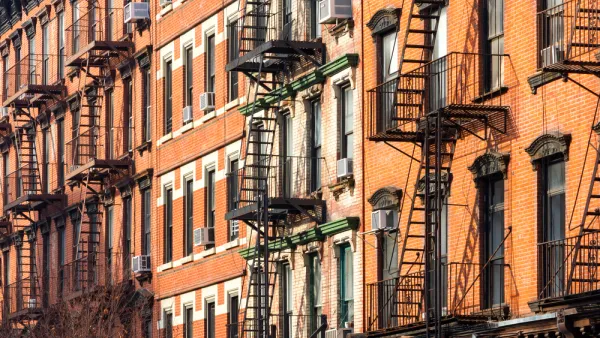
One Fourth of East Harlem Housing Set to Lose Affordability
The area could lose up to 500 units of affordable housing every year for the next 30 years if the city doesn't extend existing protections.

Planetizen Federal Action Tracker
A weekly monitor of how Trump’s orders and actions are impacting planners and planning in America.

The state-sanctioned urbicide of Austin
People don’t kill cities. Freeways do.

US to reduce Colorado River water deliveries to Mexico
A new Colorado Treaty amendment reduces Mexico’s Colorado River water allocation by 250,000 acre feet.

LA Metro’s ultimatum: no extra buses for LA28 if federal funding isn’t imminently secured
If Metro does not provide additional buses, LA28 organizers will have to find a new way to manage Olympic traffic. LA28’s budget does not include a line item for transit.

Colorado’s Largest Data Center Could Rise Next to Homes — Without a Public Hearing
The proposed campus would consume 11 times the power of Denver International Airport; as it has across the country, opposition mounts.

5 New England states march closer to 800 megawatt wind energy project
Securing federal approval for the project may be complicated under the Trump administration, which has historically been hostile towards domestic wind power.

FREE Course: Walkable City 1: Why Walkability?
After describing his path towards focusing on walkability as the essence of good planning, Jeff Speck marches through his five principal reasons for making more walkable places.
Reinventing Malls: Planning Alchemy—Turning Gray Fields Into Gold
The course focuses on the opportunities and imperatives that shape reinvention of mall sites.

Eagle County Government
Harvard University Graduate School of Design
Nashville Planning Department
The Architects Foundation
University of Cincinnati Online
The Pocatello Development Authority
The Urban Renewal Agency of the City of Pocatello
Journal of the American Planning Association