Cities like San José, CA are moving away from modern methods to keep grass down and going back to traditional methods like grazing sheep and goats.


"It is the year of weed-snackers rather than weed-whackers. As a way of controlling invasive vegetation and renewing the land, the ancient idea of using sheep and goats is finding renewed favor. In Northern California alone, at least 10 companies compete for the business."
Living Systems Land Management of San Francisco is one of those firms, and a supplier to the City of San José.
"A spokeswoman for Living Systems, Charlotte Lewis, who happens to be Jared's mother, says the company - which rents animals from farmers - used herds on 100 acres last year. This year, they expect the acreage to exceed 300.
Twenty-six of those acres belong to the Mineta San Jose International Airport. If you take De La Cruz Boulevard south from Highway 101, you can see the goats and sheep on the right. They're expected to be on the job until mid-June, chewing through a couple of acres a day. Total cost to the city: $11,700.
"It's a nice thing to brighten your morning to see a flock of sheep out there next to a piece of radar equipment," said airport spokesman David Vossbrink. "It's a reminder that you don't have to have the latest technology to solve a problem.""
Read the full story: Sheep, goats get down to grass tacks
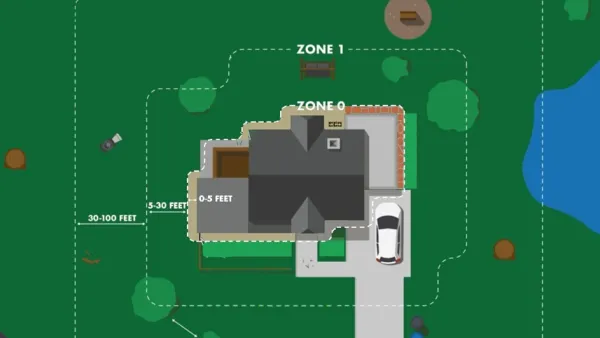
California implements strict new landscaping rules for residents in fire-prone areas
The new rules ban plants within one foot of homes and do not allow landowners to attach wooden fences to their homes.

Creating Ocean-Safe Plastic from Seashells
USC researchers have created a biodegradable, marine-safe plastic alternative using calcium carbonate from seashells, offering a promising solution to ocean pollution.
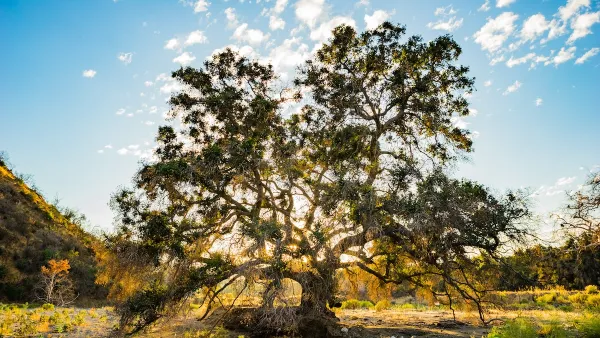
Rethinking Wildfire Defense: How a Landscape Approach Can Protect Neighborhoods
Post-fire analysis of the Eaton Fire reveals that a landscape approach — including fire-resistant vegetation, home hardening, and strategic planning — can help reduce wildfire risk, challenging assumptions that trees and plants are primary fire hazards.

Planetizen Federal Action Tracker
A weekly monitor of how Trump’s orders and actions are impacting planners and planning in America.

California plans to bury El Niño’s downpour
If the state plays its cards right, it may be able to store a billion acre-feet of El Niño’s water in aquifers.

Desperate measures: Advocates weigh draining Lake Powell to fill Colorado River
Draining the reservoir could reduce evaporation losses by a couple hundred thousand acre-feet.

Los Angeles just elected an urban planner as its mayor
Transportation analysts are optimistic that Raman will be more aggressive in addressing transit issues than Bass.

Mamdani’s pied-à-terre tax survives legal challenge
A panel of judges found that the plaintiffs failed to demonstrate injury as a result of New York City's implementation of the tax.

Eastern Nebraska is running out of electricity
Data centers and electrification are straining eastern Nebraska’s grid, throttling economic development.

FREE Course: Walkable City 1: Why Walkability?
After describing his path towards focusing on walkability as the essence of good planning, Jeff Speck marches through his five principal reasons for making more walkable places.
Reinventing Malls: Planning Alchemy—Turning Gray Fields Into Gold
The course focuses on the opportunities and imperatives that shape reinvention of mall sites.

City of Rosemead
Rutgers University, Edward J. Bloustein School of Planning and Public Policy
One Hundred Miles
University of Michigan School for Environment and Sustainability (SEAS)
Hunter College, City University of New York (CUNY)
The Architects Foundation
City of Cambridge
Montrose County
The Pocatello Development Authority