Dermot Finch of the Centre for Cities, an independent research group, says that the U.S. could learn a lot from the U.K.'s urban renaissance.


"The decline of British industry after World War II saw UK cities and towns riddled with social and economic deprivation, and largely neglected by central government.
In recent years - starting with Michael Heseltine's city development initiatives under the Conservative government of the 1980s, UK cities have basked in the attention of senior ministers. Tony Blair's Social Exclusion Unit, Gordon Brown's target to reduce child poverty and John Prescott's expert Urban Task Force attest to a concentrated effort to help cities improve after a lengthy period of economic and industrial decline.
Ex-industrial cities like Leeds and Sheffield have seen jobs growth of 15% and 25% respectively in a single decade. Who would have thought 10 years ago that Liverpool, the European Capital of Culture, would be welcoming its two millionth visitor so far this year? That Gateshead would be hosting the Conservative Party's 2008 spring conference?
There has been no equivalent high-profile championing of urban development and regeneration by the US government in recent years - American cities have been missing out."
Read the full story: What the UK can teach US cities

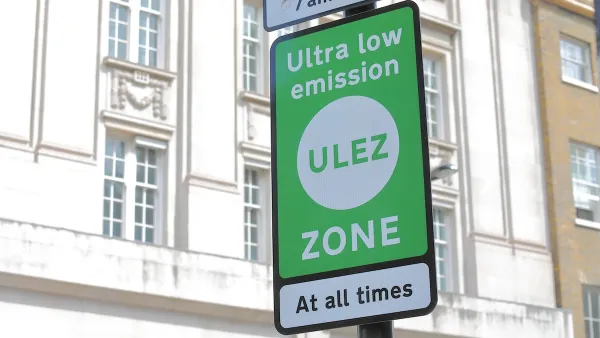
Study: London ULEZ Rapidly Cleaning up Air Pollution
Expanding the city’s ultra low-emission zone has resulted in dramatic drops in particle emissions in inner and outer London.
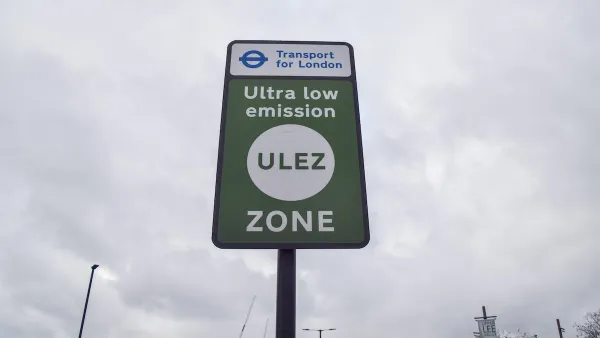
London Congestion Pricing Zone Has No Impact on Local Spending
The city’s cordon pricing scheme did not affect how much people spent at local businesses, new research finds.

Watch Out for Green Class Backlash
Low emission zones, like that implemented in London, face backlash from critics on all sides of the political spectrum for impacting the poorest drivers and putting a burden on small businesses.

Planetizen Federal Action Tracker
A weekly monitor of how Trump’s orders and actions are impacting planners and planning in America.

California plans to bury El Niño’s downpour
If the state plays its cards right, it may be able to store a billion acre-feet of El Niño’s water in aquifers.

Desperate measures: Advocates weigh draining Lake Powell to fill Colorado River
Draining the reservoir could reduce evaporation losses by a couple hundred thousand acre-feet.

In Texas, data centers are swallowing promised parkland
Residents who moved to Taylor, Texas for a rural community now have to contend with three data centers in their backyard.

How a Chicago-sized wind farm beat the odds and powered on
The project spanned five presidential administrations and a standoff with a U.S. military base.

MTA gives itself 30 days to transform pit into basketball court
The site has been under construction since 2022; the city originally estimated it would finish the court in 2024.

FREE Course: Walkable City 1: Why Walkability?
After describing his path towards focusing on walkability as the essence of good planning, Jeff Speck marches through his five principal reasons for making more walkable places.
Reinventing Malls: Planning Alchemy—Turning Gray Fields Into Gold
The course focuses on the opportunities and imperatives that shape reinvention of mall sites.

City of Rosemead
Rutgers University, Edward J. Bloustein School of Planning and Public Policy
One Hundred Miles
Hunter College, City University of New York (CUNY)
The Architects Foundation
University of Cincinnati Online
City of Cambridge
Montrose County
The Pocatello Development Authority