A remnant of Robert Moses' famous push to raze neighborhoods and build highways in their place, the Sheridan Expressway is ripe for revitalization. A local advocate believes that now "the stars are aligned" for it to happen.


"South Bronx residents have fought for a decade to cast off the shadow of Robert Moses' Sheridan expressway -- a 1.25-mile, little-used stretch of highway locally known as "the highway to nowhere." In its place they aim to build more than 1,000 sustainable and affordable apartments, greenways, parks, resident services and progressive businesses that will offer living-wage, long-term jobs to Bronx residents in the city's burgeoning "green industry" to Bronx residents.
One of Moses' few projects that never reached full fruition, the Sheridan Expressway carries an average of 37,000 cars a day (to compare, on any given day, approximately five times as many cars traverse the nearby Cross Bronx Expressway). Construction on the Sheridan began in 1958, and Moses named the road for his good friend, the Bronx commissioner of public works, Arthur V. Sheridan, who died in a car accident in 1952. Determined to provide yet another option for drivers traveling between New York City and New England, Moses originally envisioned the Sheridan to continue four miles north from the Cross Bronx Expressway through the New York Botanical Gardens and the Bronx Zoo, to the New England Thruway. In one of the first of several defeats that eventually ended Moses' reign, advocates for the gardens and the zoo blocked his plan. This was good news for the city, but the South Bronx was left with the redundant stub of an expressway that connects the Cross Bronx to the Bruckner -- a purpose already served by parallel stretches of the Major Deegan Expressway and the Bronx River Parkways."
Read the full story: A Community Plan for the 'Highway to Nowhere'
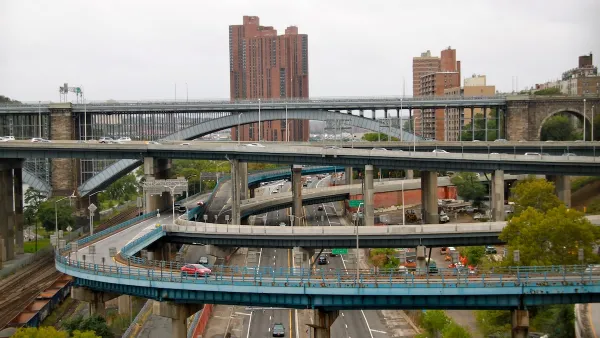
New York Scraps Cross Bronx Highway Expansion
In the wake of community opposition, the state DOT says it no longer plans to add a “traffic diversion” that would have added an elevated roadway next to the CBX.
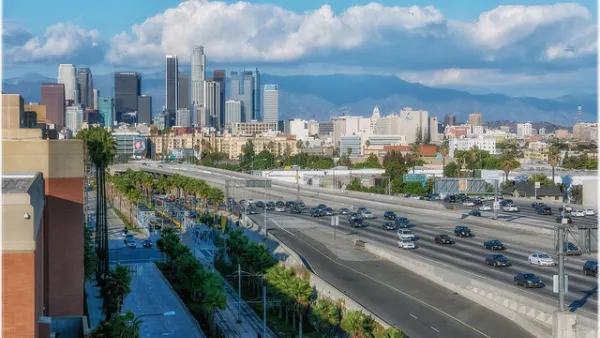
In Building Homes Near Highways, L.A. Ignores a Public Health Issue
Los Angeles seems primed for a development boom, but when developments are built near highways there can be serious health consequences.
Revisiting the Legacy of Robert Moses
A visit from the Dutch Prime Minister Mark Rutte to see Robert Caro, author of "The Power Broker," provides a refresher on the works of Robert Moses and Caro's writing.

Planetizen Federal Action Tracker
A weekly monitor of how Trump’s orders and actions are impacting planners and planning in America.

California plans to bury El Niño’s downpour
If the state plays its cards right, it may be able to store a billion acre-feet of El Niño’s water in aquifers.

Desperate measures: Advocates weigh draining Lake Powell to fill Colorado River
Draining the reservoir could reduce evaporation losses by a couple hundred thousand acre-feet.

US buildings threatened, destroyed by fires set to triple by 2060
Researchers found a high fire risk for socioeconomically vulnerable neighborhoods in the American West.

LA residents may be allowed to paint their own crosswalks
Councilwoman Katy Yaroslavsky put out a motion instructing the Los Angeles Department of Public Transportation to study the feasibility of allowing volunteers to paint crosswalks.

Dallas moves to overhaul its zoning code
The city's zoning reform will allow more multi-family and mixed-use developments.

FREE Course: Walkable City 1: Why Walkability?
After describing his path towards focusing on walkability as the essence of good planning, Jeff Speck marches through his five principal reasons for making more walkable places.
Reinventing Malls: Planning Alchemy—Turning Gray Fields Into Gold
The course focuses on the opportunities and imperatives that shape reinvention of mall sites.

City of Rosemead
Rutgers University, Edward J. Bloustein School of Planning and Public Policy
One Hundred Miles
Hunter College, City University of New York (CUNY)
The Architects Foundation
University of Cincinnati Online
City of Cambridge
Montrose County
The Pocatello Development Authority