Celebrated for its livability and character, the city is increasingly unaffordable to the very people who gave Seattle its funky vibe.


"Can Seattle really claim to be a livable city when the median home value is half a million dollars and so many who live here feel they may not be able to anymore?
"We live in the same place as the richest person in the world, and that's pretty unique," says [Aaron] Cone, 35. But with the area's wealth comes a trade-off for anyone whose name is not Bill Gates.
"I'm just glad I was able to buy a house," Cone says. "I feel like I just kind of squeaked in."
Whether Seattle has reached a tipping point is an open question, but for people like Cone it's a burning one.
A Seattle native and the child of artists, he grew up in the thick of things, hanging out at Pike Place Market, catching $1.50 movies at the old Coliseum Theater on Fifth Avenue.
Cone would go on to co-own World Pizza on Lenora Street between Second and Third avenues, a cult favorite with the same hipster clientele that made nearby establishments like the Crocodile Café popular stops on the then-burgeoning Belltown nightlife circuit in the early 1990s.
People who were fretting about the city's high cost of living in those days - as many who were watching districts like Belltown and Capitol Hill begin their rise to hipness did - surely had no idea how good they had it.
Today the old World Pizza location is a Starbucks, the Coliseum is a Banana Republic, the Crocodile has closed and Cone has fled the city center.
Cone and his former girlfriend, Alyssa Stevens, started an antiques business specializing in estate-sale items eight years ago. They opened in Pioneer Square, but moved the business to the industry-fringed Georgetown neighborhood last year to escape the district's parking woes and high rents.
Entrepreneurs like Cone, creative types and everyday workers are all hoping to make a stand on the cheaper fringes of the city to prevent being pushed out altogether. For some, that tipping point is dangerously close.
When asked about affordability in Seattle, the first thing Georgetown Records saleswoman Tina Forbes says is the story of so many who are disoriented and frustrated by the fast pace of change here: "I'm getting ready to leave - Portland, man!"
"We just keep getting pushed farther and farther south," Forbes says of people like her who've dealt with rising rents and apartments going condo, which has happened to her twice already."
Read the full story: Priced Out: Fleeing Seattle's costly core, they live on the edge
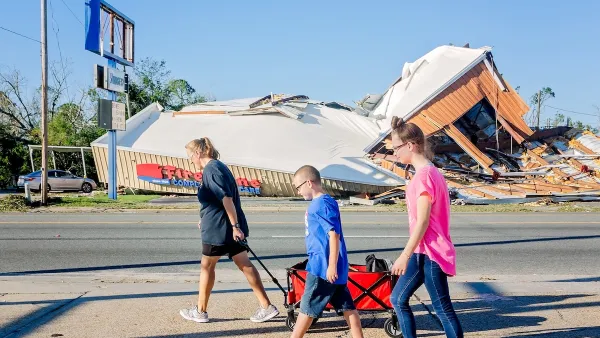
How ‘post-disaster gentrification’ alters neighborhoods after natural calamities
After hurricanes, fires or other calamities, the original residents of a community are often replaced by younger, wealthier residents.
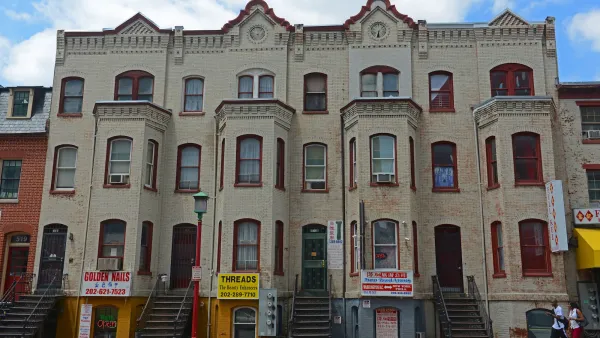
Is this the first wave of de-gentrification?
Valencia, Temescal, H Street and the fickle fortunes of the gentrified neighborhood.
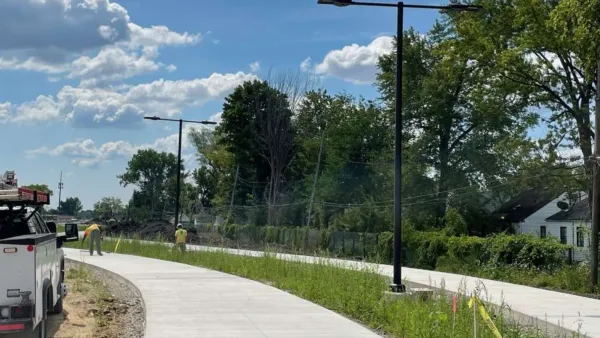
Detroit greenway brings revival — and fears of displacement
The planned Joe Louis Greenway is already bringing change to the neighborhoods near it.

Planetizen Federal Action Tracker
A weekly monitor of how Trump’s orders and actions are impacting planners and planning in America.

California plans to bury El Niño’s downpour
If the state plays its cards right, it may be able to store a billion acre-feet of El Niño’s water in aquifers.

Desperate measures: Advocates weigh draining Lake Powell to fill Colorado River
Draining the reservoir could reduce evaporation losses by a couple hundred thousand acre-feet.

Mamdani’s pied-à-terre tax survives legal challenge
A panel of judges found that the plaintiffs failed to demonstrate injury as a result of New York City's implementation of the tax.

Eastern Nebraska is running out of electricity
Data centers and electrification are straining eastern Nebraska’s grid, throttling economic development.

Seattle passes record-breaking transit services expansion
Proposition 1 will double the city’s transit tax to add 95,000 more bus trips and preserve 180,000 bus trips annually.

FREE Course: Walkable City 1: Why Walkability?
After describing his path towards focusing on walkability as the essence of good planning, Jeff Speck marches through his five principal reasons for making more walkable places.
Reinventing Malls: Planning Alchemy—Turning Gray Fields Into Gold
The course focuses on the opportunities and imperatives that shape reinvention of mall sites.

City of Rosemead
Rutgers University, Edward J. Bloustein School of Planning and Public Policy
One Hundred Miles
University of Michigan School for Environment and Sustainability (SEAS)
Hunter College, City University of New York (CUNY)
The Architects Foundation
City of Cambridge
Montrose County
The Pocatello Development Authority