The developer of the Tejon Ranch agreed to a plan to put permanent conservation easements on almost 375 square miles of ranch lands and wilderness 60 miles north of Los Angeles, in exchange for rights to develop 10 percent of its land holdings.


"Almost 90 percent of one of Southern California's best-known ranches - long the property of one of the state's best-known newspaper families - will be kept permanently free of development under the terms of a deal announced on Thursday between the ranch corporation and five major conservation organizations.
"This is the Holy Grail of conservation in California," said Joel Reynolds of the Natural Resources Defense Council. Bill Corcoran, the senior regional representative of the Sierra Club, added that the property, known as the Tejon Ranch, which reaches from the firs of the southern Sierra Nevada across the dry Tehachapi Mountains and west to the coastal range, "is the keystone for protecting Southern California's natural legacy."
In return for the commitment to allow easements on roughly 240,000 acres, the groups, including the Sierra Club, Audubon California and the Natural Resources Defense Council, will give up their opposition to industrial, resort and residential development on another 30,000 acres near Interstate 5.
The agreement brings to an end a standoff between Tejon Ranch, a publicly traded company formed after the Chandler family heirs, onetime owners of The Los Angeles Times, sold the land more than a decade ago, and conservation groups that wanted to prevent the ranchland, with its varied ecosystems, from becoming part of the sprawl of greater Los Angeles."
Read the full story: Major Deal Preserves Ranch Land in California

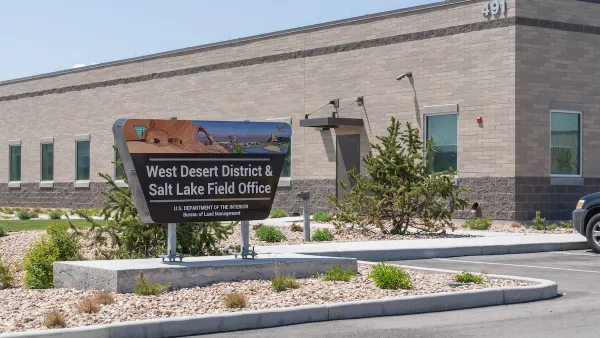
Public Lands Can Help Us Tackle the Housing Crisis in the West
The U.S. owns more than 650 million acres of public lands, and it has the power to sell or lease limited parcels for affordable housing. But mass disposal of public lands, as some legislators have proposed, is not the answer.

Community-Led Conservation: Protecting Elephant Hill’s Unique Biodiversity in Northeast LA
Community-led efforts are crucial in protecting the unique biodiversity of Elephant Hill in Northeast LA, with a focus on preserving the threatened Southern California black walnut tree and ensuring public access to this vital green space.
Growing Jobs by Growing Trees
Learn about some less-than-obvious jobs associated with trees and forests.

Planetizen Federal Action Tracker
A weekly monitor of how Trump’s orders and actions are impacting planners and planning in America.

Amtrak, CN end decades-long dispute with eight-year agreement
The new operating agreement establishes an updated framework for the companies to work together, including processes to resolve disputes.

Judges permit Denver to divert 77,000 acre feet from the Colorado River for reservoir expansion
Overuse and climate change have caused the Colorado River’s water levels to plummet.

Maryland local governments examine if they should have more power to raise property taxes
Maryland’s housing market is out of reach for the majority of moderate-income residents.

Northwest rail fans eager for Sept. 30 debut of Amtrak’s Airo fleet
Get ready for that new train smell and more seats. But they won’t go faster or run more frequently on the Cascades route in Washington and Oregon.

NYC DOT wants faster, more permanent street upgrades
The city is examining ways to build more concrete infrastructure without getting entangled in 'decades-long' projects.

FREE Course: Walkable City 1: Why Walkability?
After describing his path towards focusing on walkability as the essence of good planning, Jeff Speck marches through his five principal reasons for making more walkable places.
Reinventing Malls: Planning Alchemy—Turning Gray Fields Into Gold
The course focuses on the opportunities and imperatives that shape reinvention of mall sites.

Harvard University Graduate School of Design
KFH Group Inc.
Greater Baltimore Committee
The Architects Foundation
University of Cincinnati Online
The Pocatello Development Authority
The Urban Renewal Agency of the City of Pocatello