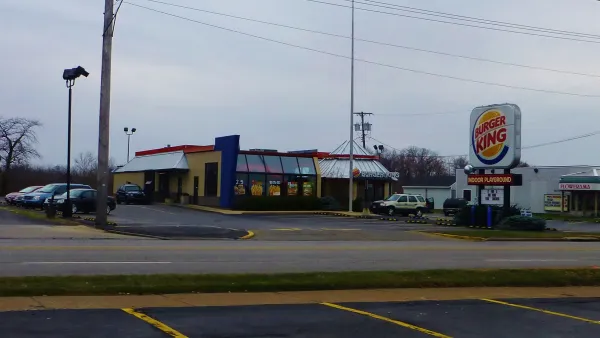
High rates of obesity and diabetes are being correlated to high concentrations of fast food restaurants in neighborhoods. Some look to zoning as a solution.


"Higher rates of diabetes and obesity occur in neighborhoods -- regardless of the residents' income, race or ethnicity -- where fast-food restaurants and convenience stores greatly outnumber grocery stores and produce vendors, according to a statewide study released today."
"'One of the points that this study makes is that we can't just look at issues of weight as a personal choice,' said Dr. Jonathan Fielding, Los Angeles County's public health director, who was not associated with the study."
"'We are affected by our environment. We understand that when we're talking about air quality, but we forget it affects what we eat.'"
"At least two of the study's recommendations -- requiring fast-food restaurants to post calorie and fat content on menu boards and placing zoning restrictions on new outlets -- have already drawn opposition from the California Restaurant Assn."
FULL STORY: UCLA study links poor health to fast-food neighbors

Planners Reboot Public Health Efforts in South Los Angeles
A law passed to combat obesity and diabetes in South Los Angeles by slowing the proliferation of fast food restaurants has done little to change the landscape of the area.
Study: South Los Angeles Fast Food Ban Didn't Cut the Fat
A fast food ban enacted in 2008 in an effort to curb obesity, diabetes, and other chronic health issues failed to achieve its well-intentioned goals, according to a new study by the RAND Corporation.
Fighting Food Deserts in Los Angeles
Public health analysts and justice activists are tackling food deserts in a state known for its agricultural output. Low-income neighborhoods of color are the hardest hit by a lack of grocery options.

The state-sanctioned urbicide of Austin
People don’t kill cities. Freeways do.

US to reduce Colorado River water deliveries to Mexico
A new Colorado Treaty amendment reduces Mexico’s Colorado River water allocation by 250,000 acre feet.

New Jersey’s second-largest city bans standalone data centers
Jersey City will continue to allow co-location facilities, such as those meant for research institutions that store their own data.

Amtrak not solely to blame for New Jersey commuter rail's unreliability, report finds
A new study from the Garden State Initiative found that NJ Transit’s budget grew 20% across a 4 year period, but reliability declined significantly over the same period.

EPA erases limits on planet-warming pollution from power plants
Under Monday’s plan, power plants would still have some limits on how much mercury, arsenic and other contaminants they can emit.

Phoenix announces new on-demand transit service, more frequent RAPID buses
Both new services will launch in October, and are part of Phoenix's Project Effective Access Solutions for Easing Congestion.

FREE Course: Walkable City 1: Why Walkability?
After describing his path towards focusing on walkability as the essence of good planning, Jeff Speck marches through his five principal reasons for making more walkable places.
Reinventing Malls: Planning Alchemy—Turning Gray Fields Into Gold
The course focuses on the opportunities and imperatives that shape reinvention of mall sites.

Eagle County Government
Harvard University Graduate School of Design
Nashville Planning Department
The Architects Foundation
University of Cincinnati Online
The Pocatello Development Authority
The Urban Renewal Agency of the City of Pocatello
Journal of the American Planning Association