High rates of accidents and few bike lanes make Indianapolis a dangerous place to ride a bike, according to this article.


"After more than two hundred accidents and four deaths involving cyclists and motorists in the metro Indianapolis area last year, local cycling advocates are hoping education and respect will go a long way to a safer 2008."
"Central Indiana Bicycle Association President Nancy Tibbett said Indiana has a long way to go before being thought of as a bicycle-friendly place, but recent events, such as the announced addition of bike lanes on parts of New York and Michigan streets in Downtown Indianapolis, are encouraging."
"Jonathan Juillerat, general manager of Nebo Ridge Bicycles in Carmel, argues Indianapolis should add more designated lanes for bicycles and the Bureau of Motor Vehicles should do a better job of educating motorists."
"'It's intimidating as a cyclist,' he said. 'Riding city streets sometimes feels like Russian roulette, so I made a conscious decision not to ride as much because of that. Eventually, I feel like my number will be up because motorists aren't paying attention.'"
Read the full story: Bicyclist says riding streets 'like Russian roulette'

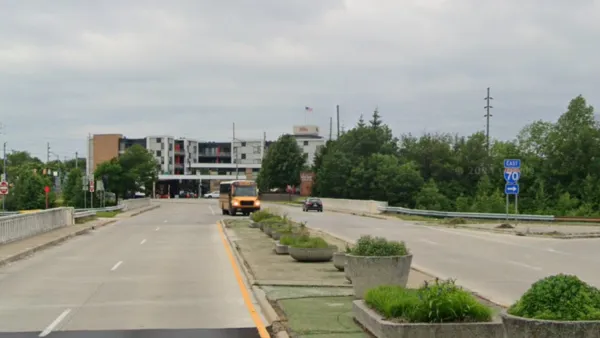
Indy Neighborhood Group Builds Temporary Multi-Use Path
Community members, aided in part by funding from the city, repurposed a vehicle lane to create a protected bike and pedestrian path for the summer season.
Bike Lanes Make Streets Safer for Pedestrians
A new study from the New York City Department of Transportation shows that streets with painted bike lanes are 40% less dangerous for pedestrians, among other findings.
Goodbye, Bike Lane
Calling it redundant, NYC's DOT has chosen to sandblast 14 blocks of a Bedford Avenue bike lane away.

Planetizen Federal Action Tracker
A weekly monitor of how Trump’s orders and actions are impacting planners and planning in America.

‘Going backwards:’ Baltimore mayor, students rally against state's transit funding plan
Maryland's proposed six-year plan provides no funding for Baltimore’s BMORE bus program and reduces its road maintenance funding.

Detroit to transform waterfront with $2.2 billion investment
Developers will convert about 18 acres of unused parking lot space into civic spaces.

85-year-old ranch is Texas’ newest state park
The 650 acre ranch is one of the largest parcels of land along Lake Palestine.

MIT to create AI-powered hub for public transportation companies
Google awarded the project, titled the Public Transit Intelligence Hub, $2.1 million in funding.

A 3D concrete printer may solve Virginia’s housing crisis
The printer is able to build concrete walls much faster than humans, and can do so directly at job sites.

FREE Course: Walkable City 1: Why Walkability?
After describing his path towards focusing on walkability as the essence of good planning, Jeff Speck marches through his five principal reasons for making more walkable places.
Reinventing Malls: Planning Alchemy—Turning Gray Fields Into Gold
The course focuses on the opportunities and imperatives that shape reinvention of mall sites.

City of Thousand Oaks
City of Wisconsin Rapids
Harvard University Graduate School of Design
The Architects Foundation
University of Cincinnati Online
Northern Illinois Transit Authority (NITA)
The Pocatello Development Authority
The Urban Renewal Agency of the City of Pocatello