"Slum tourism" is on the rise in developing countries around the world. Some say the tours help the affluent understand the dire situations faced by the world's poor, but others say it's just a way to help Westerners feel good about themselves.


"Slum tourism, or 'poorism,' as some call it, is catching on. From the favelas of Rio de Janeiro to the townships of Johannesburg to the garbage dumps of Mexico, tourists are forsaking, at least for a while, beaches and museums for crowded, dirty - and in many ways surprising - slums. When a British man named Chris Way founded Reality Tours and Travel in Mumbai two years ago, he could barely muster enough customers for one tour a day. Now, he's running two or three a day and recently expanded to rural areas."
"Slum tourism isn't for everyone. Critics charge that ogling the poorest of the poor isn't tourism at all. It's voyeurism. The tours are exploitative, these critics say, and have no place on an ethical traveler's itinerary."
"'Would you want people stopping outside of your front door every day, or maybe twice a day, snapping a few pictures of you and making some observations about your lifestyle?' asked David Fennell, a professor of tourism and environment at Brock University in Ontario. Slum tourism, he says, is just another example of tourism's finding a new niche to exploit. The real purpose, he believes, is to make Westerners feel better about their station in life. 'It affirms in my mind how lucky I am - or how unlucky they are,' he said."
Read the full story: Slum Visits: Tourism or Voyeurism?

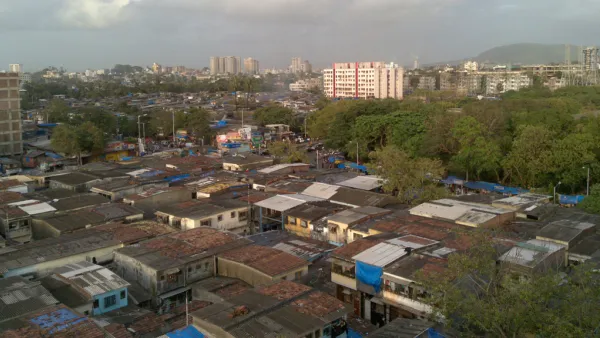
Bad Housing Policies Worsening Slums Around the World
Richard Florida argues that policies in cities around the world are making it harder on those most in need of housing.
Lack of Plumbing Aside, We Could Learn a Thing or Two from India's Slums
Asserting a controversial opinion, Michael McQuarrie takes a fresh look at the state of community development by comparing it to the slums in Mumbai. These vibrant and economically active slums make him wonder: have we created a dependent poor?
India Tries to Hide its Poor As Games Begin
As the Commonwealth Games get underway in New Delhi, India, locals are upset that officials have made efforts to hide slum areas from the view of visitors.

Planetizen Federal Action Tracker
A weekly monitor of how Trump’s orders and actions are impacting planners and planning in America.
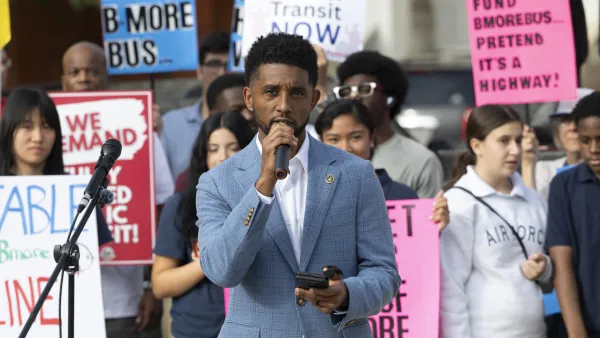
‘Going backwards:’ Baltimore mayor, students rally against state's transit funding plan
Maryland's proposed six-year plan provides no funding for Baltimore’s BMORE bus program and reduces its road maintenance funding.

Detroit to transform waterfront with $2.2 billion investment
Developers will convert about 18 acres of unused parking lot space into civic spaces.

85-year-old ranch is Texas’ newest state park
The 650 acre ranch is one of the largest parcels of land along Lake Palestine.

MIT to create AI-powered hub for public transportation companies
Google awarded the project, titled the Public Transit Intelligence Hub, $2.1 million in funding.

A 3D concrete printer may solve Virginia’s housing crisis
The printer is able to build concrete walls much faster than humans, and can do so directly at job sites.

FREE Course: Walkable City 1: Why Walkability?
After describing his path towards focusing on walkability as the essence of good planning, Jeff Speck marches through his five principal reasons for making more walkable places.
Reinventing Malls: Planning Alchemy—Turning Gray Fields Into Gold
The course focuses on the opportunities and imperatives that shape reinvention of mall sites.

City of Thousand Oaks
City of Wisconsin Rapids
Harvard University Graduate School of Design
The Architects Foundation
University of Cincinnati Online
Northern Illinois Transit Authority (NITA)
The Pocatello Development Authority
The Urban Renewal Agency of the City of Pocatello