Residents and public officials are calling on merchants to clean up Duval Street in Key West, Florida. Long considered the city's economic engine, the opposition believes some of the questionable quirkiness give the street and the city its character.


"Dorie Hochstedler was part star tourist, part terrified grandmother when she offered perches on her body for an iguana, four exotic birds and an albino Burmese python called Lemon Drop.
'I'm doing it so my grandchildren will get a kick out of it,' the Indiana native said as a gawking crowd instantly assembled.
The unique memory is why Hochstedler and millions of other tourists come to funky, laid-back Key West. And the prime lure is famed Duval Street, known for its bars, high-end art galleries, drag queens and an unending parade of offbeat characters.
Many Key Westers think Duval, stretching 1.2 miles from the Gulf of Mexico to the Atlantic Ocean, is the city's crown jewel.
But many others believe the street, with its T-shirt shops that sell bongs, and cracked sidewalks littered with cigarette butts, is a source of embarrassment.
They want Duval to clean up its act."
Read the full story: Key West's Duval St. may have to clean up act

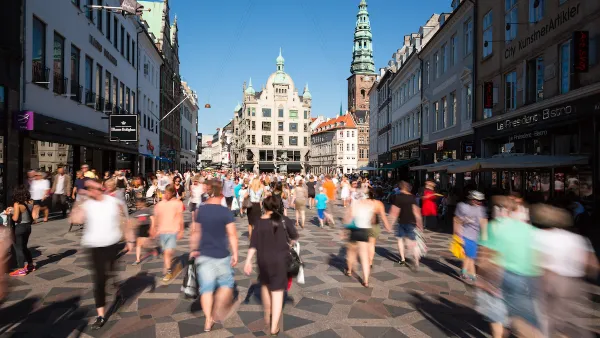
How the ‘Social Field of View’ Impacts Street Life
The vibrancy of a neighborhood may be defined by what people can see in their immediate vicinity.
Opinion: 'Instant' Delivery Services Could Decimate Street Vitality
The race to deliver goods at lightning speed has the potential to create 'dark cities' as street-level storefronts give way to closed-off warehouses only frequented by delivery workers.
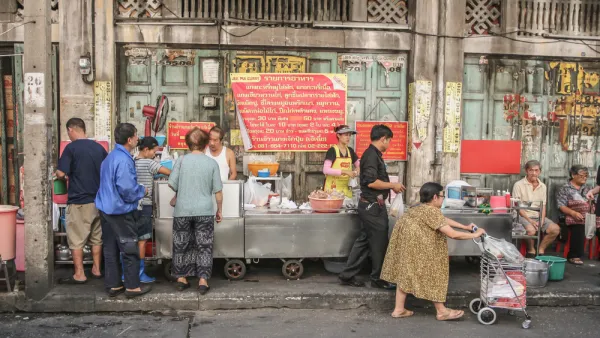
Is the End of Bangkok Street Food Vending Near?
Street food vendors are an integral part of the Bangkok urban landscape, but city planners want to see them gone.

Planetizen Federal Action Tracker
A weekly monitor of how Trump’s orders and actions are impacting planners and planning in America.

‘Going backwards:’ Baltimore mayor, students rally against state's transit funding plan
Maryland's proposed six-year plan provides no funding for Baltimore’s BMORE bus program and reduces its road maintenance funding.

Detroit to transform waterfront with $2.2 billion investment
Developers will convert about 18 acres of unused parking lot space into civic spaces.

85-year-old ranch is Texas’ newest state park
The 650 acre ranch is one of the largest parcels of land along Lake Palestine.

MIT to create AI-powered hub for public transportation companies
Google awarded the project, titled the Public Transit Intelligence Hub, $2.1 million in funding.

A 3D concrete printer may solve Virginia’s housing crisis
The printer is able to build concrete walls much faster than humans, and can do so directly at job sites.

FREE Course: Walkable City 1: Why Walkability?
After describing his path towards focusing on walkability as the essence of good planning, Jeff Speck marches through his five principal reasons for making more walkable places.
Reinventing Malls: Planning Alchemy—Turning Gray Fields Into Gold
The course focuses on the opportunities and imperatives that shape reinvention of mall sites.

City of Thousand Oaks
City of Wisconsin Rapids
Harvard University Graduate School of Design
The Architects Foundation
University of Cincinnati Online
Northern Illinois Transit Authority (NITA)
The Pocatello Development Authority
The Urban Renewal Agency of the City of Pocatello