What is your county doing to preserve open spaces important to your community? And is it effective? If the answers to those questions are "not enough" and "no", read on and take these effective strategies to your lawmakers.


"Local land use issues are often the catalyst for getting new people involved in environmental issues. When a community confronts the prospect of losing a nearby forest or farm to development, it often produces a new generation of conservationists interested not only in the view, but in larger environmental issues. And in an era when concerns about global warming are paramount, preserving wild land and stopping the tide of suburban sprawl are important parts of long-term sustainability initiatives."
"The Trust for Public Land and the National Association of Counties recognized five initiatives that worked to preserve open space like farmland, forests and ridges that are important to local communities concerned about sprawl, water quality and wildlife habitat."
"Counties are the level of government that, more and more, are leading the charge to protect open space, according to leaders of the two organizations. With state and federal budgets strapped, and local governments typically unable to marshal the money needed to buy land or conservation easements, that is likely to continue to be the case."
"Since 1996, 151 counties have prioritized land conservation with new or reconsidered conservation programs. In that time these counties have passed 260 ballot measures, generating $14.3 billion for open space, parks, watersheds, recreational lands and wildlife preserves. Over 77 percent of all county conservation ballot measures in the last decade have won voter approval."
"'We can react to pressures like development, or be thoughtful in our responses,' said Will Rogers, TPL President. 'Local conservation programs can help our communities shape thoughtful growth. This year's winners are being recognized for their commitment to creating healthy, livable places.'"
Thanks to Matt Shaffer
Read the full story: 5 Proven Ways to Preserve Open Space
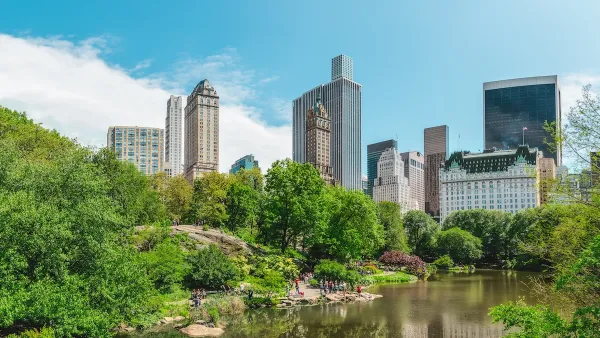
Public Parks as Climate Resilience Tools
Designed with green infrastructure, parks can mitigate flooding, reduce urban heat, and enhance climate resilience, offering cost-effective solutions to environmental challenges while benefiting communities.
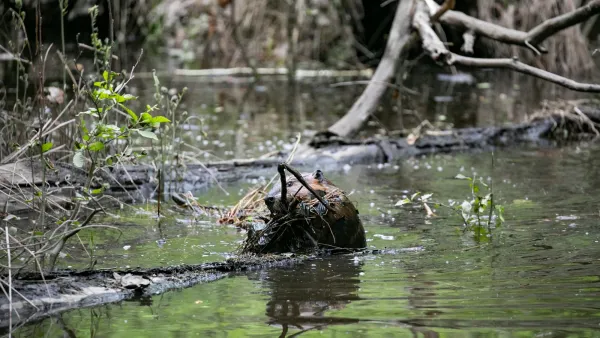
Two years after California reintroduced beavers, they are transforming the landscape into a 'climate-resilient powerhouse'
A beaver restoration program is proving that ancient solutions can help solve modern problems.
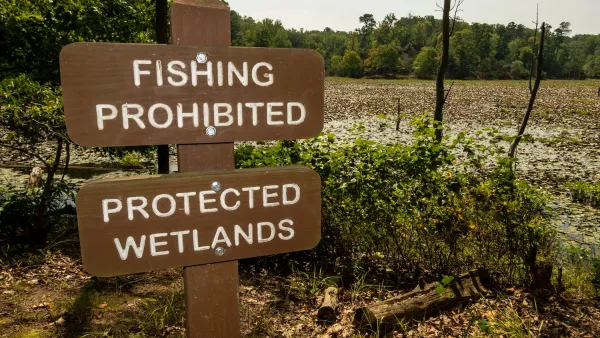
Proposed EPA Rule Change Would Exclude Millions of Acres of Wetlands and Waterways From Federal Protection
A proposed change to the Waters of the United States Rule would narrow the definition of protected waterways.

Desperate measures: Advocates weigh draining Lake Powell to fill Colorado River
Draining the reservoir could reduce evaporation losses by a couple hundred thousand acre-feet.

Eastern Nebraska is running out of electricity
Data centers and electrification are straining eastern Nebraska’s grid, throttling economic development.

Move over, LA: St. Louis gears up for Olympics, invests millions in downtown redevelopment
The Missouri city will host the 2028 Olympic soccer group stage and knockout matches.

‘No clear next steps’ for Chicago's permanent festival grounds
Eleventh Ward Ald. Nicole Lee has suggested Soldier Field as a possible location for the permanent event space.

California, Hawaii, Rhode Island approve housing propositions
Hawaii and Rhode Island each approved their sole proposition, while California approved two of its three.

Officials claim feds 'rushed' Amtrak environmental review
Amtrak plans to move their Chicago maintenance facility from an industrial area to a residential one.

FREE Course: Walkable City 1: Why Walkability?
After describing his path towards focusing on walkability as the essence of good planning, Jeff Speck marches through his five principal reasons for making more walkable places.
Reinventing Malls: Planning Alchemy—Turning Gray Fields Into Gold
The course focuses on the opportunities and imperatives that shape reinvention of mall sites.

City of Rosemead
Rutgers University, Edward J. Bloustein School of Planning and Public Policy
One Hundred Miles
University of Michigan School for Environment and Sustainability (SEAS)
Hunter College, City University of New York (CUNY)
The Architects Foundation
City of Cambridge
Montrose County
The Pocatello Development Authority