Thanks to unbeknownst peace-making by NYC Mayor Bloomberg between the Democratic governor and the Republican Senate Majority leader, his congestion pricing plan has been salvaged with a new deadline for legislative approval set for March 31, 2008.


Under a deal reached Thursday, 7/19, that will be "written into draft legislation and a letter of agreement", it is hoped that the city will qualify for the Dept. of Transportation's Urban Partnership Program and win critical transit funding.
From: "NYC Traffic Plan First Had To Crack Albany's Gridlock"
"Ninety-six hours of high pressure negotiations pushed by Gov. Eliot Spitzer ended with Bloomberg landing state approval to pursue his vision for a cleaner, less congested Manhattan and a chance for $500 million in federal funding.
In the process, the Republican-turned-independent helped bring together disparate allies - Senate Republican leader Joseph Bruno and the Democratic governor. During weeks of unprecedented name calling and power plays, the two state leaders refused to negotiate or meet, except on their own terms."
"Although Bruno and Spitzer supported the mayor's ‘congestion pricing' concept", their feuding had prevented the plan from being heard by the Assembly, resulting in the missed, original deadline of July 16.
Democratic Assembly Speaker Sheldon Speaker, a known critic of congestion pricing, "said that although a deal had been reached, the debate and the negotiation have just begun".
From: "NYC Car Toll Plan: After Deal, Far To Go"
"Although Bloomberg had initially said a decision had to be made by Monday so the city would meet the federal deadline, a spokesman for the mayor said Thursday the administration was in touch with federal officials as the deal was reached."
"What emerged was[from the talks that ensued past the initial deadline]was an agreement to form a commission that will examine the overall concept of reducing traffic. The primary plan the commission will study is Bloomberg's proposal, through hearings, testimony and a review of every aspect of traffic congestion.
The group is to make a recommendation by January 31."
The commission can devise a plan that won't "be required to include tolls". However, "any alternative will have to obtain the same traffic-reductions targets as Bloomberg's original plan and be approved the Dept. of Transportation."
Those familiar with the Urban Partnership Program indicate that DOT will only accept a plan that charges tolls, as Los Angeles recently discovered (see related link).
The legislature will be required to act on the commission's recommendation by March 31, 2008.
[Editor's Note: Parts of this summary were taken from "Albany Revives NYC Traffic Plan"/AP; NY Metro http://ny.metro.us/, pg. 1, July 20-22, 2007 - print edition only.]
Read the full story: NYC traffic plan first had to crack Albany's gridlock


Planetizen Federal Action Tracker
A weekly monitor of how Trump’s orders and actions are impacting planners and planning in America.

Amtrak, CN end decades-long dispute with eight-year agreement
The new operating agreement establishes an updated framework for the companies to work together, including processes to resolve disputes.

Colorado’s Largest Data Center Could Rise Next to Homes — Without a Public Hearing
The proposed campus would consume 11 times the power of Denver International Airport; as it has across the country, opposition mounts.

'This is going to be painful:’ Virginia stares down $1.7 billion funding gap for highway maintenance
The state may address the deficit by shifting $290 million from its construction budget to maintenance projects.

Judges permit Denver to divert 77,000 acre feet from the Colorado River for reservoir expansion
Overuse and climate change have caused the Colorado River’s water levels to plummet.
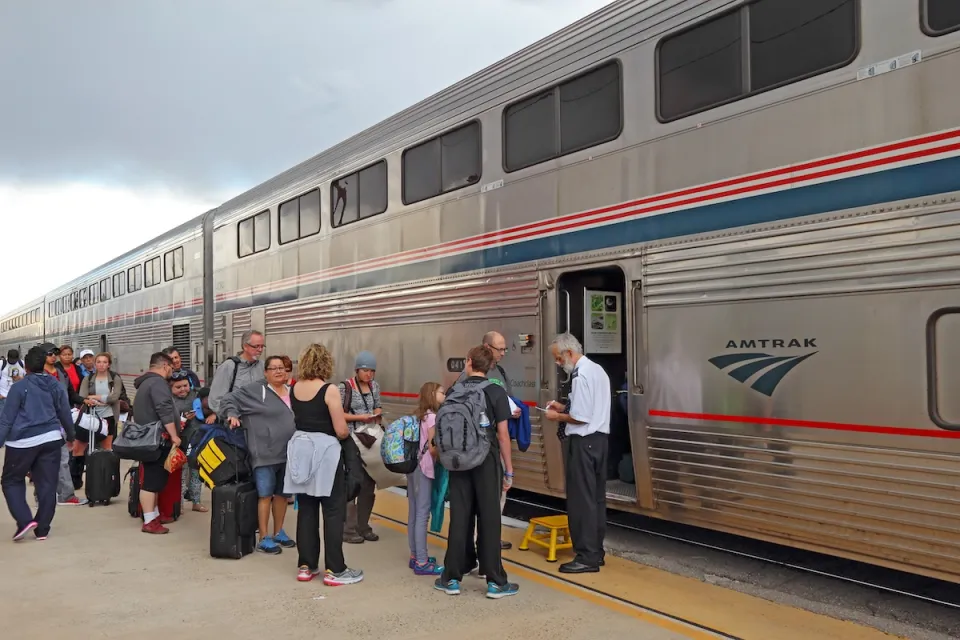
Amtrak, CN end decades-long dispute with eight-year agreement
The new operating agreement establishes an updated framework for the companies to work together, including processes to resolve disputes.

FREE Course: Walkable City 1: Why Walkability?
After describing his path towards focusing on walkability as the essence of good planning, Jeff Speck marches through his five principal reasons for making more walkable places.
Reinventing Malls: Planning Alchemy—Turning Gray Fields Into Gold
The course focuses on the opportunities and imperatives that shape reinvention of mall sites.

KFH Group Inc.
Greater Baltimore Committee
Eagle County Government
The Architects Foundation
University of Cincinnati Online
The Pocatello Development Authority
The Urban Renewal Agency of the City of Pocatello