There are five kinds of streets in this world.



A month or so ago, I was reading a book reiterating the old argument that tall buildings are bad because they block out the sun. As I explained on this very site over a decade ago, this claim is oversimplified if not downright wrong: places with tall buildings and wide streets (like the part of midtown Manhattan where I live) have significant amounts of sunlight and lots of tall buildings.
And when I visited Israel a few years ago, I noticed some pre-automobile streets that have neither sun nor height, because they are so narrow that they simply don't let in much sun. On the other hand, there are low-rise streets that are quite sunny, and high-rise streets that are not. Why? Because streets fall into five broad categories:

1. Tall buildings, narrow streets
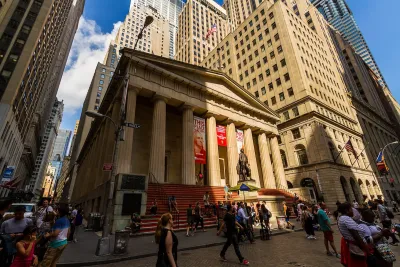
On these streets, tall buildings and narrow streets really do combine to create shade-dominated, low-sun streets. For example, many streets in New York's Financial District are narrow because they were built before streetcars and automobiles, and have tall buildings because Wall Street was New York's first financial center. Although some people dislike the darkness of these streets, I kind of like them and thought about living there when I was looking for new apartments four years ago. Why? Because their narrowness makes them feel more walkable to me. Cars go through these streets at relatively low speeds, and they are easier to cross than the wider streets built in more recent centuries.
2. Short buildings, narrow streets
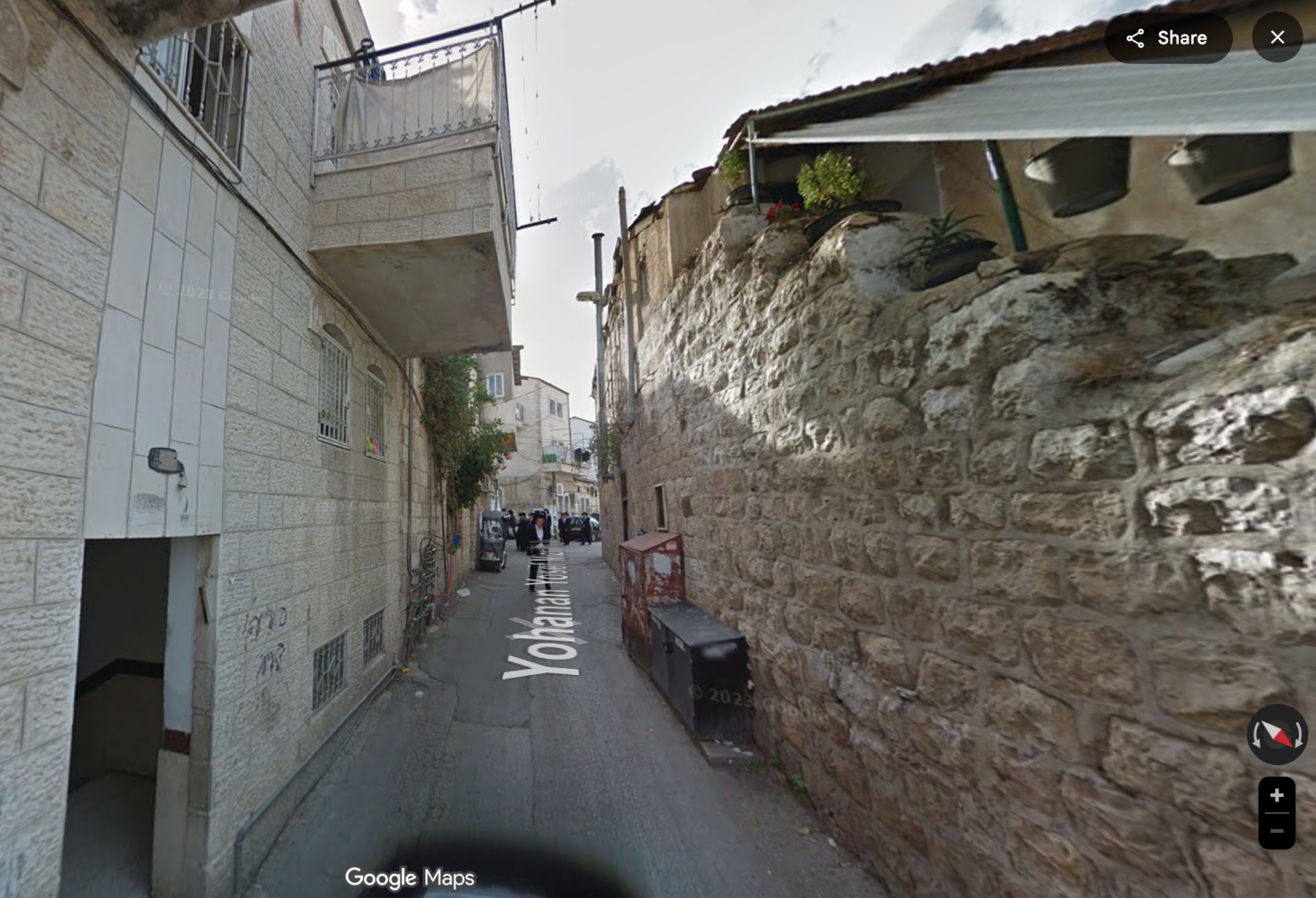
Buildings on these streets are often just one or two stories tall, but even so they can be just as dark as the streets in the Financial District. Why? Because the oldest such streets are so narrow that even a two- or three-story building can affect sunlight. These streets seem to be pretty rare in the U.S. but I have seen a few in Europe and Israel (for example, look for 3 Yohanan Yosef Mizrahi Street, Jerusalem, or 9 Rue Pecquay in Paris, on Google Street View).
3. Tall buildings, wide streets
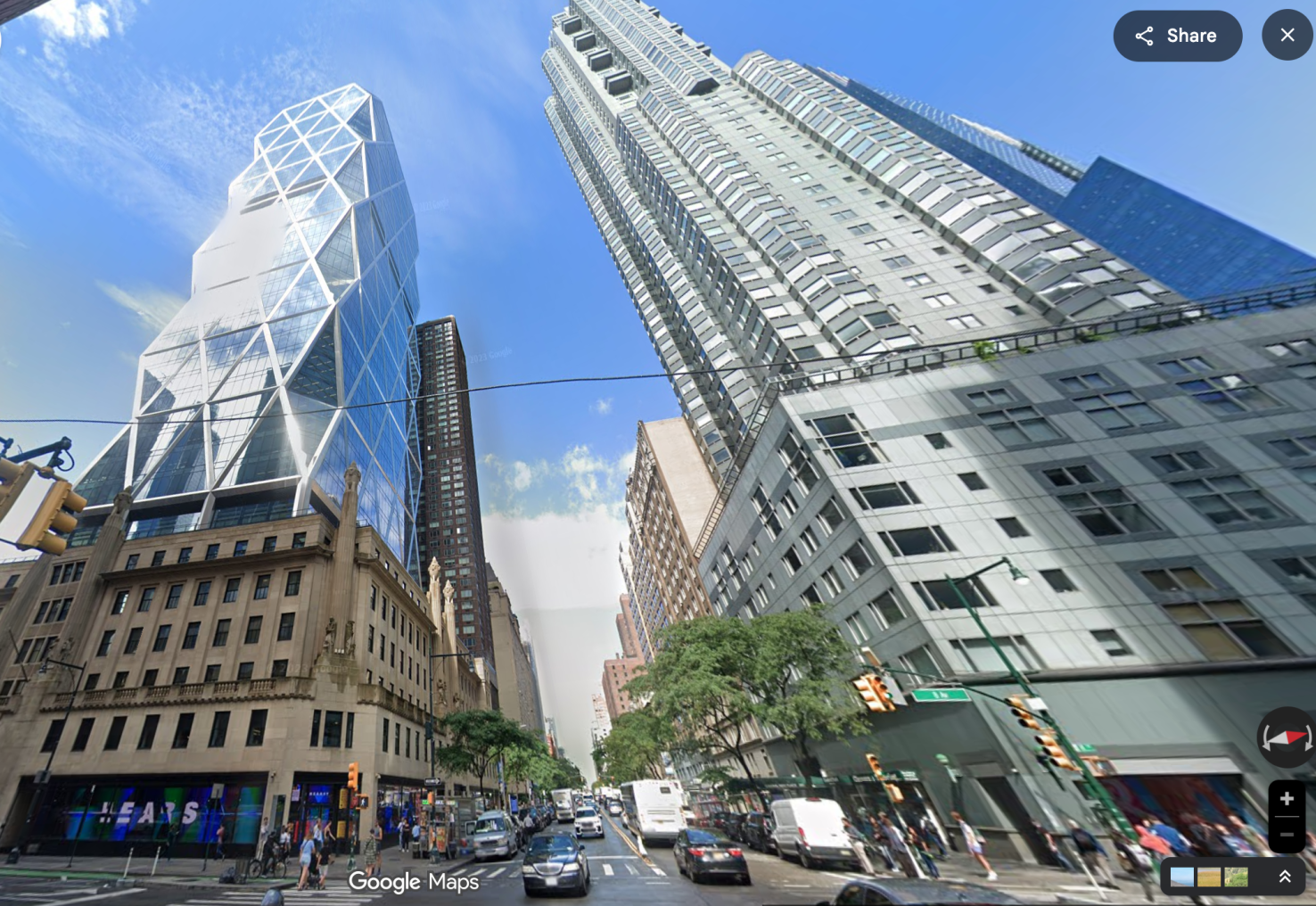
On Manhattan's major arterials (such as 57th Street where I live), tall buildings are common, but the streets have been widened to facilitate fast driving. As a result, the shade-producing effects of tall buildings are balanced out by the wide streets that let sunlight in (perhaps good) but also allow dangerously fast traffic levels (not so good). So these streets are often sunnier than the narrow-street areas in categories 1 and 2, but are also somewhat less comfortable to cross on foot — so I would rate them medium-to-high for both sunlight and walkability.
4. Short buildings, wide streets
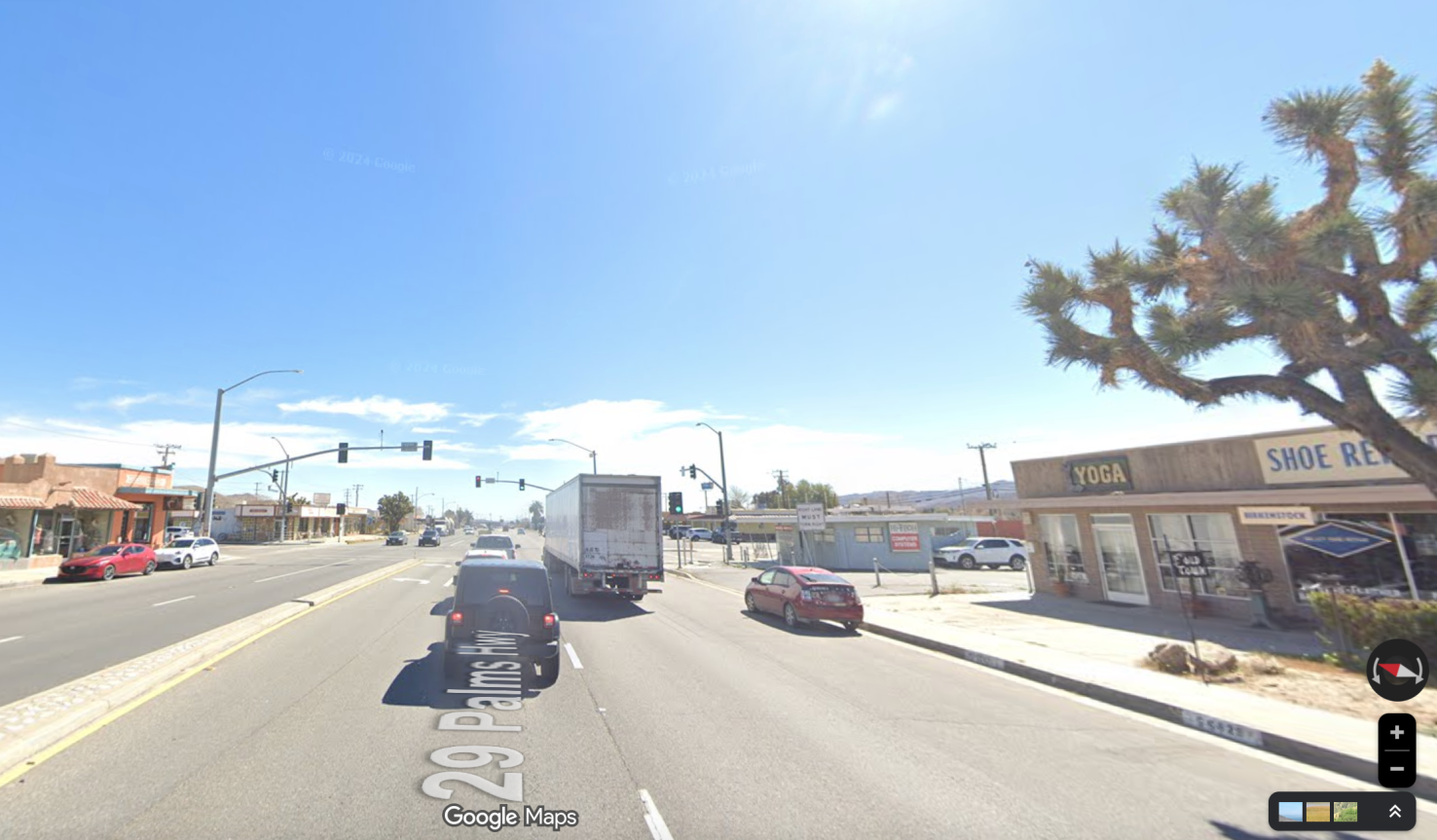
The typical American rural/suburban commercial street has one-or two-story buildings, or maybe taller buildings that are set back 25 or more feet from the street. The streets are very wide to accommodate cars going 40 miles per hour or more. Because the buildings are either too short or too far from the street to create shade, these areas are by far the sunniest; shade is hard to find. They are also the least walkable of all, because they are often even wider than category 3 streets. As a result, cars on category 4 streets travel at levels dangerous for pedestrians. In other words, category 4 streets have the most sunlight and the least walkability.
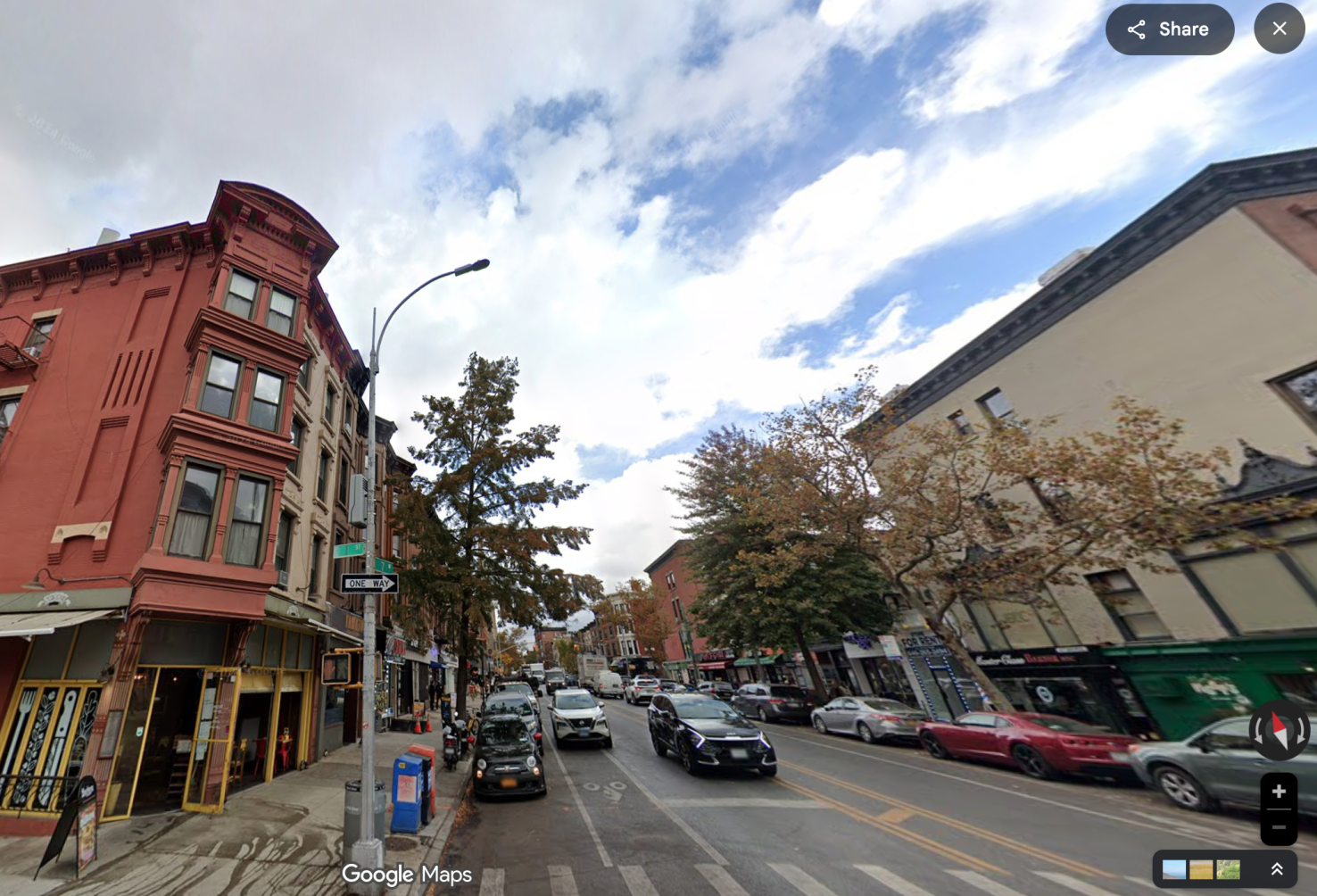
5. Short(ish) buildings, medium streets
Many North American (and for that matter, European) neighborhoods built between 1880 and 1920 don't fit comfortably into any of these categories. For example, on the side streets of Brooklyn's Park Slope, buildings are typically between two and four stories but adjoin sidewalks, creating a bit more shade than in a typical North American suburb. Streets are narrow enough that cars are less likely to travel at dangerously high speeds than in suburbia, but wide enough to support on-street parking (which means that walkers do have to worry a little bit about auto traffic). As a result, the streets let in more sunlight than do pre-automobile category 2 streets. In other words, these areas typically have medium levels of both sunlight and walkability: sunnier than streets in categories 1-2, and more walkable than streets in categories 3-4. If I was creating a "political compass"-type graph of street types, category 5 would be pretty close to dead center: not the sunniest, not the most walkable, but not the worst in any category.
Is one type of neighborhood objectively best? It seems to me that there are tradeoffs between sunlight, walkability and driveability:
If planning for vehicle traffic is your top priority, category 4 is best, category 3 is second best, category 5 is in-between, and categories 1-2 are dreadful.
If planning for sunlight is your top priority, your ranking will probably be identical, but you might like category 5 a bit more and category 3 a bit less.
If planning for pedestrians (or shade for that matter) is your top priority, categories 1 and 2 are superstars, category 3 and 5 are just ok, and category 4 should be avoided in any urban environment other than limited-access highways.
Why Walk Scores Don’t Tell the Whole Story
A popular measure of walkability only measures proximity, not safety or comfort.

The number of kids walking to school dropped from over 50% to 11% since the 1960s
Unsafe pedestrian infrastructure makes walking to school dangerous or impossible for a growing number of American students.
Downtown St. Petersburg Poised for Pedestrian-Friendly Makeover
A new vision for Central Avenue includes wider sidewalks and more space for outdoor dining.

Washington state to charge fee to drivers with fuel-efficient cars
Revenue from the fee will go towards supporting the state’s highways.

Illinois considers spending $1 billion in taxpayer money on data center
A quantum computing campus and data center are currently under construction in Chicago.

Trump to blast ‘hydrocarbon highway’ through ‘world’s longest art gallery’
Environmental and historic preservation groups are suing to stop the project.

Michigan to turn neighborhood into virtual power plant
Residents will soon be able to divert their excess energy to the grid in exchange for compensation.

Data center, mining project swarm to long-awaited Alaska railroad line
The state-owned railroad approved final plans for the spur line this week; the project is expected to cost $311 million, mostly funded by the federal government

U.S. Army plan to explode reactive lead waste in Iowa postponed indefinitely
The Army will detonate the lead inside underground concrete chambers.

FREE Course: Walkable City 1: Why Walkability?
After describing his path towards focusing on walkability as the essence of good planning, Jeff Speck marches through his five principal reasons for making more walkable places.
Reinventing Malls: Planning Alchemy—Turning Gray Fields Into Gold
The course focuses on the opportunities and imperatives that shape reinvention of mall sites.

City of Charlotte
City of Rosemead
Rutgers University, Edward J. Bloustein School of Planning and Public Policy
University of Michigan School for Environment and Sustainability (SEAS)
Hunter College, City University of New York (CUNY)
The Architects Foundation
University District Partnership

