A new vision for Central Avenue includes wider sidewalks and more space for outdoor dining.


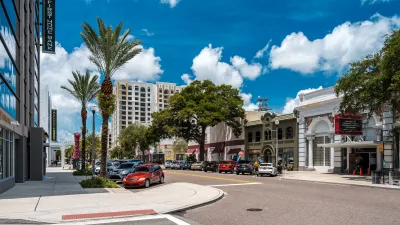
The St. Petersburg Downtown Partnership revealed its design for a new streetscape on Central Avenue that would widen sidewalks, add more space for outdoor dining, and make other pedestrian improvements.
According to an article in St. Pete Rising, “The first phase of the streetscape project was implemented during construction of the 42-story Art House condo tower, offering a preview of what the rest of the block could become.” That phase included the removal of seven on-street parking spaces, an expanded sidewalk, a 5-foot landscaped buffer, and new landscaping and lighting.
While the plan is mostly conceptual, it offers a path for expanding the same improvements to the rest of the corridor. “The plan also includes traffic-calming features like a mid-block crosswalk, an elevated speed table, and upgraded crosswalks at both the 2nd and 3rd Street intersections.”
Read the full story: Central Avenue makeover would prioritize pedestrians over parking in downtown St. Pete


The number of kids walking to school dropped from over 50% to 11% since the 1960s
Unsafe pedestrian infrastructure makes walking to school dangerous or impossible for a growing number of American students.
Why Walk Scores Don’t Tell the Whole Story
A popular measure of walkability only measures proximity, not safety or comfort.
St. Petersburg Launches Sidewalk Master Plan to Close Gaps in Pedestrian Network and Improve Accessibility
The plan will inform priorities for fiscal year 2027.

Planetizen Federal Action Tracker
A weekly monitor of how Trump’s orders and actions are impacting planners and planning in America.

California plans to bury El Niño’s downpour
If the state plays its cards right, it may be able to store a billion acre-feet of El Niño’s water in aquifers.

Chicago breaks ground on $3 billion megadevelopment
The new neighborhood, titled Foundry Park, will one day host 3,700 residences.

California High-Speed Rail Authority CEO resigns after $600,000 scandal
Under Ian Choudri, the authority used taxpayer dollars to fund first class flights and trips to nightclubs.

Want to study the Missouri River? Soon, you may need unanimous approval from 10 states
Legislation would require 10 governors’ permission to study or build projects moving water outside the basin.

Desperate measures: Advocates weigh draining Lake Powell to fill Colorado River
Draining the reservoir could reduce evaporation losses by a couple hundred thousand acre-feet.

FREE Course: Walkable City 1: Why Walkability?
After describing his path towards focusing on walkability as the essence of good planning, Jeff Speck marches through his five principal reasons for making more walkable places.
Reinventing Malls: Planning Alchemy—Turning Gray Fields Into Gold
The course focuses on the opportunities and imperatives that shape reinvention of mall sites.

City of Rosemead
Rutgers University, Edward J. Bloustein School of Planning and Public Policy
One Hundred Miles
Hunter College, City University of New York (CUNY)
The Architects Foundation
University of Cincinnati Online
City of Cambridge
Montrose County
The Pocatello Development Authority