Congress failed to renew a federal program allowing states to let electric car drivers use carpool lanes without additional passengers, forcing California to end EV access to its HOV lanes.


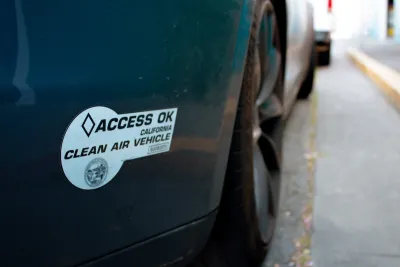
Starting in October, EV drivers will no longer be able to go solo in carpool lanes, writes Aarian Marshall in Wired. The change, which mainly affects California, comes after Congress failed to reauthorize a program that let EVs and hybrids use carpool lanes with just one occupant.
Over 1 million California drivers took advantage of the program since its start in 1999. “California isn't alone. Another pilot project that gave some New York state electric-vehicle drivers access to carpool lanes will also end. Over 48,000 New Yorkers had received decals through that Clean Pass program.”
The change will deal another blow to the electric car market, which has been under attack by the Trump administration, which is ending the $7,500 federal tax credit for EV purchases and attempted to kill the National Electric Vehicle Infrastructure (NEVI) program (a move later thwarted by the courts). “But while the California program’s end will likely frustrate plenty of EV drivers, it might not make a meaningful dent in the state’s transition to new-energy vehicles.” So far in 2025, 22 percent of new light-duty cars sold in California are electric, hybrid, or hydrogen-powered, much higher than the projected average of 8 percent in the rest of the country.
FULL STORY: The Free Ride for EVs in the Carpool Lane Is Coming to an End

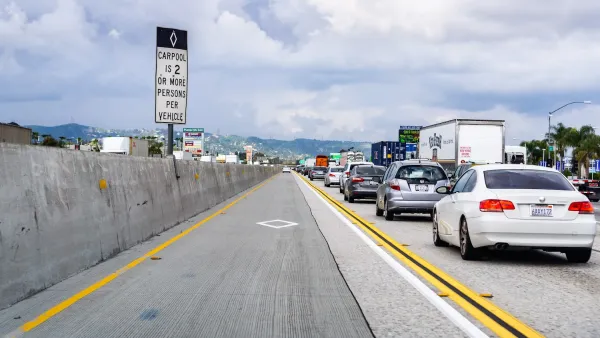
California’s Carpool Lane Exemption for EVs Dies This Week
The program that allows EV drivers to use carpool lanes alone has issued 1,211,530 stickers since it began in 2000.
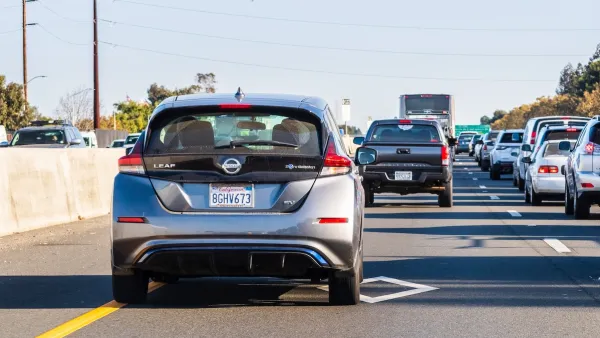
When Carpool Lanes Cause Mayhem
A newly widened Bay Area freeway serves as a reminder of the futility of HOV lanes. There are better ways to manage and mitigate traffic.
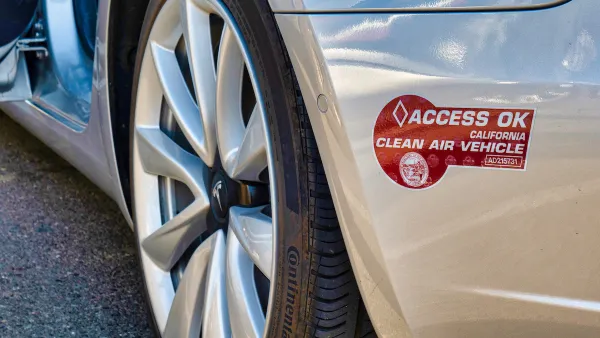
California EV Owners To Lose Carpool Lane Privilege
A program that began in 1999 to encourage more electric car ownership is set to expire next year without Congressional and state action.

Planetizen Federal Action Tracker
A weekly monitor of how Trump’s orders and actions are impacting planners and planning in America.

The state-sanctioned urbicide of Austin
People don’t kill cities. Freeways do.

US to reduce Colorado River water deliveries to Mexico
A new Colorado Treaty amendment reduces Mexico’s Colorado River water allocation by 250,000 acre feet.

5 New England states march closer to 800 megawatt wind energy project
Securing federal approval for the project may be complicated under the Trump administration, which has historically been hostile towards domestic wind power.

Baltimore to break ground on $50 million Transit Priority Project
The project will bring faster bus trips, safer streets and better bike connections to Baltimore.

Airbnb launches $250 million 'last-dollar financing' housing accelerator, makes first investment in Austin
The company will put $6.4 million towards affordable housing development in Texas’ capital.

FREE Course: Walkable City 1: Why Walkability?
After describing his path towards focusing on walkability as the essence of good planning, Jeff Speck marches through his five principal reasons for making more walkable places.
Reinventing Malls: Planning Alchemy—Turning Gray Fields Into Gold
The course focuses on the opportunities and imperatives that shape reinvention of mall sites.

Eagle County Government
Harvard University Graduate School of Design
Nashville Planning Department
The Architects Foundation
University of Cincinnati Online
The Pocatello Development Authority
The Urban Renewal Agency of the City of Pocatello
Journal of the American Planning Association