The National Electric Vehicle Infrastructure program planned to fund the construction of hundreds of EV charging stations across the country.


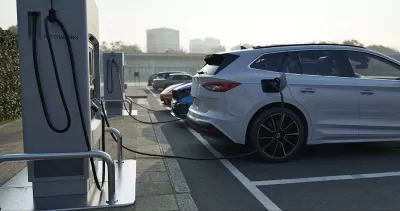
The United States Department of Transportation (USDOT) has ordered all states to end their electric vehicle charging infrastructure programs, part of a $5 billion planned federal investment that would develop a nationwide system of EV charging stations to alleviate one of consumers’ main concerns, ‘range anxiety.’
As Aarian Marshall reports in Wired, “Officials at the Federal Highway Administration (FHWA), which manages the program, ordered state transportation directors to “decertify” the plans that all 50 states have used to outline where and how they will build their charging stations, and with what companies they’ll contract to do so.”
The program was designed to install chargers along major freeways and assist jurisdictions that may not be able to afford the cost.
Marshall notes that “The order may be illegal. It could fly in face of court orders demanding the Trump administration ‘unfreeze’ a funding pause that prevents federal money from flowing to state agencies. It may also violate the Administrative Procedures Act, which requires agencies to follow legal procedures before taking action.”
FULL STORY: Feds Halt the National Electric Vehicle Charging Program

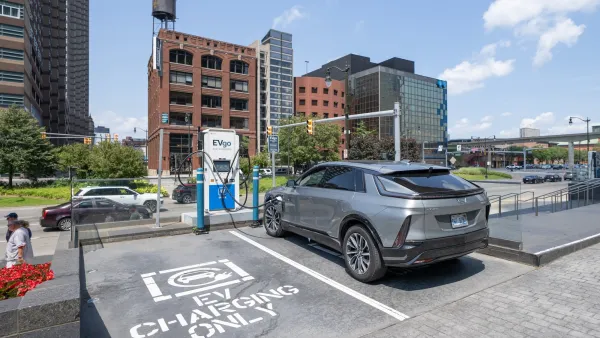
96% of federal EV charging funds from 2021-2022 are unspent
New Buy America requirements and other stipulations are slowing the process for accessing federal funds.
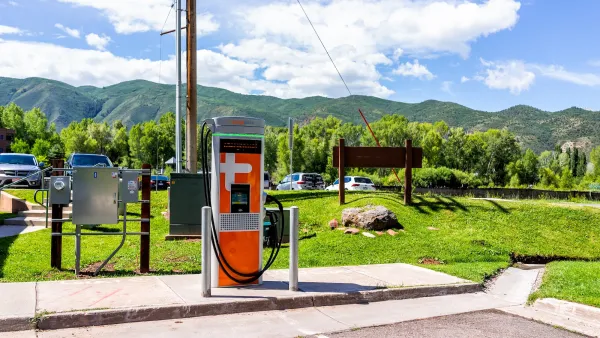
USDOT Cancels Over $100 Million in Sustainable Transportation Funds for Colorado
The administration is pulling funding for what it calls “woke” and “redundant” clean energy projects including EV charging infrastructure.
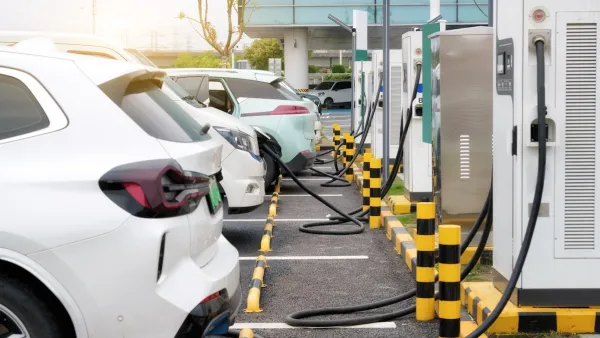
USDOT Issues New Rules for EV Charging Grants After Judge Forces Administration to Unfreeze Funds
The Trump administration is reviving the National Electric Vehicle Infrastructure program, revising its guidelines to eliminate consumer protections, environmental reviews, labor standards, and other provisions from the Biden-era program.

The state-sanctioned urbicide of Austin
People don’t kill cities. Freeways do.

US to reduce Colorado River water deliveries to Mexico
A new Colorado Treaty amendment reduces Mexico’s Colorado River water allocation by 250,000 acre feet.

New Jersey’s second-largest city bans standalone data centers
Jersey City will continue to allow co-location facilities, such as those meant for research institutions that store their own data.

Amtrak not solely to blame for New Jersey commuter rail's unreliability, report finds
A new study from the Garden State Initiative found that NJ Transit’s budget grew 20% across a 4 year period, but reliability declined significantly over the same period.

EPA erases limits on planet-warming pollution from power plants
Under Monday’s plan, power plants would still have some limits on how much mercury, arsenic and other contaminants they can emit.

Phoenix announces new on-demand transit service, more frequent RAPID buses
Both new services will launch in October, and are part of Phoenix's Project Effective Access Solutions for Easing Congestion.

FREE Course: Walkable City 1: Why Walkability?
After describing his path towards focusing on walkability as the essence of good planning, Jeff Speck marches through his five principal reasons for making more walkable places.
Reinventing Malls: Planning Alchemy—Turning Gray Fields Into Gold
The course focuses on the opportunities and imperatives that shape reinvention of mall sites.

Eagle County Government
Harvard University Graduate School of Design
Nashville Planning Department
The Architects Foundation
University of Cincinnati Online
The Pocatello Development Authority
The Urban Renewal Agency of the City of Pocatello
Journal of the American Planning Association