In suburban Houston, cities are scrambling to expand water infrastructure to serve new communities. But can sprawl be part of a workable solution to the housing crisis?



A proposal from Indiana could make it the first state to charge tolls on interstate freeways. In suburban Houston, some communities are putting limits on growth as they upgrade their aging water infrastructure to meet demand. The governor of Connecticut forcefully rejects President Trump’s order to further criminalize homelessness, California officials block multifamily development in wildfire-ravaged Pacific Palisades, and is the sprawl-versus-infill debate the wrong way to frame the housing crisis? Also, a Burning Man founder says artists could be the key to ending San Francisco’s ‘doom loop.’
The full list of August’s most-read stories:
If the request is approved by the FHWA, Indiana could gain over $38 billion in new revenue over a 22-year period. It would be the first state to charge tolls on interstate freeways.
The region’s water infrastructure isn’t keeping up with its rapid growth, prompting some communities to put a moratorium on new development until they can address the issue.
Alan Mallach argues that the solution to the housing crisis lies in a mindful combination of outward sprawl and infill development.
Gov. Ned Lamont repudiated President Trump’s executive order calling on cities to crack down on homelessness and forcibly institutionalize unhoused people, saying that it’s up to governments to address the root causes of the housing crisis rather than punish people experiencing homelessness.
Artists create vibrant urban neighborhoods attractive to everyone, but too often, they’re displaced from the places they made desirable. P Segal encourages planners to see artists as an underutilized resource — and to protect affordable spaces for them.
Citing fire risk, the Los Angeles mayor and California governor issued twin executive orders prohibiting homeowners in the Palisades Fire area from building multiple units on their lots.
A local business owner says the city’s move to force him to evict unhoused people he allowed to camp on his property is unconstitutional.
A new ordinance requires landlords to allow cooling devices in rental units to keep indoor temperatures below 82 degrees.
After the San Francisco-to-San Jose commuter rail introduced electric trains and increased service frequency, ridership surged, signaling the potential for more efficient service as Caltrain works to electrify the rest of the system.
Gridlock resulting from a tsunami warning prompted concerns about Oahu’s evacuation infrastructure and capacity to move people to safety quickly and efficiently.

March Must-Reads: Top 10 Articles From Last Month
Seattle may roll back a development fee as housing permits plummet, an ambitious Google-led project in the heart of San Jose goes sideways, and a list of sci-fi books to feed your futurist dreams.
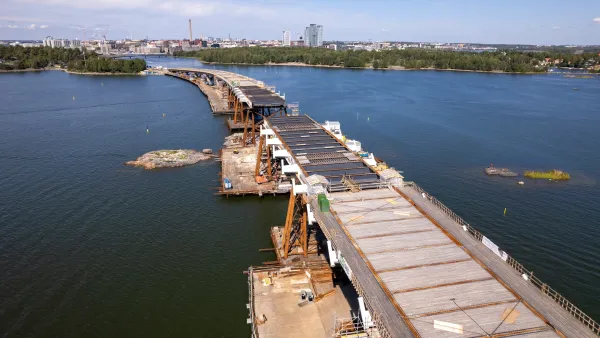
April must-reads: Top 10 articles from last month
The world's longest car-free bridge opens in Finland, Amtrak's new Mardi Gras line shatters ridership predictions, and Bay Area commuters could lose a third of Caltrain stations.
February Must-Reads: Top 10 Articles From Last Month
Transit agencies like BART and TriMet face lingering budget shortfalls, forcing major service cuts and layoffs, while federal plans to ban fare-free transit throw a wrench in NYC Mayor Mamdani’s proposal to make the city’s buses ‘fast and free.’

Planetizen Federal Action Tracker
A weekly monitor of how Trump’s orders and actions are impacting planners and planning in America.

The state-sanctioned urbicide of Austin
People don’t kill cities. Freeways do.

US to reduce Colorado River water deliveries to Mexico
A new Colorado Treaty amendment reduces Mexico’s Colorado River water allocation by 250,000 acre feet.

Mamdani overhauls NYC's Vision Zero plan with 100 new policy goals
The overhaul aims to reduce traffic deaths and make streets safer for pedestrians, cyclists and drivers through lower speed limits, new safety infrastructure and more.

Amtrak not solely to blame for New Jersey commuter rail's unreliability, report finds
A new study from the Garden State Initiative found that NJ Transit’s budget grew 20% across a 4 year period, but reliability declined significantly over the same period.

EPA erases limits on planet-warming pollution from power plants
Under Monday’s plan, power plants would still have some limits on how much mercury, arsenic and other contaminants they can emit.

FREE Course: Walkable City 1: Why Walkability?
After describing his path towards focusing on walkability as the essence of good planning, Jeff Speck marches through his five principal reasons for making more walkable places.
Reinventing Malls: Planning Alchemy—Turning Gray Fields Into Gold
The course focuses on the opportunities and imperatives that shape reinvention of mall sites.

Eagle County Government
Harvard University Graduate School of Design
Nashville Planning Department
The Architects Foundation
University of Cincinnati Online
The Pocatello Development Authority
The Urban Renewal Agency of the City of Pocatello
Journal of the American Planning Association

