Seattle may roll back a development fee as housing permits plummet, an ambitious Google-led project in the heart of San Jose goes sideways, and a list of sci-fi books to feed your futurist dreams.




Cities and states continue to look to zoning as a way out of the housing crisis. In Virginia, a new bill would ease the way for churches and other nonprofits to build housing, while Seattle may reduce a developer fee designed to fund affordable housing that has led to a sharp drop in permit applications. Maine affordable housing builders say Buy America rules are slowing housing production, and Google’s plan to build housing, shops, and offices in downtown San Jose stalls. The Trump administration released a plan for Gaza, and Alan Mallach has some thoughts. If you want to think about cities through the lens of fiction, check out a list of sci-fi visions of the future to stir your imagination.
The full list of March’s most-read stories:
A law passed by Virginia’s General Assembly would allow faith-based groups and other tax-exempt nonprofits to build housing on their property without having to apply for rezoning if they reserve 60% of the units as affordable housing for 50 years.
New Jersey Governor Mikie Sherrill scaled back a construction project, eliminating plans for a second bridge and widened highway leading to the Newark Bay Bridge. The new plan will cost an estimated $6.7 billion.
Less than 10 years after its passage, Seattle’s Mandatory Housing Affordability program is facing an uncertain future as applications for new housing projects have dropped sharply. The city council is considering significantly reducing developer fees, which could unlock over a dozen stalled housing projects.
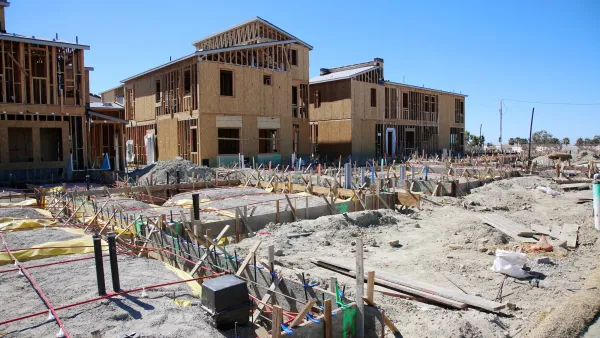
Texas faces a significant housing shortage, with inventory estimated to be hundreds of thousands of units short of the state’s need. This is despite record numbers of new housing permits being issued in much of the state.
The sci-fi novels on this list offer varied visions for the cities of the future.
The California High-Speed Rail Authority cut $1.7 billion from its budget in its draft 2026 business plan, which calls for the completion of the line’s first segment and the start of revenue service between Merced and Bakersfield to generate revenue.
Planetizen blogger Alan Mallach assesses the Trump administration’s ‘master plan’ for Gaza, calling it a totalitarian surveillance state.
In a response to a Planetizen blog by Michael Lewyn, Michael W. Mehaffy defends the concept of “QUIMBY,” or “Quality In My Back Yard,” arguing that it doesn’t create a universal definition of quality, but rather defines a process by which local stakeholders can determine standards to streamline permitting.
At least 400 fully permitted affordable housing units in Maine are on hold as new Buy America requirements approved in 2021 take effect, calling for 95% of materials for housing receiving federal subsidies to come from U.S. sources.
An 80-acre parcel in downtown San Jose, California is sitting mostly empty after Google nixed a plan to develop the property, which it owns, into a mixed-use hub. The city, which sold Google 16 city-owned parcels for the project, cannot legally force the company to build on or lease the land.


August Must-Reads: Top 10 Articles From Last Month
In suburban Houston, cities are scrambling to expand water infrastructure to serve new communities. But can sprawl be part of a workable solution to the housing crisis?

The Trouble With QUIMBY
The idea of “quality urbanism in my back yard” has its uses, but should not be used to limit housing supply.
Less than 6% of California cities are building enough housing for very low-income households
Only five jurisdictions are on track to meet their housing goals for all income brackets.

Planetizen Federal Action Tracker
A weekly monitor of how Trump’s orders and actions are impacting planners and planning in America.

California plans to bury El Niño’s downpour
If the state plays its cards right, it may be able to store a billion acre-feet of El Niño’s water in aquifers.

Chicago breaks ground on $3 billion megadevelopment
The new neighborhood, titled Foundry Park, will one day host 3,700 residences.

Satanic place names
From streams and lakes to valleys and canyons, I mapped more than 1,000 places named after the Devil.

California High-Speed Rail Authority CEO resigns after $600,000 scandal
Under Ian Choudri, the authority used taxpayer dollars to fund first class flights and trips to nightclubs.

Want to study the Missouri River? Soon, you may need unanimous approval from 10 states
Legislation would require 10 governors’ permission to study or build projects moving water outside the basin.

FREE Course: Walkable City 1: Why Walkability?
After describing his path towards focusing on walkability as the essence of good planning, Jeff Speck marches through his five principal reasons for making more walkable places.
Reinventing Malls: Planning Alchemy—Turning Gray Fields Into Gold
The course focuses on the opportunities and imperatives that shape reinvention of mall sites.

City of Rosemead
Rutgers University, Edward J. Bloustein School of Planning and Public Policy
One Hundred Miles
Hunter College, City University of New York (CUNY)
The Architects Foundation
University of Cincinnati Online
City of Cambridge
Montrose County
The Pocatello Development Authority

