While many factors affect the drop in housing permits, developers say a change to the fee could make a significant impact in moving projects along.



A landmark Seattle housing law is facing pushback as the city sees permit applications for new housing drop precipitously, reports David Kroman in The Seattle Times.
City officials saw the Mandatory Housing Affordability program, passed between 2017 and 2019, as “a best-of-all-worlds approach to unleashing the private market while also taking advantage of a generationally good environment for development on behalf of the public.” The program requires developers who want to build larger buildings to pay into an affordable housing fund or offer affordable units.
But last year saw only half as many permit applications as 2024, bringing in only $22 million in revenue for affordable housing, prompting city leaders to consider scaling back or pausing the fees for up to three years. A coalition of developers says scaling back the fees by 75 to 90 percent could unlock at least 13 permitted housing projects that are currently on hold.
FULL STORY: Developers want rollback of Seattle affordability program as construction stalls

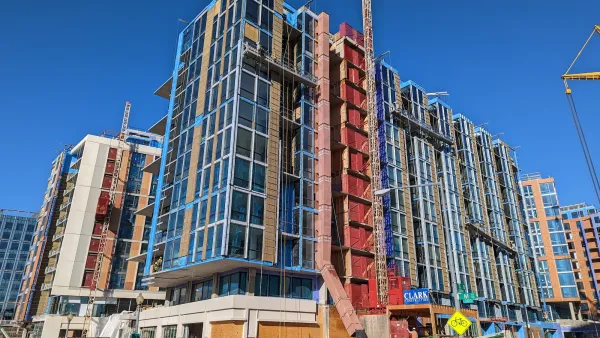
Analysis: DC needs tens of thousands of new homes — not just 'zoned capacity'
Estimates for Washington DC's housing needs range from 15,000 to 170,000.
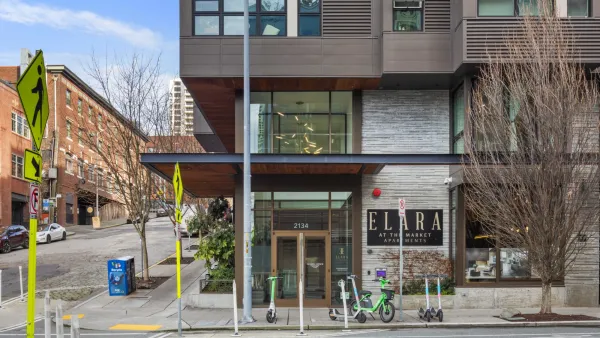
Seattle's first social housing building gets 10,000 resident applications
The Elara at the Market development includes 150 affordable housing units.

Connecticut developer fee brought in $8M for affordable housing — but fewer affordable homes are being built
A new report from the city of Stamford highlights how letting developers pay into an affordable housing fund has led to a sharp drop in permits for new affordable units.

The state-sanctioned urbicide of Austin
People don’t kill cities. Freeways do.

US to reduce Colorado River water deliveries to Mexico
A new Colorado Treaty amendment reduces Mexico’s Colorado River water allocation by 250,000 acre feet.

New Jersey’s second-largest city bans standalone data centers
Jersey City will continue to allow co-location facilities, such as those meant for research institutions that store their own data.

Amtrak not solely to blame for New Jersey commuter rail's unreliability, report finds
A new study from the Garden State Initiative found that NJ Transit’s budget grew 20% across a 4 year period, but reliability declined significantly over the same period.

EPA erases limits on planet-warming pollution from power plants
Under Monday’s plan, power plants would still have some limits on how much mercury, arsenic and other contaminants they can emit.

Phoenix announces new on-demand transit service, more frequent RAPID buses
Both new services will launch in October, and are part of Phoenix's Project Effective Access Solutions for Easing Congestion.

FREE Course: Walkable City 1: Why Walkability?
After describing his path towards focusing on walkability as the essence of good planning, Jeff Speck marches through his five principal reasons for making more walkable places.
Reinventing Malls: Planning Alchemy—Turning Gray Fields Into Gold
The course focuses on the opportunities and imperatives that shape reinvention of mall sites.

Eagle County Government
Harvard University Graduate School of Design
Nashville Planning Department
The Architects Foundation
University of Cincinnati Online
The Pocatello Development Authority
The Urban Renewal Agency of the City of Pocatello
Journal of the American Planning Association