The law would require 60% affordability and ensure that projects have access to water and sewage lines.


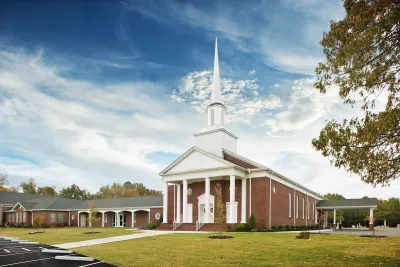
The Virginia General Assembly passed a bill that will allow faith-based organizations to build housing on property they own, reports Kate Seltzer in The Virginian-Pilot.
The legislation supports a growing trend dubbed ‘Yes in God’s Backyard’ that has seen churches calling on their local jurisdictions to allow them to build affordable housing on underused property. The effort benefits both local residents who need housing and churches, whose congregations are shrinking, often leaving them with buildings and parking lots larger than they need.
Tavaris McCoy, a pastor and head of an affordable housing consulting firm, says “When churches are interested in getting involved in the work of affordable housing, which is at a crisis level cross our state, then the last thing we need is for them to be further delayed or blocked by zoning.”
Because Virginia cities are not allowed to permit zoning variations based on a project’s affordability, the new state law “would require localities to allow property tax-exempt nonprofits, including religious organizations, to build multi-family, affordable housing on their land without requiring rezoning, assuming localities don’t have existing regulations to the contrary.” Qualifying projects must reserve 60 percent of the proposed development as affordable housing for 50 years.
Read the full story: General Assembly is a ‘yes’ on ‘Yes in God’s Backyard’ housing legislation

Church-to-housing trend grows in Southern California
Many faith leaders are eager to support housing construction on church land.
Five simple zoning changes that any city can make to increase housing affordability
Zoning for more affordable housing is not rocket science, says Donald Elliot, author of "An Even Better Way to Zone." Here’s his five-step guide to getting started.
St. Pete Allows Housing on Church Land, a Florida First
Religious institutions can now build housing on their properties without rezoning.

Planetizen Federal Action Tracker
A weekly monitor of how Trump’s orders and actions are impacting planners and planning in America.

Data reveals that NYC’s bet on congestion pricing has paid off
After almost two years of the program, reports show positive impacts on traffic and air quality and no disruptions to parking.

Denver is solving homelessness. Why aren't the rest of us?
Since 2023, Denver's street homeless population has decreased by 64%, proving that effective tools exist to support those in need of housing.

Boston to study congestion pricing in NYC
Mayor Michelle Wu said she was sending a delegation to NYC to understand congestion pricing's impact on the city.

In California, electric school buses are powering 1,000 homes — and turning a profit
Tellus Power, the charging equipment manufacturer behind the project, is also helping school buses connect to the power grid in Vermont, Illinois and San Francisco.

‘No state has sacrificed more:’ Arizona joins Nevada, sues feds over Colorado River plan
The Arizona Department of Water Resources' motion claims that the state's cities, tribes and farmers can't survive without sufficient water from the Colorado River.

FREE Course: Walkable City 1: Why Walkability?
After describing his path towards focusing on walkability as the essence of good planning, Jeff Speck marches through his five principal reasons for making more walkable places.
Reinventing Malls: Planning Alchemy—Turning Gray Fields Into Gold
The course focuses on the opportunities and imperatives that shape reinvention of mall sites.

City of Rosemead
Rutgers University, Edward J. Bloustein School of Planning and Public Policy
One Hundred Miles
The Architects Foundation
University of Cincinnati Online
Montrose County
Northern Illinois Transit Authority (NITA)
The Pocatello Development Authority