Mayor Michelle Wu said she was sending a delegation to NYC to understand congestion pricing's impact on the city.


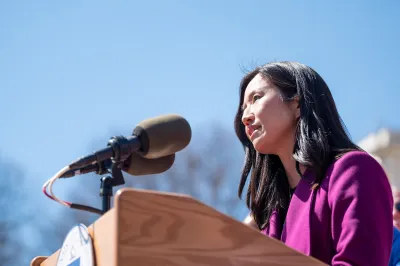
Boston may be the next city to adopt congestion pricing. Mayor Michelle Wu is sending a delegation to New York City to examine its system as part of her climate action plan, Veronica Haynes writes for WCVB.
WCVB reports:
“There’s not a specific plan on the table. It’s really just learning and understanding what the real before and after has been for New York. They’re a very high-profile example of finding ways to cut traffic, make air quality better,” Wu said.
New York City drivers passing through congestion zones pay $9 during peak hours, which has generated about $550 million for the city. Recent studies reveal that congestion pricing has had positive impacts on NYC’s traffic and air quality.
Read the full story: Boston explores congestion pricing as transit funding option

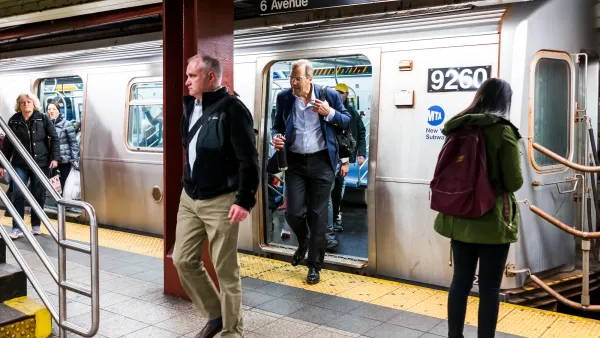
NYC to Upgrade 1/3 of its Subway Car Fleet
The MTA is seeking proposals for up to 2,390 new subway cars to upgrade its aging fleet.
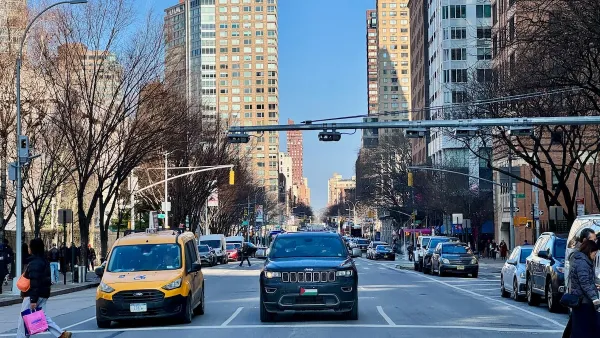
NYC’s ‘Rare and Comprehensive’ Public Data Reveals Congestion Pricing's Success
The Metropolitan Transportation Authority’s analytics and data team maintains over 180 regularly updated datasets about the city’s transportation system.
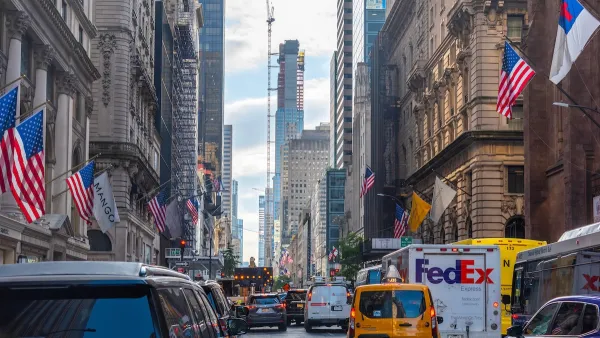
NYC Congestion Pricing: Still Working
10 million fewer vehicles entered the congestion pricing zone in the first six months of the program than last year, while pedestrian fatalities are at ‘historic lows.’

Planetizen Federal Action Tracker
A weekly monitor of how Trump’s orders and actions are impacting planners and planning in America.

Data reveals that NYC’s bet on congestion pricing has paid off
After almost two years of the program, reports show positive impacts on traffic and air quality and no disruptions to parking.

Denver is solving homelessness. Why aren't the rest of us?
Since 2023, Denver's street homeless population has decreased by 64%, proving that effective tools exist to support those in need of housing.

Boston to study congestion pricing in NYC
Mayor Michelle Wu said she was sending a delegation to NYC to understand congestion pricing's impact on the city.

In California, electric school buses are powering 1,000 homes — and turning a profit
Tellus Power, the charging equipment manufacturer behind the project, is also helping school buses connect to the power grid in Vermont, Illinois and San Francisco.

‘No state has sacrificed more:’ Arizona joins Nevada, sues feds over Colorado River plan
The Arizona Department of Water Resources' motion claims that the state's cities, tribes and farmers can't survive without sufficient water from the Colorado River.

FREE Course: Walkable City 1: Why Walkability?
After describing his path towards focusing on walkability as the essence of good planning, Jeff Speck marches through his five principal reasons for making more walkable places.
Reinventing Malls: Planning Alchemy—Turning Gray Fields Into Gold
The course focuses on the opportunities and imperatives that shape reinvention of mall sites.

City of Rosemead
Rutgers University, Edward J. Bloustein School of Planning and Public Policy
One Hundred Miles
The Architects Foundation
University of Cincinnati Online
Montrose County
Northern Illinois Transit Authority (NITA)
The Pocatello Development Authority