The MTA is seeking proposals for up to 2,390 new subway cars to upgrade its aging fleet.


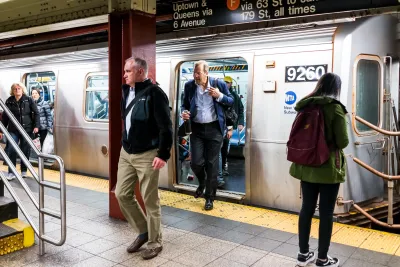
The New York Metropolitan Transportation Authority (MTA) plans to replace up to a third of its subway car fleet, or roughly 2,390 cars, to modernize its rolling stock.
As Dan Zukowski explains in Smart Cities Dive, “The order is part of the MTA’s $68 billion 2025-2029 capital plan and 2020-2024 capital plan, which are partially funded by New York’s congestion pricing program.” The MTA’s cars are, on average, 25 years old, with some nearing 50. “In preparation for the procurement, the MTA established a rolling stock program in February, headed by Jessie Lazarus, who previously served as the authority’s deputy chief of commercial ventures. The program directs the MTA’s acquisition strategy for buses, subway cars and commuter rail trains.”
The agency says new cars will help them offer better and more reliable service by reducing the amount of time cars spend being repaired. It expects to award a contract by early 2028.
Read the full story: New York’s MTA plans to replace more than a third of its subway fleet

New York MTA Officials Warn of Massive Budget Gaps Without Congestion Pricing
The agency will lose hundreds of millions in projected congestion pricing revenue, forcing cuts to expansion plans.
NYC Transit Needs Its Commuters Back
With ridership still at less than half of pre-pandemic levels, the region's transit agencies face billions of dollars in budget shortfalls after federal assistance runs out.
Op-Ed: NYC Transit Service Cuts Wrong Way to Bolster Budget
The agency could see an influx of capital funds from congestion pricing, but cuts to bus and rail service to make up for budget shortfalls would result in long-term setbacks to the system.

Planetizen Federal Action Tracker
A weekly monitor of how Trump’s orders and actions are impacting planners and planning in America.

California plans to bury El Niño’s downpour
If the state plays its cards right, it may be able to store a billion acre-feet of El Niño’s water in aquifers.

Chicago breaks ground on $3 billion megadevelopment
The new neighborhood, titled Foundry Park, will one day host 3,700 residences.

Satanic Place Names
From streams and lakes to valleys and canyons, I mapped more than 1,000 places named after the Devil.

California High-Speed Rail Authority CEO resigns after $600,000 scandal
Under Ian Choudri, the authority used taxpayer dollars to fund first class flights and trips to nightclubs.

Want to study the Missouri River? Soon, you may need unanimous approval from 10 states
Legislation would require 10 governors’ permission to study or build projects moving water outside the basin.

FREE Course: Walkable City 1: Why Walkability?
After describing his path towards focusing on walkability as the essence of good planning, Jeff Speck marches through his five principal reasons for making more walkable places.
Reinventing Malls: Planning Alchemy—Turning Gray Fields Into Gold
The course focuses on the opportunities and imperatives that shape reinvention of mall sites.

City of Rosemead
Rutgers University, Edward J. Bloustein School of Planning and Public Policy
One Hundred Miles
Hunter College, City University of New York (CUNY)
The Architects Foundation
University of Cincinnati Online
City of Cambridge
Montrose County
The Pocatello Development Authority