A tsunami alarm revealed serious flaws in Oahu’s evacuation planning, prompting calls for urgent improvements in emergency infrastructure, coordination, and public safety.



A tsunami warning last week caused widespread traffic chaos across Oahu as thousands of residents rushed to evacuate coastal areas, offering an unexpected test of Hawaii’s evacuation infrastructure. The resulting gridlock — marked by multi-hour delays and stalled intersections — highlighted the state’s limited capacity to move people efficiently during emergencies, especially in communities with only one way in or out. Despite the fact that the tsunami did not materialize, the incident raised serious concerns about how a real disaster might unfold.
As Victoria Budiono reports, state and county officials acknowledged the strain on Oahu’s road network and the urgent need for improvements. Transportation Director Ed Sniffen noted that overlapping rush-hour traffic and panicked supply runs made the situation worse, while military police and alternate routes like Kolekole Pass were temporarily activated to ease the congestion. State Senator Chris Lee emphasized the need for better emergency planning, including the development of non-car evacuation options such as bike and pedestrian routes, especially in high-density and geographically constrained neighborhoods.
In the aftermath, Hawaii’s Department of Transportation is conducting a formal review to identify gaps and explore investments in bypass roads, emergency communication, and coordination with military partners. While no injuries were reported, officials view the incident as a wake-up call — a reminder that future emergencies, such as tsunamis or wildfires, demand a more resilient and responsive evacuation system.
FULL STORY: Tsunami Warning Revealed Gaps in Hawaii Evacuation Plans

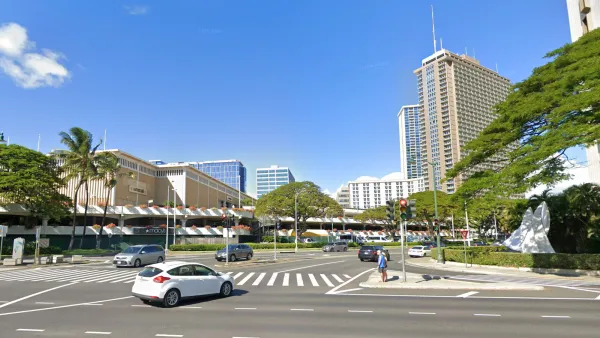
Hawaii DOT takes action after reporters call attention to dangerous crosswalk
The state made changes to a treacherous intersection after reporting revealed that traffic light timing was posting a threat to pedestrians.

Honolulu lowers speed limits near schools — but doesn't change the signs
A year and a half after changing the legal speed limit in school zones, the city has yet to update street signs — meaning police can't cite speeders.

Florida developer uses Live Local Act to bypass zoning rules for massive waterfront project
The proposed Causeway Cove project would include over 900 residential units and more than 400 hotel rooms.

The state-sanctioned urbicide of Austin
People don’t kill cities. Freeways do.

US to reduce Colorado River water deliveries to Mexico
A new Colorado Treaty amendment reduces Mexico’s Colorado River water allocation by 250,000 acre feet.

New Jersey’s second-largest city bans standalone data centers
Jersey City will continue to allow co-location facilities, such as those meant for research institutions that store their own data.

Amtrak not solely to blame for New Jersey commuter rail's unreliability, report finds
A new study from the Garden State Initiative found that NJ Transit’s budget grew 20% across a 4 year period, but reliability declined significantly over the same period.

EPA erases limits on planet-warming pollution from power plants
Under Monday’s plan, power plants would still have some limits on how much mercury, arsenic and other contaminants they can emit.

Phoenix announces new on-demand transit service, more frequent RAPID buses
Both new services will launch in October, and are part of Phoenix's Project Effective Access Solutions for Easing Congestion.

FREE Course: Walkable City 1: Why Walkability?
After describing his path towards focusing on walkability as the essence of good planning, Jeff Speck marches through his five principal reasons for making more walkable places.
Reinventing Malls: Planning Alchemy—Turning Gray Fields Into Gold
The course focuses on the opportunities and imperatives that shape reinvention of mall sites.

Eagle County Government
Harvard University Graduate School of Design
Nashville Planning Department
The Architects Foundation
University of Cincinnati Online
The Pocatello Development Authority
The Urban Renewal Agency of the City of Pocatello
Journal of the American Planning Association