Let’s have a look at what’s happening on the ground.




Almost no development occurs in the United States without a permit. In 2024 alone, local building departments authorized about 1.48 million new privately owned housing units, worth more than $384 billion, and that total does not include the office buildings, storefronts, additions, and renovations that are applied for across the same counters every day (U.S. Census Bureau 2024). Permitting is where growth actually starts, and it is also where growth can stall.
For some community members, the building permit counter is the only place they’ve made contact with the local planning department. Not the comprehensive plan, not the zoning ordinance, but the place where a homeowner tries to get a permit for a patio deck or a small builder waits to find out whether their plans passed review. This can also be where local government can be frustrating for the public. Reviews can take months, applications are rejected over small omissions, and the same mistakes can reappear on the next submission. So it makes sense that when planning agencies look for help and to put artificial intelligence (AI) to work, permitting can be near the top of the list.
What it looks like
This is not a hypothetical. A growing number of planning departments are running AI on permit applications today, and we are starting to find out if AI is making a difference.
Honolulu is an example I hear about often, and it is a more complicated one than some of their headline numbers suggest. The city’s Department of Planning and Permitting started using an AI prescreening tool called CivCheck in late 2025 to help applicants catch code and completeness problems before being formally filed. The early results looked promising. For single- and two-family projects, the city and the vendor report that review cycles fell from an average of 3.4 to 1.4, corrections per application dropped from more than 23 to under 8, and total permitting time went from about 73 days to roughly 33, with median wait times down about 40%. For a homeowner who used to wait half a year, that is a significant difference.

We need to be careful reading those figures. They come from the city and the vendor rather than from an independent review, and they were reported in the middle of a very public technology stumble. Only months before CivCheck went live, the same department replaced its decades-old permitting system with a new platform called HNL Build, and the launch did not go well. In an anonymous survey, staff rated the new system at the bottom of the scale, said it was slower than what it replaced, and warned that it weakened the audit trail and let some reviews be bypassed. One engineer told a reporter he would not set foot in a building processed through the department after the switch without added outside oversight. The point is not that Honolulu failed. It is that a promising metric and a real problem happened, and that any tool is only as trustworthy as the record-keeping and the process around it.
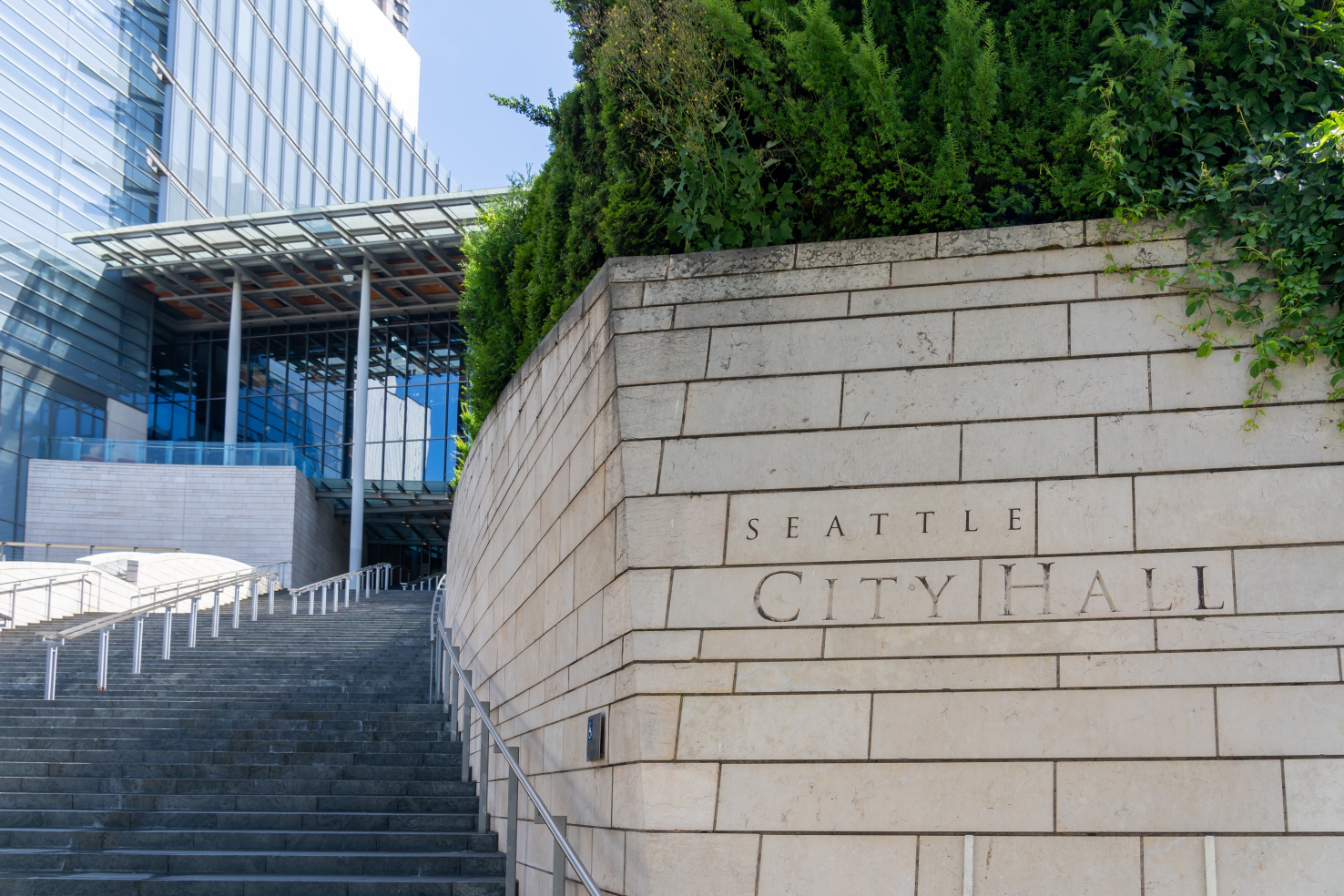
Honolulu is not alone. Seattle has been piloting the same kind of tool and reported catching completeness problems with about 87% accuracy and design-compliance issues with about 92% accuracy, while cutting intake review time roughly in half. Denver signed a multi-year, multi-million-dollar contract for an AI-guided plan review platform with ComplyAI, with the stated goal of raising the share of applications that pass on the first round from about 37% to 80%. Louisville and Bellevue are testing tools aimed at cutting avoidable resubmissions. Harris County, Texas, has funded its own program. Baltimore and Los Angeles are experimenting as well. And the federal government has started subsidizing this work, with HUD grants available to jurisdictions that want to modernize permitting.
The American Planning Association's new AI in Planning Use Cases Database points to a clear trend: adoption of AI-powered tools in planning is accelerating, with permitting emerging as the function most represented across use cases.
"We're witnessing the next wave of automation, this time enabled by AI," says Zhenia Dulko, researcher and Foresight Manager at APA. "My reading of recent signals is that everything in planning that can be automated, will be. As a profession, we need to be better prepared for that scenario."
Why permitting is an important place to start
Much of permit review is rules-based and repetitive. Does the application include the required drawings? Does the addition meet the setback? Is the lot coverage under the limit? Are the parking counts right? These are exactly the kinds of checks software can do quickly and tirelessly, and they are also the checks that eat up staff time and generate the back-and-forth that slows everyone down.
Permitting is also measurable in a way that makes the case easy to sell. You can count days-to-decision, review cycles, and first-round approval rates before and after, and put the improvement in front of a city council. And the political pressure is real. The national conversation about housing costs has put a spotlight on permitting timelines, and mayors and planning directors are feeling the pressure.
This connects to something I wrote about in “AI for Planners Explained: Urban Digital Twins.” The more a jurisdiction has invested in a good digital model of its zoning and built environment, the more an automated review can check a proposal against real local context rather than a generic checklist. Permitting is one of the most concrete, everyday payoffs of that kind of investment. It's where the abstract promise of a smarter model of the city becomes a faster answer for the person standing at the counter.
The catch: a permit is a legal decision
This is where to be careful, because permitting is not like using AI to draft a staff report or clean up meeting notes. A permit is a legal determination. It grants or denies someone the right to build; it carries due process expectations, and it can be appealed. That changes what an error means.
But there are certainly limits. AI is good at clear-cut checks but can be much weaker in the grayer areas: site-specific conditions, unusual lots, places where two code provisions seem to conflict, and judgment calls about neighborhood impact. Those are not outliers you can ignore. They can be the reason why the application made it to a planner’s desk instead of sailing through to approval.
And when an automated review is wrong, someone has to answer for it. A recent Forbes piece put the problem plainly in its title: “AI permits clear in days. Who pays when they’re wrong?” If a tool approves a set of plans that should have been flagged, and the building goes up, the liability does not fall on the software. It falls on the jurisdiction and, ultimately, on the public. That is a strong argument for treating AI as a first pass, not a final word.

There is an accuracy problem worth identifying. These systems can produce confident, fluent, wrong answers, including citing a code section that does not say what the tool claims. I wrote a column on guarding against exactly this in “5 ways to hallucination-proof your AI output,” and permit review is a place where those habits matter a lot. Check the tool against the actual ordinance. Keep a human as the decision-maker. Do not let a polished summary stand in for the code itself.
Finally, a reality check the cities themselves offer: officials estimate that applicants, not staff, are responsible for something like half of all delays. Incomplete submissions, slow responses to correction notices, and confusion about requirements are a huge part of the backlog. That is actually good news for AI, because plain-language guidance and completeness checks at the front end can help applicants get it right the first time. But it also means automation aimed only at the review side will not fix a problem that is half about communication.
What good looks like
The goal is not to automate the counter out of existence. It is to let the software handle the mechanical, repetitive checks and the routine questions so that people can spend their time where human judgment actually adds value: the ambiguous cases, the applicant who needs help understanding what to fix, the project that does not fit the template.
That is also my answer to the anxiety that this technology will reduce planning staff. In the cities reporting results, the story has generally been reassignment, not layoffs, moving experienced reviewers off the routine backlog and toward the work that requires their expertise. The counter still needs people. It may just need them spending less time stamping the obvious and more time on the cases and the residents that actually need attention.
In this case, starting small may be a wise thing to do. Notice that Honolulu and several of the other cities did not start by trying to automate every permit type at once. They picked well-bounded categories, single-family additions, standard rooftop solar, where the rules are clear and the volume is high. Start there, keep a “human in the loop,” measure whether it actually helps, and expand only when confident.
Do it on purpose
If your department is already using an AI tool to answer applicant emails or draft correction letters, you already have an AI permitting practice, whether or not anyone decided to have one. As I argued in “Does every planner need an AI policy?” the real choice is between an implicit policy and a deliberate one. For permitting, a deliberate policy means answering a few specific questions before the tool goes live. Which determinations require a human signature? How are applicants told when AI touched their file? How, and how often, do you check the tool’s output against the actual code? And who is watching for uneven outcomes across neighborhoods and applicant types?
A call to action
The permit counter can shape residents' impression of whether local government is competent. AI can help reduce the backlog and give people faster answers. A planner’s job is to make sure the answer is still the right one, and that a person remains accountable for it. If we bring AI to the counter cautiously, we can make government work better for the public it serves. If we let it arrive by default, we risk being faster and less accountable at the same time, which serves no one.
--
Do you have an example from your own agency, or a topic you would like to see covered? I’d like to hear from you. You can comment in the section below and, if you have a question you would like answered, please email [email protected] with "AI question for Tom Sanchez" in the subject line.
Thanks to Zhenia Dulko from the American Planning Association for her comments and suggestions on this column.


Does every planner need an AI policy?
From a hundred-person agency to a one-person consultancy, the answer is yes. The difference is what “policy" means.

5 ways to hallucination-proof your AI output
With public trust on the line, the stakes are high for urban planners to ensure accuracy in our AI work. Here’s how to do it.

Denver starts using AI to speed up housing permits
The CivCheck platform is designed to flag missing or incomplete application items and reduce the time it takes for applications to get approved.

Planetizen Federal Action Tracker
A weekly monitor of how Trump’s orders and actions are impacting planners and planning in America.

Amtrak, CN end decades-long dispute with eight-year agreement
The new operating agreement establishes an updated framework for the companies to work together, including processes to resolve disputes.

Judges permit Denver to divert 77,000 acre feet from the Colorado River for reservoir expansion
Overuse and climate change have caused the Colorado River’s water levels to plummet.

NYC plants over 18,000 trees, the most new foliage in a decade
Many of the trees were planted in communities vulnerable to extreme heat.

New bill requires California data center developers to create water scarcity plans
Gov. Gavin Newsom recently signed 7 bills intended to give California communities more information about the impact of proposed data centers.

San Diego may kill one-third of its bus routes as budget crisis looms
Under the city's proposed plan, 21% of Metropolitan Transit System riders would lose access to transit services.

FREE Course: Walkable City 1: Why Walkability?
After describing his path towards focusing on walkability as the essence of good planning, Jeff Speck marches through his five principal reasons for making more walkable places.
Reinventing Malls: Planning Alchemy—Turning Gray Fields Into Gold
The course focuses on the opportunities and imperatives that shape reinvention of mall sites.

City of Wisconsin Rapids
Harvard University Graduate School of Design
KFH Group Inc.
The Architects Foundation
University of Cincinnati Online
The Pocatello Development Authority
The Urban Renewal Agency of the City of Pocatello

