Visitors to Zion National Park can enjoy the canyon via the nation’s first fully electric park shuttle system.


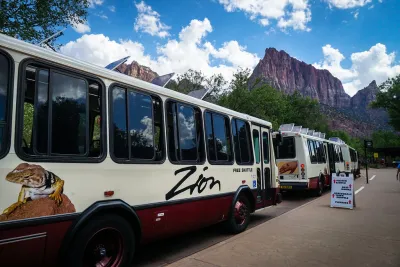
Zion National Park, one of the Southwest’s most treasured landscapes, is quieter and has cleaner air thanks to the park’s introduction of electric shuttle buses last year. The park first started using a shuttle system in 2000 to reduce traffic in the canyon, which sees up to five million visitors per year.
As Morgan Sjogren explains in Reasons to Be Cheerful, the concept of using shuttles in national parks isn’t at all new: “In 1910 the newly established Glacier National Park used horse carriages to transport 11 passengers per trip, evolving four years later to a fleet of red buses. Today, Glacier still operates 33 vintage red propane shuttles, in service since the mid-1930s, that are considered the oldest touring fleet in the world!”
Unlike other parks with optional shuttle systems, Zion’s system is mandatory for visitors who want to visit the canyon between March and November. According to park officials, the change resulted in an increase in wildlife and an improved visitor experience.
According to Sjogren, “Zion is the first national park to fully transition to zero-emissions electric shuttles. As of 2024, the Park Service set a goal to fully electrify its 600,000 vehicles.” However, funding for the switch appears uncertain under the Trump administration, which is cutting subsidies for EVs and charging infrastructure.
FULL STORY: In Zion National Park, ‘the Smog Is Gone’


Swapping your gas car for an EV is greener than keeping it, research shows
An EV repays the 'carbon debt' caused by building it after 4,400 miles.
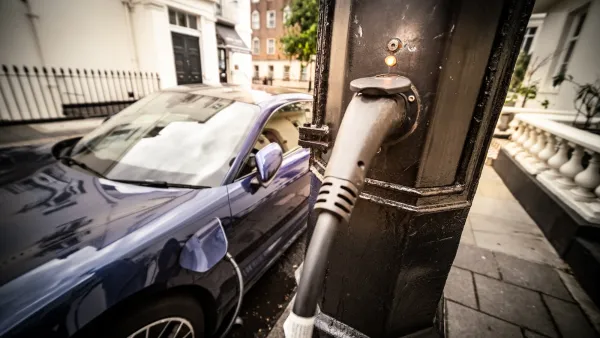
DC light poles will soon charge your electric car
The city awarded three grants to companies that will install more publicly available EV chargers.
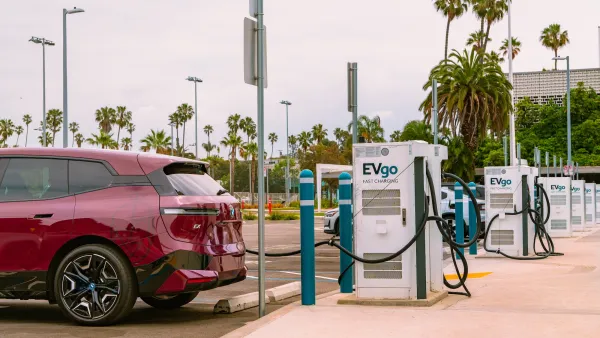
California Beats EV Adoption Goal by Over 1 Million Vehicles
The state pledged to put 1.5 million EVs on its roads by 2025.

Planetizen Federal Action Tracker
A weekly monitor of how Trump’s orders and actions are impacting planners and planning in America.

The state-sanctioned urbicide of Austin
People don’t kill cities. Freeways do.

US to reduce Colorado River water deliveries to Mexico
A new Colorado Treaty amendment reduces Mexico’s Colorado River water allocation by 250,000 acre feet.

Brightline West’s future may rely on $6 billion federal loan
The company has until Nov. 2 to make a $400 million equity investment into its proposed high-speed rail line.

LA Metro’s ultimatum: no extra buses for LA28 if federal funding isn’t imminently secured
If Metro does not provide additional buses, LA28 organizers will have to find a new way to manage Olympic traffic. LA28’s budget does not include a line item for transit.

Colorado’s Largest Data Center Could Rise Next to Homes — Without a Public Hearing
The proposed campus would consume 11 times the power of Denver International Airport; as it has across the country, opposition mounts.

FREE Course: Walkable City 1: Why Walkability?
After describing his path towards focusing on walkability as the essence of good planning, Jeff Speck marches through his five principal reasons for making more walkable places.
Reinventing Malls: Planning Alchemy—Turning Gray Fields Into Gold
The course focuses on the opportunities and imperatives that shape reinvention of mall sites.

Eagle County Government
Harvard University Graduate School of Design
Nashville Planning Department
The Architects Foundation
University of Cincinnati Online
The Pocatello Development Authority
The Urban Renewal Agency of the City of Pocatello
Journal of the American Planning Association