The city awarded three grants to companies that will install more publicly available EV chargers.


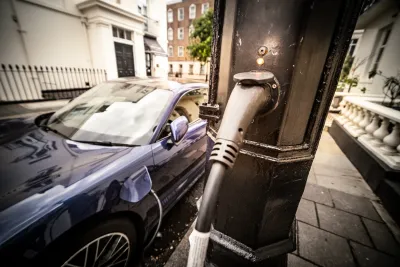
The Washington D.C. Department of Energy and Environment awarded three grants to companies that will add more electric car charging stations to public areas in the district, reports Christian Flores for ABC 7. Over 20% of cars sold in D.C. are electric, a rate second only to California in the United States, according to the Alliance for Automotive Innovation.
According to a DOEE spokesperson, the grants, which total $609,000, are meant to offset upfront equipment costs and are funded with money from a settlement with Volkswagen, not taxpayer funds. One of the companies, Voltpost, will install EV chargers on existing utility poles. As of today, the city only owns six chargers at two locations. "There are more than 1,000 privately-run chargers, but the CEOs who spoke with 7News said there are hurdles to building more stations."
FULL STORY: Company that turns light posts into EV chargers among 3 to win energy grant from DC

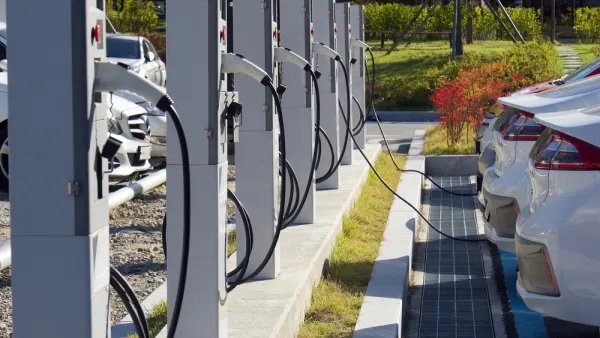
Charging Ahead: Why EV Infrastructure Is Still Expanding Despite Market Uncertainty
Electrify America is forging ahead with major charging network expansions, confident that long-term demand will keep rising despite short-term EV market and policy disruptions.

Swapping your gas car for an EV is greener than keeping it, research shows
An EV repays the 'carbon debt' caused by building it after 4,400 miles.
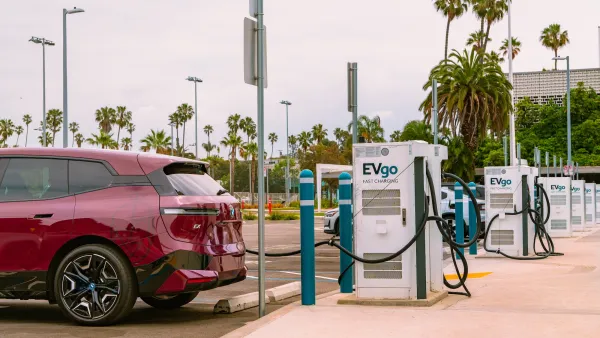
California Beats EV Adoption Goal by Over 1 Million Vehicles
The state pledged to put 1.5 million EVs on its roads by 2025.

Planetizen Federal Action Tracker
A weekly monitor of how Trump’s orders and actions are impacting planners and planning in America.

The state-sanctioned urbicide of Austin
People don’t kill cities. Freeways do.

US to reduce Colorado River water deliveries to Mexico
A new Colorado Treaty amendment reduces Mexico’s Colorado River water allocation by 250,000 acre feet.

Guerilla urbanists are building DIY bus stop benches in Chicago
A before-and-after of one of the bus stops with a new bench. The new benches are not officially sanctioned or permitted, but the residents who placed them hope they will be the start of a network of DIY benches across the city.

Mamdani overhauls NYC's Vision Zero plan with 100 new policy goals
The overhaul aims to reduce traffic deaths and make streets safer for pedestrians, cyclists and drivers through lower speed limits, new safety infrastructure and more.

Amtrak not solely to blame for New Jersey commuter rail's unreliability, report finds
A new study from the Garden State Initiative found that NJ Transit’s budget grew 20% across a 4 year period, but reliability declined significantly over the same period.

FREE Course: Walkable City 1: Why Walkability?
After describing his path towards focusing on walkability as the essence of good planning, Jeff Speck marches through his five principal reasons for making more walkable places.
Reinventing Malls: Planning Alchemy—Turning Gray Fields Into Gold
The course focuses on the opportunities and imperatives that shape reinvention of mall sites.

Eagle County Government
Harvard University Graduate School of Design
Nashville Planning Department
The Architects Foundation
University of Cincinnati Online
The Pocatello Development Authority
The Urban Renewal Agency of the City of Pocatello
Journal of the American Planning Association