The state pledged to put 1.5 million EVs on its roads by 2025.


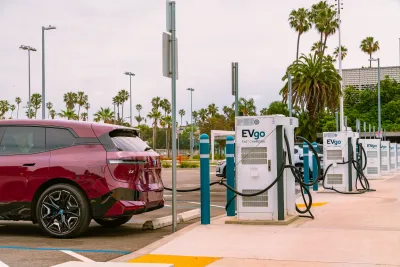
Over 2.5 million electric cars have been sold in California since 2010, meaning the state exceeded its goal of putting 1.5 million EVs on its roads by 2025.
According to an article by Caroline Petrow-Cohen in the Los Angeles Times, “Former Gov. Jerry Brown set the goal in 2012 with an executive order that also allocated $120 million for charging infrastructure. Prior to 2010, fewer than 600 zero-emission vehicles had been sold in the state, according to the California Energy Commission.” The state failed to meet another goal set by the California Air Resources Board in 2022 that 35% of new cars must be zero-emission by 2026.
In 2025, almost 23 percent of new vehicles sold in California were zero-emission vehicles, though EV sales jumped last year in anticipation of the end of the federal EV tax credit. Governor Newsom’s budget included a proposed $200 million EV incentive to replace the federal credit, and the California Energy Commission’s Clean Transportation Investment Plan includes $98.5 million for light-duty ZEV infrastructure.
FULL STORY: California exceeds clean car goal despite declining federal support

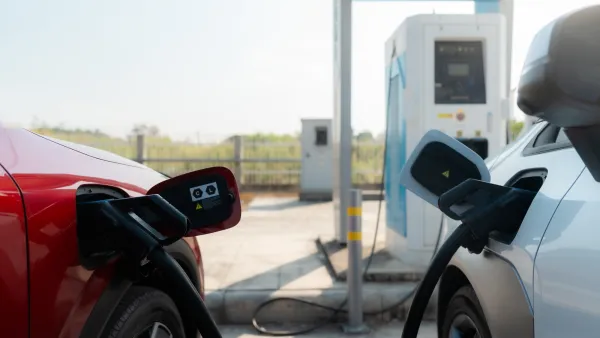
California launches $3,500 EV rebate
A new rebate program aims to maintain momentum for EV adoption as the federal government eliminates other incentives.
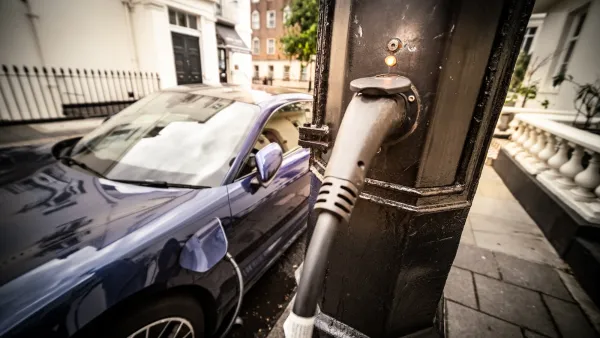
DC light poles will soon charge your electric car
The city awarded three grants to companies that will install more publicly available EV chargers.
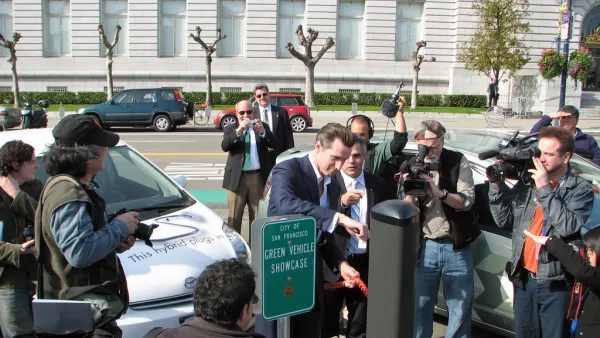
California Backtracks on Pledge to Save EV Subsidy
Despite a November promise to replace the federal EV subsidy with a state incentive, Governor Newsom now says the state cannot make up for the “federal vandalism” of EV tax credits.

Planetizen Federal Action Tracker
A weekly monitor of how Trump’s orders and actions are impacting planners and planning in America.

The state-sanctioned urbicide of Austin
People don’t kill cities. Freeways do.

US to reduce Colorado River water deliveries to Mexico
A new Colorado Treaty amendment reduces Mexico’s Colorado River water allocation by 250,000 acre feet.

5 New England states march closer to 800 megawatt wind energy project
Securing federal approval for the project may be complicated under the Trump administration, which has historically been hostile towards domestic wind power.

Baltimore to break ground on $50 million Transit Priority Project
The project will bring faster bus trips, safer streets and better bike connections to Baltimore.

Airbnb launches $250 million 'last-dollar financing' housing accelerator, makes first investment in Austin
The company will put $6.4 million towards affordable housing development in Texas’ capital.

FREE Course: Walkable City 1: Why Walkability?
After describing his path towards focusing on walkability as the essence of good planning, Jeff Speck marches through his five principal reasons for making more walkable places.
Reinventing Malls: Planning Alchemy—Turning Gray Fields Into Gold
The course focuses on the opportunities and imperatives that shape reinvention of mall sites.

Eagle County Government
Harvard University Graduate School of Design
Nashville Planning Department
The Architects Foundation
University of Cincinnati Online
The Pocatello Development Authority
The Urban Renewal Agency of the City of Pocatello
Journal of the American Planning Association