Shelterforce found more than a dozen examples of tenant-serving technology that help renters identify landlords, respond to eviction, fight back against housing discrimination, and more.


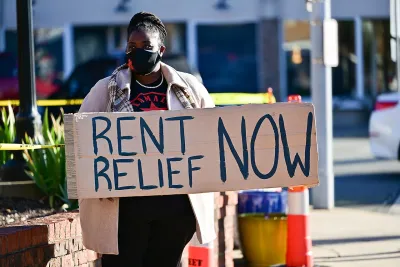
Tenants in pockets of the U.S. are using new tech tools to combat landlord abuse, identify hidden property owners, fight eviction, report discrimination, and push for accountability. From Chicago’s Landlord Mapper tool to New York’s Who Owns What to the Tenant Power Toolkit in California, these tenant-serving tech tools leverage public data to expose landlord networks, streamline legal defenses, and connect renters with resources.
For example, in Los Angeles County, about 500 tenants each month file eviction responses using the Tenant Power Toolkit. That represents around 10 percent of the 5,000 evictions typically filed per month in the county. “The tool has really helped give tenants more leverage in the eviction process, and decreased the rate of defaults," says Paul Lanctot, the toolkit’s main programmer.
We spoke with several other tool creators to learn more about how the different types of tech works, the impact the tools have had so far, and whether some tools can be scaled for use in larger geographic areas.
FULL STORY: Tech Tools Help Tenants Push Back Against Problematic Landlords


Good Cause Eviction Policies Don’t Hamper Construction, New Research Shows. Legislators Are Still Concerned.
Multiple states have ongoing pushes for good cause eviction protections. A frequent obstacle: a now disproven claim by developers.

Supreme Court Landlord Appeal Case Could Overturn Tenant Protections
A legal case claiming that COVID-era eviction moratoriums were unconstitutional could spell trouble for tenant protections.
Opinion: Why Passing ‘Good Cause’ Eviction Matters
A proposed bill would require landlords who don’t renew leases to provide a reason, helping prevent capricious retaliation against tenants while still holding tenants who don’t obey the terms of their lease responsible.

The state-sanctioned urbicide of Austin
People don’t kill cities. Freeways do.

US to reduce Colorado River water deliveries to Mexico
A new Colorado Treaty amendment reduces Mexico’s Colorado River water allocation by 250,000 acre feet.

New Jersey’s second-largest city bans standalone data centers
Jersey City will continue to allow co-location facilities, such as those meant for research institutions that store their own data.

Amtrak not solely to blame for New Jersey commuter rail's unreliability, report finds
A new study from the Garden State Initiative found that NJ Transit’s budget grew 20% across a 4 year period, but reliability declined significantly over the same period.

EPA erases limits on planet-warming pollution from power plants
Under Monday’s plan, power plants would still have some limits on how much mercury, arsenic and other contaminants they can emit.

Phoenix announces new on-demand transit service, more frequent RAPID buses
Both new services will launch in October, and are part of Phoenix's Project Effective Access Solutions for Easing Congestion.

FREE Course: Walkable City 1: Why Walkability?
After describing his path towards focusing on walkability as the essence of good planning, Jeff Speck marches through his five principal reasons for making more walkable places.
Reinventing Malls: Planning Alchemy—Turning Gray Fields Into Gold
The course focuses on the opportunities and imperatives that shape reinvention of mall sites.

_(50856846781).jpg)
Eagle County Government
Harvard University Graduate School of Design
Nashville Planning Department
The Architects Foundation
University of Cincinnati Online
The Pocatello Development Authority
The Urban Renewal Agency of the City of Pocatello
Journal of the American Planning Association