In the wake of Trump’s cuts to high-speed rail projects, rail authorities are looking to private-public partnerships to supplement their budgets.


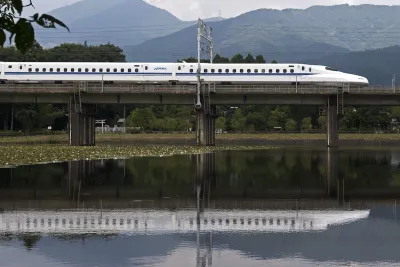
The California High-Speed Rail Authority is seeking outside funding to continue its work on an HSR line that would eventually connect Los Angeles and San Francisco.
According to Dan Zukowski of Smart Cities Dive, “Possible areas of discussion include monetizing assets such as train sets, station facilities, track access, fast cargo and parcels movement. Other opportunities include transit-oriented development, real estate, allowing fiber optic lines along the right-of-way and leasing certain assets to the private sector.” Authority CEO Ian Choudri says the agency has reached out to private sector investors who have expressed “strong and growing interest” and will release a request for expression of interest for private-public partnerships soon.
In Texas, USDOT also pulled funding for the proposed Dallas-to-Houston HSR line, ending Amtrak’s involvement in the project. Now, Texas Central officials are similarly seeking out private investment to make up for the loss.
FULL STORY: California high-speed rail project seeks outside investors

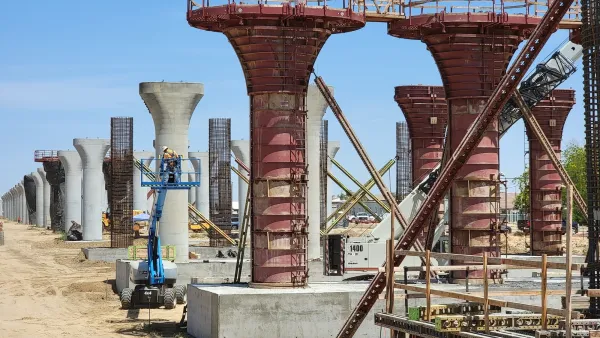
Legal Standoff Over Federal Funding for California High-Speed Rail Heats up
A judge dismissed the Trump administration’s request to throw out a lawsuit brought by the state’s high-speed rail authority.
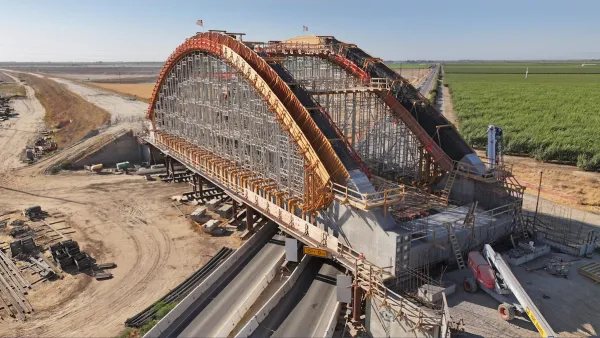
62% of Californians Still Want High-Speed Rail
The majority of Californians want the state to keep building the California High-Speed Rail Project, which is moving ahead despite the loss of federal funding.
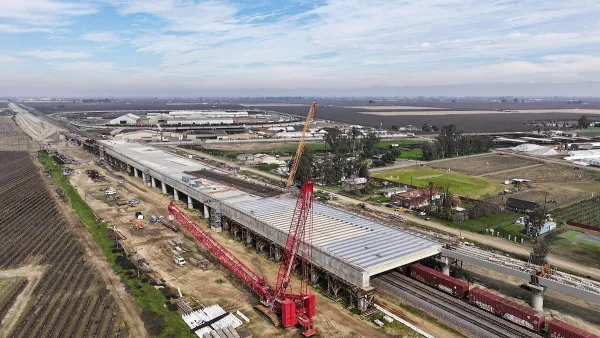
DOT Officially Cancels California High-Speed Rail Funding
The Trump administration has repeatedly taken aim at the LA-to-Bay Area rail project, blaming Democratic leaders for cost overruns and delays.

The state-sanctioned urbicide of Austin
People don’t kill cities. Freeways do.

US to reduce Colorado River water deliveries to Mexico
A new Colorado Treaty amendment reduces Mexico’s Colorado River water allocation by 250,000 acre feet.

New Jersey’s second-largest city bans standalone data centers
Jersey City will continue to allow co-location facilities, such as those meant for research institutions that store their own data.

Amtrak not solely to blame for New Jersey commuter rail's unreliability, report finds
A new study from the Garden State Initiative found that NJ Transit’s budget grew 20% across a 4 year period, but reliability declined significantly over the same period.

EPA erases limits on planet-warming pollution from power plants
Under Monday’s plan, power plants would still have some limits on how much mercury, arsenic and other contaminants they can emit.

Phoenix announces new on-demand transit service, more frequent RAPID buses
Both new services will launch in October, and are part of Phoenix's Project Effective Access Solutions for Easing Congestion.

FREE Course: Walkable City 1: Why Walkability?
After describing his path towards focusing on walkability as the essence of good planning, Jeff Speck marches through his five principal reasons for making more walkable places.
Reinventing Malls: Planning Alchemy—Turning Gray Fields Into Gold
The course focuses on the opportunities and imperatives that shape reinvention of mall sites.

Eagle County Government
Harvard University Graduate School of Design
Nashville Planning Department
The Architects Foundation
University of Cincinnati Online
The Pocatello Development Authority
The Urban Renewal Agency of the City of Pocatello
Journal of the American Planning Association