The Mayor’s plan calls for creating a nonprofit housing corporation tasked with building affordable housing that meets Green Building standards.



The Chicago City Council approved a proposal to create a nonprofit housing development corporation run by the city’s Department of Housing, reports Todd Feurer for CBS News Chicago. “The $135 million fund will be financed from a $1.25 billion borrowing plan approved by the City Council last year,” Feuer adds.
“That nonprofit, known as the Residential Investment Corp., would control a $135 million fund that would be used to provide low-cost loans to developers to build environmentally friendly buildings.” Projects built under its auspices would have to set aside 30 percent of units as affordable housing and meet Green Building Standards.
According to Feurer, “The ordinance includes guarantees that the loan fund will use Department of Housing workers for any services similar to existing jobs within the department.” The proposal underwent several changes before it was approved.
Read the full story: City Council approves Mayor Johnson's "green social housing" plan to boost affordable housing

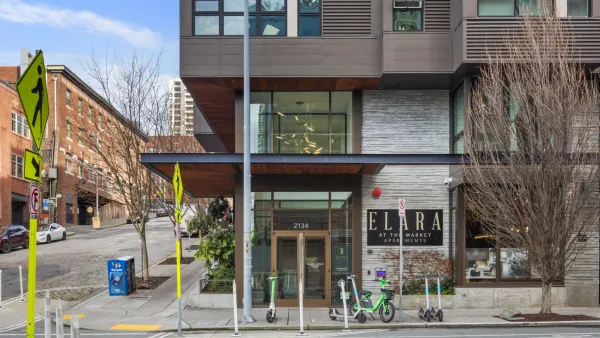
Seattle's first social housing building gets 10,000 resident applications
The Elara at the Market development includes 150 affordable housing units.
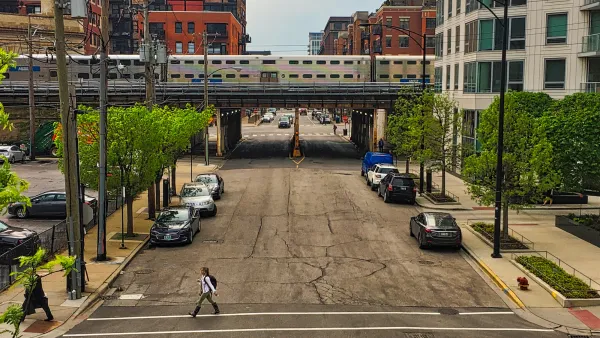
Chicago eliminates parking requirements near transit
In 2025, Illinois barred cities from mandating parking near train and bus stations.
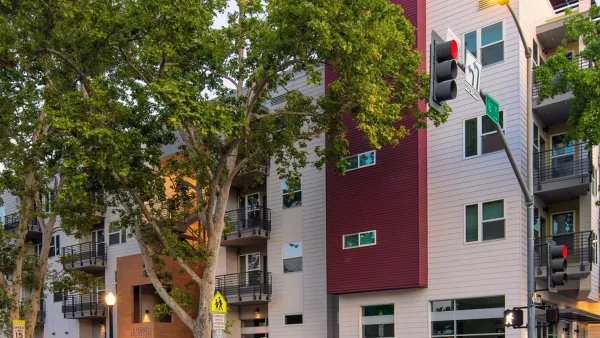
New Washington State Law Lets Cities Give Social Housing Developers City-owned Land
In its current form, HB 1687, which authorizes local governments to assist social housing agencies with land or other resources, only applies to Seattle.

Planetizen Federal Action Tracker
A weekly monitor of how Trump’s orders and actions are impacting planners and planning in America.

California plans to bury El Niño’s downpour
If the state plays its cards right, it may be able to store a billion acre-feet of El Niño’s water in aquifers.

Desperate measures: Advocates weigh draining Lake Powell to fill Colorado River
Draining the reservoir could reduce evaporation losses by a couple hundred thousand acre-feet.

Metra may invest $9.1 billion in regional rail
The agency released a draft of a study examining potential ways to offer more frequent train service.

California city breaks ground on transit connector
The project includes three mobility hubs and a pedestrian bridge.

After public outcry, Massachusetts city releases housing development tracker
Cambridge’s tracker currently shows 250 housing projects in various stages of development.

FREE Course: Walkable City 1: Why Walkability?
After describing his path towards focusing on walkability as the essence of good planning, Jeff Speck marches through his five principal reasons for making more walkable places.
Reinventing Malls: Planning Alchemy—Turning Gray Fields Into Gold
The course focuses on the opportunities and imperatives that shape reinvention of mall sites.

City of Rosemead
Rutgers University, Edward J. Bloustein School of Planning and Public Policy
One Hundred Miles
Hunter College, City University of New York (CUNY)
The Architects Foundation
University of Cincinnati Online
City of Cambridge
Montrose County
The Pocatello Development Authority