California now has 48% more electric vehicle chargers than gasoline nozzles, reflecting its rapid shift toward clean transportation and aggressive zero-emission goals despite federal pushback.


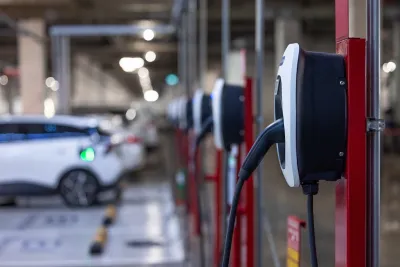
California now has significantly more electric vehicle (EV) chargers than gasoline nozzles, marking a major milestone in the state’s transition to clean transportation. According to Governor Gavin Newsom’s office, there are approximately 178,000 public and shared private EV chargers across California, compared to an estimated 120,000 gas nozzles—representing a 48% difference. As reported by Patrick George, most of these chargers—about 162,000—are Level 2, which are slower but adequate for daily use, while only 17,000 are DC fast chargers, which offer quicker charging similar to traditional refueling.
The surge in charger availability reflects California’s continued leadership in electric vehicle adoption. In 2024 alone, the number of charging ports nearly doubled, a response to increasing demand as roughly 25% of new car sales in the state last year were electric vehicles. To further support this growth, California is investing $1.4 billion into expanding charging and hydrogen fuel infrastructure, improving charger reliability, and accelerating permitting processes—part of a broader effort to meet its climate and clean energy targets.
These developments come amid policy tensions at the national level. Governor Newsom criticized efforts by the Trump administration to reverse federal support for EV infrastructure and tax credits, stating that California is doing the opposite by strengthening its zero-emission goals. Under current state law, 68% of all new vehicles sold must be zero-emission by 2030, with a complete ban on new gas-powered car sales by 2035. While legal and legislative challenges may follow, California continues to push forward in building a transportation system centered on electric mobility.
FULL STORY: California Now Has More EV Chargers Than Gas Pumps


Companies Eyeing EV Charging as Next Big Opportunity
More electric vehicles on the road will mean more demand for charging stations where drivers can power up away from home.
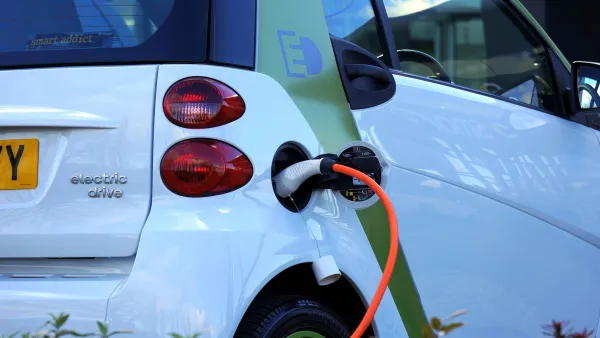
Federal Government Pledges $5 Billion for Electric Car Charging
A $5 billion federal investment will contribute to state efforts to install electric vehicle charging stations along interstate highways and major corridors.
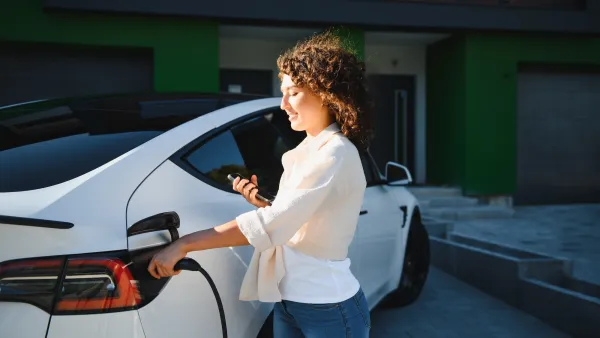
Swapping your gas car for an EV is greener than keeping it, research shows
An EV repays the 'carbon debt' caused by building it after 4,400 miles.

Planetizen Federal Action Tracker
A weekly monitor of how Trump’s orders and actions are impacting planners and planning in America.

The state-sanctioned urbicide of Austin
People don’t kill cities. Freeways do.

US to reduce Colorado River water deliveries to Mexico
A new Colorado Treaty amendment reduces Mexico’s Colorado River water allocation by 250,000 acre feet.

5 New England states march closer to 800 megawatt wind energy project
Securing federal approval for the project may be complicated under the Trump administration, which has historically been hostile towards domestic wind power.

Baltimore to break ground on $50 million Transit Priority Project
The project will bring faster bus trips, safer streets and better bike connections to Baltimore.

Airbnb launches $250 million 'last-dollar financing' housing accelerator, makes first investment in Austin
The company will put $6.4 million towards affordable housing development in Texas’ capital.

FREE Course: Walkable City 1: Why Walkability?
After describing his path towards focusing on walkability as the essence of good planning, Jeff Speck marches through his five principal reasons for making more walkable places.
Reinventing Malls: Planning Alchemy—Turning Gray Fields Into Gold
The course focuses on the opportunities and imperatives that shape reinvention of mall sites.

Eagle County Government
Harvard University Graduate School of Design
Nashville Planning Department
The Architects Foundation
University of Cincinnati Online
The Pocatello Development Authority
The Urban Renewal Agency of the City of Pocatello
Journal of the American Planning Association