Doug Ford, the no-nonsense premier of Canada's most populous province, Ontario, is taking on Trump where it hurts — making American energy more expensive.


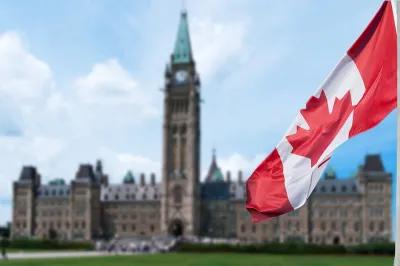
President Trump's trade war with Canada has a new combatant: Doug Ford, who has served as the premier of Ontario since 2018, “has made good on his threat to slap a 25 per cent surcharge on electricity sold to the U.S. in retaliation for President Donald Trump‘s tariffs,” reports Rob Ferguson in a developing story for the Toronto Star on March 10.
[Yes, tariffs can be applied on imports or exports of goods.]
Ferguson adds that the “tariff response charge” would raise “an estimated $300,000 to $400,000 per day” and “will be paid by utilities in New York, Michigan and Minnesota that import power from generators of electricity in Ontario."
“Until these tariffs are off the table, until the threat of tariffs is gone for good, Ontario will not relent,” Ford said Monday. “We will not back down … we will apply maximum pressure to maximize our leverage.”
Ford had warned the three governors of the pending move last week, and reiterated that he “will not hesitate to shut the electricity off completely” if Trump escalates the trade war.
Ford hoped that the export energy tariff would spread to other provinces.
Ford said Alberta Premier Danielle Smith should agree to a federal surcharge on her province’s high volume of oil and gas exports south of the border, calling it a “trump card.”
“The Americans, all of a sudden their gas prices go up 90 (cents) to a dollar a gallon, they will lose their minds,” added Ford. “We need to at least put that in the window.”
However, Smith would have none of it, “calling it 'an absurd and self-destructive idea' for an industry that is the lifeblood of Alberta’s economy,” added Ferguson.
Rob Gillies of The Associated Press also reported on Ontario's electricity export tariffs that became effective Monday.
FULL STORY: Doug Ford slaps 25 per cent tax on electricity to the U.S. in response to Trump tariffs

Bike Prices to Soar in U.S. Thanks to Trump's Trade War with China
Depending on the type of bicycle for sale, the price may jump 25 percent due to new tariffs paid by importers and consumers (not China as the president would have you think) if it arrives in the United States after June 1.
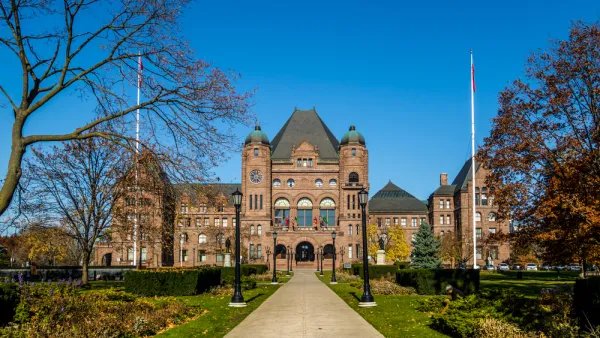
Doug Ford, Elected Ontario Premier, Promises End of Cap and Trade
The brother of former Toronto Mayor Rob Ford decisively won the election on June 7 to be the next premier of Ontario, ousting current Premier Kathleen Wynne. His first order of business: end the province's emissions trading program.

Where Trump's Trade Policies Are Likely to Have the Largest Effect
Time will tell whether President Trump is able to enact any of the ambitious trade policies he proposed on the campaign trail, but research shows the cities that will prosper or suffer based on the success of those initiatives.

Planetizen Federal Action Tracker
A weekly monitor of how Trump’s orders and actions are impacting planners and planning in America.

The state-sanctioned urbicide of Austin
People don’t kill cities. Freeways do.

US to reduce Colorado River water deliveries to Mexico
A new Colorado Treaty amendment reduces Mexico’s Colorado River water allocation by 250,000 acre feet.

Mamdani overhauls NYC's Vision Zero plan with 100 new policy goals
The overhaul aims to reduce traffic deaths and make streets safer for pedestrians, cyclists and drivers through lower speed limits, new safety infrastructure and more.

Amtrak not solely to blame for New Jersey commuter rail's unreliability, report finds
A new study from the Garden State Initiative found that NJ Transit’s budget grew 20% across a 4 year period, but reliability declined significantly over the same period.

EPA erases limits on planet-warming pollution from power plants
Under Monday’s plan, power plants would still have some limits on how much mercury, arsenic and other contaminants they can emit.

FREE Course: Walkable City 1: Why Walkability?
After describing his path towards focusing on walkability as the essence of good planning, Jeff Speck marches through his five principal reasons for making more walkable places.
Reinventing Malls: Planning Alchemy—Turning Gray Fields Into Gold
The course focuses on the opportunities and imperatives that shape reinvention of mall sites.

Eagle County Government
Harvard University Graduate School of Design
Nashville Planning Department
The Architects Foundation
University of Cincinnati Online
The Pocatello Development Authority
The Urban Renewal Agency of the City of Pocatello
Journal of the American Planning Association